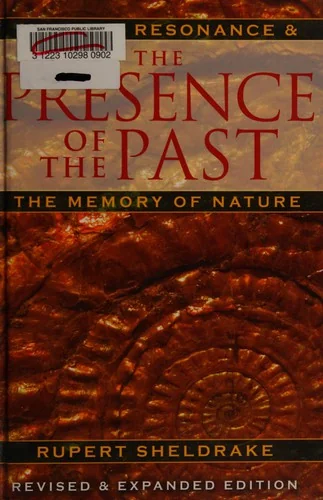
The Presence of the Past: Morphic Resonance and the Memory of Nature (Edition, Revised and Expanded)
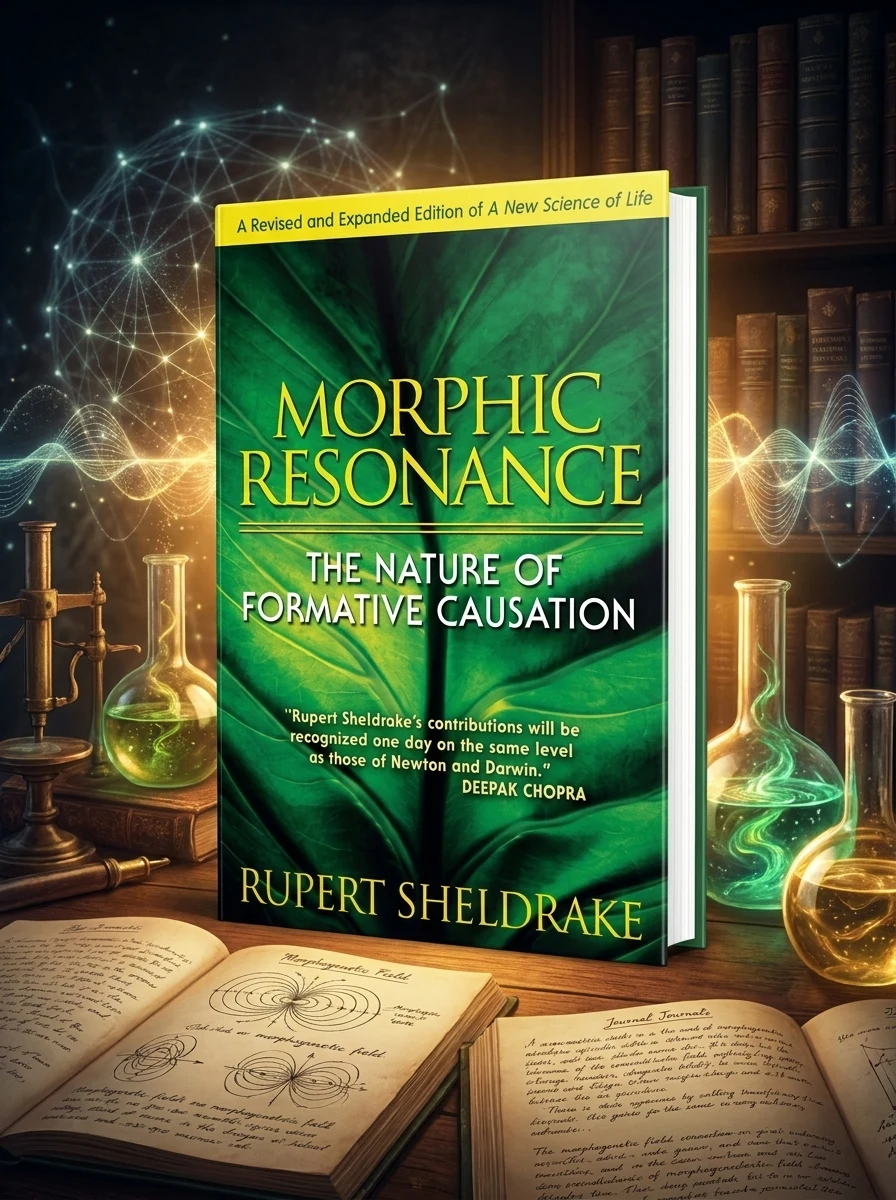
✍️ Sheldrake, RupertDive into Rupert Sheldrake's groundbreaking theory of morphic resonance, revealing how all self-organizing systems, from the simplest crystals to complex human societies, tap into and contribute to a universal collective memory. This revised edition presents compelling evidence that shapes everything from animal instincts and cultural inheritance to the very process of evolution itself. Sheldrake argues that nature operates not by immutable laws, but through deeply ingrained habits, challenging our understanding of causality and consciousness.


Praise for this book
“So compelling that it sets the reader to underlining words and scribbling notes in the margin.”
📝 Description: The Presence of the Past: Morphic Resonance and the Memory of Nature (Edition, Revised and Expanded)
📑 What's inside
- Preface to the 2012 Edition Acknowledgments Introduction
- The Habits of Nature
- The Plan of This Book
- 1 Eternity and Evolution
- Evolution in an Eternal World
- Physical Eternity
- Evolution
- The Evolutionary Universe
- Do the Laws of Nature Evolve?
- The Growth of Habits
- 2 Changeless Laws, Permanent Energy
- Intuitions of a Timeless Reality
- The Pythagoreans
- Platonism, Aristotelianism, and the Rise of Western Science
- From Nicholas of Cusa to Galileo
- Descartes and the Mechanical Philosophy
- Atomism and Materialism
- The Newtonian Synthesis
- The Theory of Relativity
- Quantum Theory
- Eternal Energy
- The Survival of Eternal Laws
- Repeatable Experiments
- 3 From Human Progress to Universal Evolution
- Faith in God's Purposes
- Faith in Human Progress
- Progressive Evolution
- Time for Very Slow Change
- The Tree of Life
- The Blind Watchmaker
- Evolving Organisms
- 4 The Nature of Physical Forms
- The Elusiveness of Form
- Philosophies of Form
- Platonic Physics and Chemistry
- Platonic Biology
- Aristotelian Biology
- Materialistic Biology
- Morphogenesis
- 5 The Mystery of Morphogenesis
- The Unsolved Problem of Morphogenesis
- Organisms Are Not Preformed
- The Regeneration of Wholeness
- The Germ-Plasm
- Entelechy
- Selfish Genes
- Genetic Programs
- The Duality of Matter and Information
- Why Genes Are Overrated
- Chemical Theories of Pattern Formation
- Organic Wholes
- 6 Morphogenetic Fields
- Fields of Different Kinds
- Morphogenetic Fields
- The Nature of Morphogenetic Fields
- The Evolution of Morphogenetic Fields
- The Hypothesis of Formative Causation
- Influence through Space and Time
- Morphic Fields
- Fields of Information
Showing the first 60 entries.
💎 Expert review
📖 Why choose it
Why this book is worth reading
Readers who feel that standard materialist science leaves a void in understanding consciousness and interconnectedness will find profound resonance here. Sheldrake invites you to view the world not as a machine, but as a living, remembering entity. If you are intrigued by the idea that crystals, animals, and human societies share a universal memory, this book offers a compelling framework. It is ideal for those seeking to reconcile scientific inquiry with spiritual wonder, offering a fresh perspective on how habits shape reality and evolution itself.
⭐ Reader reviews
Reader rating
Sheldrake’s theory is provocative, challenging our understanding of causality by suggesting nature relies on habit rather than fixed laws. While the concept of morphic resonance is fascinating, it remains controversial within mainstream science due to its speculative nature. This book may not suit readers who demand rigidly empirical data or those skeptical of metaphysical interpretations of biological processes. However, for open-minded seekers willing to explore the edges of scientific possibility, it provides a stimulating and thought-provoking alternative view of how self-organizing systems evolve and remember.
❓ Frequently asked questions
📖 Who should read this
If you're a curious seeker who questions established scientific paradigms and is open to a revolutionary understanding of how the universe organizes itself, this book offers profound insights. It's for anyone fascinated by the interconnectedness of life, collective consciousness, and the subtle forces shaping our world.
🎯 Key themes and symbolism
Morphic Resonance Explained
Explore the central concept that morphic fields serve as a conduit for collective memory, organizing and shaping the behavior and form of systems at every scale, from cells to entire ecosystems. This profound idea redefines our understanding of inherited traits and systemic organization.
Nature's Evolving Habits
Challenge the notion of fixed natural laws, as Sheldrake posits that the universe functions more like a living entity with evolving habits or memories. This perspective suggests that natural phenomena repeat because they've done so before, not just due to static principles.
Collective Memory's Reach
Witness the far-reaching implications of morphic resonance across various disciplines. From the consistent forms of crystals and the intricate instincts of animals to the shared patterns in human culture and the very substrate of consciousness, this theory connects all existence.
📜 Historical context
📚 Glossary
- Morphic Resonance
- Morphic Field
- Habits of Nature
📔 Questions to reflect on
- How does the concept of 'habits of nature' alter your perception of scientific laws and the predictability of the universe?
- Consider a collective human behavior or cultural trend. How might morphic resonance offer an alternative explanation for its prevalence or rapid spread?
- If your own consciousness contributes to a collective human memory, what responsibility might that imply for your thoughts and actions in the larger scheme of things?