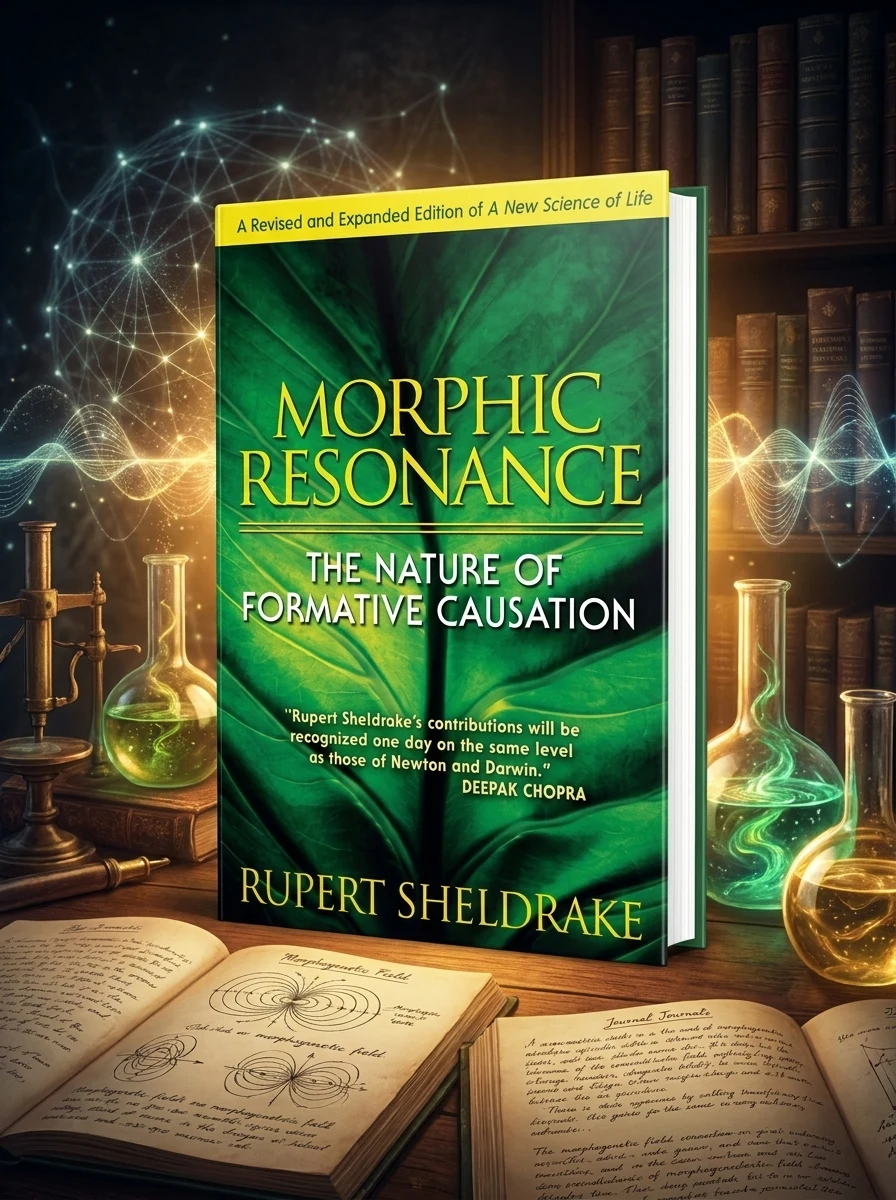
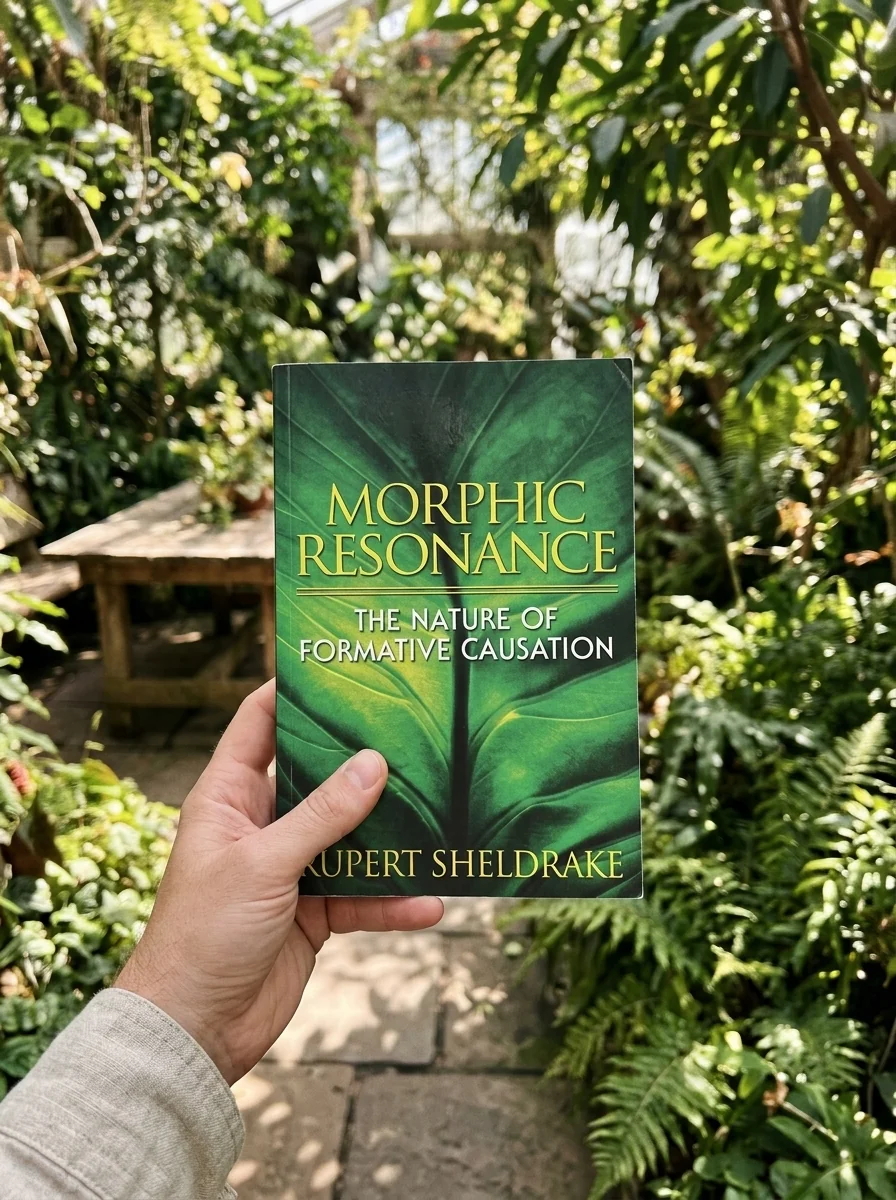
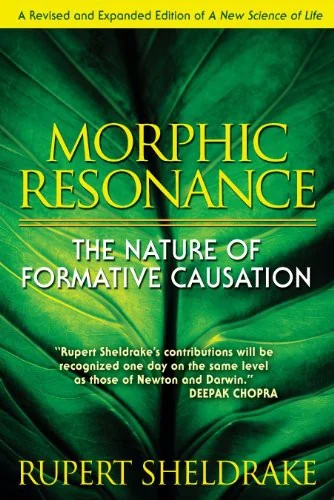
Morphic Resonance: The Nature of Formative Causation (Revised, Expanded)
✍️ Sheldrake, RupertRupert Sheldrake's controversial yet compelling work introduces 'morphic resonance,' a radical concept proposing that past forms and behaviors influence present ones through non-material connections. This expanded edition continues to challenge the prevailing mechanistic view of life, suggesting that nature's regularities are more akin to evolving habits than immutable laws. It delves into the profound implications of morphogenetic fields across biology, chemistry, and physics, offering a new lens through which to understand evolution, consciousness, and the very fabric of existence, sparking intense debate since its initial publication.


Praise for this book
“Sheldrake's theories continue to gain verification, and this book is particularly important because its implications affect the way we view the natural world, as well as ourselves, as one small part of it. Morphic Resonance is therefore strongly recommended to anyone interested in understanding current thought about what may lie behind the formation of all natural systems.”
📝 Description: Morphic Resonance: The Nature of Formative Causation (Revised, Expanded)
📑 What's inside
- Preface to the 2009 Edition Acknowledgments Introduction
- 1 The Unsolved Problems of Biology
- 1.1 The background of success
- 1.2 The problems of morphogenesis
- 1.3 Behavior
- 1.4 Evolution
- 1.5 The origin of life
- 1.6 Minds
- 1.7 Parapsychology
- 1.8 Conclusions
- 2 Three Theories of Morphogenesis
- 2.1 Descriptive and experimental research
- 2.2 Mechanism
- 2.3 Vitalism
- 2.4 Organicism
- 3 The Causes of Form
- 3.1 The problem of form
- 3.2 Form and energy
- 3.3 The structures of crystals
- 3.4 The structures of proteins
- 3.5 Formative causation
- 4 Morphogenetic Fields
- 4.1 Morphogenetic germs
- 4.2 Chemical morphogenesis
- 4.3 Morphogenetic fields as "probability structures"
- 4.4 Probabilistic processes in biological morphogenesis
- 4.5 Morphogenetic germs in biological systems
- 5 The Influence of Past Forms
- 5.1 The constancy and repetition of forms
- 5.2 The general possibility of trans-temporal causal connections
- 5.3 Morphic resonance
- 5.4 The influence of the past
- 5.5 Implications of an attenuated morphic resonance
- 5.6 An experimental test with crystals
- 6 Formative Causation and Morphogenesis
- 6.1 Sequential morphogeneses
- 6.2 The polarity of morphogenetic fields
- 6.3 The size of morphogenetic fields
- 6.4 The increasing specificity of morphic resonance during morphogenesis
- 6.5 The maintenance and stability of forms
- 6.6 A note on physical "dualism"
- 6.7 A summary of the hypothesis of formative causation
- 7 The Inheritance of Form
- 7.1 Genetics and heredity
- 7.2 Altered morphogenetic germs
- 7.3 Altered pathways of morphogenesis
- 7.4 Dominance
- 7.5 Family resemblances
- 7.6 Environmental influences and morphic resonance
- 7.7 The inheritance of acquired characteristics
- 7.8 Epigenetic inheritance
- 7.9 Experiments with phenocopies
- 8 The Evolution of Biological Forms
- 8.1 The neo-Darwinian theory of evolution
- 8.2 Mutations
- 8.3 The divergence of chreodes
- 8.4 The suppression of chreodes
- 8.5 The repetition of chreodes
- 8.6 The influence of other species
- 8.7 The origin of new forms
Showing the first 60 entries.
💎 Expert review
📖 Why choose it
Why this book is worth reading
Readers fascinated by the interconnectedness of all life will find profound value in this expanded exploration. It offers a compelling alternative to rigid scientific dogma, inviting you to view evolution as a dynamic process of habit rather than fixed law. Those seeking to understand consciousness and existence beyond material constraints will appreciate the bold theoretical framework. It is ideal for open-minded thinkers willing to question established norms about how nature operates across biology, chemistry, and physics.
⭐ Reader reviews
Reader rating
This text presents a radical vision of formative causation that will delight those eager to dismantle mechanistic views of life. However, it may frustrate readers who demand conventional empirical proof or strictly adhere to traditional scientific methodologies. The controversial nature of the theory means it lacks broad consensus, which might alienate skeptics expecting definitive answers. It is best suited for philosophical explorers rather than hardline empiricists. While intellectually stimulating and beautifully argued, its speculative depth requires a willingness to embrace uncertainty and non-material connections as valid explanatory tools.
❓ Frequently asked questions
📖 Who should read this
If you question conventional scientific dogma and seek a broader understanding of life's interconnectedness, this revised edition offers profound insights into evolution, consciousness, and the very fabric of reality. Prepare to have your worldview expanded by a truly original mind.
🎯 Key themes and symbolism
Resonant Forms & Habits
Sheldrake posits that organisms, and even crystals, are not merely products of genetics or physical forces, but inherit a collective memory from similar past systems. This 'morphic resonance' influences their development and behavior, suggesting that nature operates through ingrained, evolving habits rather than strict, unyielding laws, fundamentally altering our understanding of inheritance.
Beyond Material Limits
This book boldly ventures beyond the confines of purely material science, introducing the concept of non-physical 'morphogenetic fields.' These fields are proposed to facilitate direct, non-local communication across time and space, providing a framework for understanding how systems are organized and connected in ways that defy conventional reductionist explanations, fostering a holistic worldview.
Evolution Reimagined
By proposing that formative causation, guided by morphic resonance, shapes development, Sheldrake offers a profound reinterpretation of evolution. He suggests that the past experiences and forms of a species contribute to the development of its future generations, providing a dynamic, memory-infused model of natural development that complements and extends Darwinian theory.
📜 Historical context
📚 Glossary
- Morphic Resonance
- Morphogenetic Fields
- Formative Causation
📔 Questions to reflect on
- How might the concept of morphic resonance influence your understanding of personal habits, cultural traditions, or even collective human consciousness?
- If organisms inherit collective memory, what profound implications does this have for the processes of evolution, learning, and the very nature of biological inheritance?
- Consider a phenomenon you observe in nature or society. How might Sheldrake's ideas offer an alternative or complementary explanation to purely mechanistic or reductionist ones?