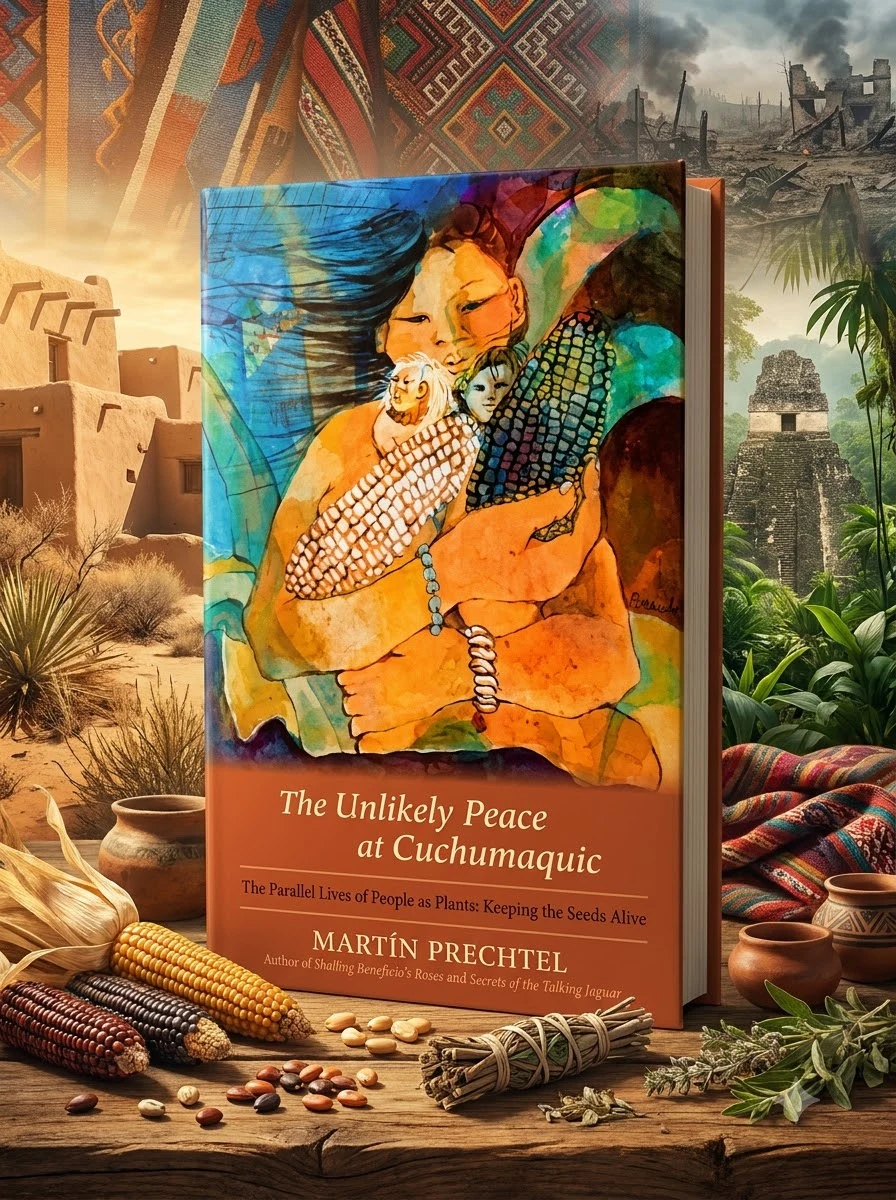
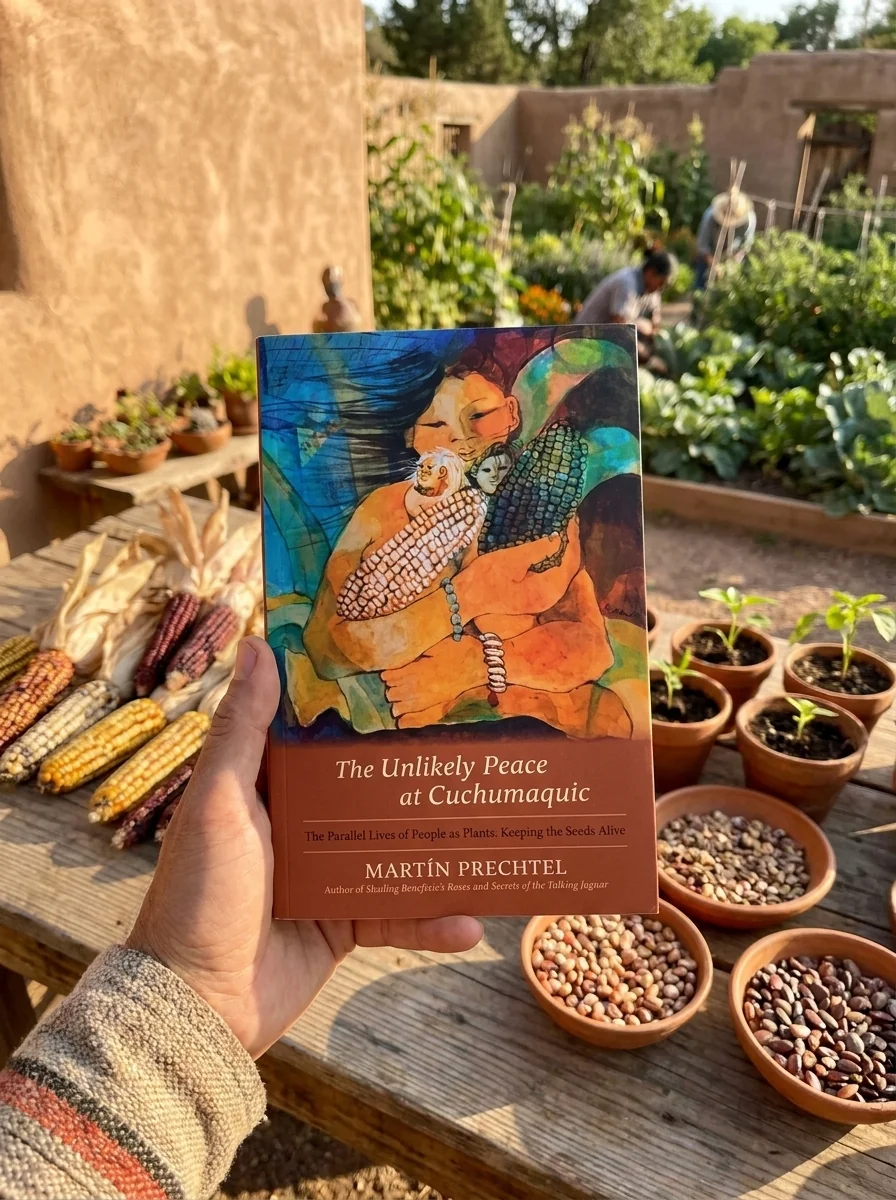
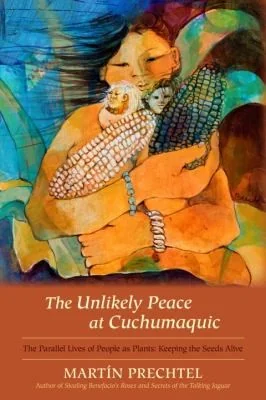
The Unlikely Peace at Cuchumaquic: The Parallel Lives of People as Plants: Keeping the Seeds Alive
✍️ Prechtel, MartínA shamanic memoir connecting indigenous seed preservation with human spiritual survival.
Rooted in Pueblo and Tzutujil Mayan traditions, this four-part volume examines how human culture dies when authentic, unmonetized plant seeds disappear. Prechtel draws on his experiences as a village leader in Santiago Atitlán to demonstrate that ancient spiritual wisdom must be actively replanted to survive modern extinction. Through original accounts of indigenous life, memory, and sacred agriculture, the narrative presents practical and metaphorical seed keeping as an urgent response to global ecological crisis.
This work emerges from twentieth-century Pueblo reservation life and the Tzutujil Mayan community of Santiago Atitlán, Guatemala. It addresses the destruction of traditional practices following the Guatemalan civil war and the modern global loss of indigenous seeds.


Praise for this book
“Prechtel's words are like the wildly colored heirloom kernels of corn born of ancestral knowledge that traditional Maya farmers prayerfully place into the holy earth. Once planted, the author waters these sacred seeds of the Indigenous Soul with heartfelt compassion for a spiritually disconnected humanity in this period of global transformation. May these sprouts of indigenous awareness flourish and produce vital seeds for a collective return to an awareness of our oneness with nature.”
“Martín Prechtel has seen it all: He grew up on a Pueblo Indian reservation, was apprenticed to a Guatemalan medicine man and settled in the United States after fleeing the Guatemalan civil war. The Unlikely Peace at Cuchumaquic: The Parallel Lives of People as Plants: Keeping the Seeds Alive (North Atlantic Books) relates the preservation of seeds and plant life to the similar seeds of spirituality in human life as he chronicles his own life journey.”
“A haunting and enchanting prose poem that encompasses a shattering earthquake, the rapacious disaster capitalism that fed on it, and the resilience of an indigenous culture whose authenticity carried it through those dark times.... Martín Prechtel's deep wisdom has given us a model that can be replicated everywhere, so that from the moral bankruptcy and collapse of global capitalism a true human culture, in union with the wild, can emerge.”
📝 Description: The Unlikely Peace at Cuchumaquic: The Parallel Lives of People as Plants: Keeping the Seeds Alive
📑 What's inside
- Preface
- A Note on Writing with Native Words
- Part I. The Unlikely Peace at Cuchumaquic
- Chapter 1. Always a Place at the Table
- Chapter 2. Star Arches, the Lurching Earth, and the Seed-eyed God
- Chapter 3. The Unlikely Peace at Cuchumaquic
- Part II. The Life of People as Plants
- Chapter 4. In the Shade of the Fire Flower
- Chapter 5. The Fiery Speech of Seeds as Time
- Chapter 6. The Miraculous Return of the Tree of Time
- Chapter 7. The Frenchman Gets Everything
- Chapter 8. Checkmated by My Love
- Chapter 9. People as Seeds, Their Youth as Chocolate, the Dead Echoing Back to Life
- Part III. Keeping the Seeds Alive
- Chapter 10. Burning Up the Memory
- Chapter 11. The Seeds Come Back Riding Little Bald Gourd
- Chapter 12. Swimming Past the Dogs of Amnesia, the Seeds Disappear into the Redwoods
- Chapter 13. The Six Donancianas
- Chapter 14. Tunneling Past Centuries, Red Corn in Their Cheeks, the Old Ladies Scurry into View
- Chapter 15. Here's Your Damned Corn
- Chapter 16. From Their Motley Hands, the Motley Seeds Surprise the People into Beauty
- Chapter 17. Seeds of Birth and Seeds of Death Return, Carrying the Whole World
- Part IV. Our Agreement with the Holy in Nature
- Chapter 18. Our Ancient Seed Jar
- Chapter 19. The Marriage Contract with the Wild
- Chapter 20. Keeping Our Agreement with the Wild:
- Our Ancient Seed Jars: Finding an Agreement to Keep
- Sprout 1. There Has to Be Wild Land, Air, and Sea
- Sprout 2. The Veld-Sacred Feral Land
- Sprout 3. All Origins Must Be Known-Where the Seeds Go, So the Agreement Must Go
- Sprout 4. When the People Marry, the Seeds Marry
- Sprout 5. Kneel at the Feet of the Mother of the Food You Eat and Ask Her to Adopt You
- Sprout 6. Beautiful Farming
- Sprout 7. A Temple Called a Field
- Sprout 8. The Majesty of Decay
- Sprout 9. The Body of the Plants City
- Sprout 10. Offerings-Farmers as the Jewelers of Vitality
- Sprout 11. Kiss Your Pumpkins-Sacred Pantry Temples
- Sprout 12. Learning to Live Beyond Our Time-The Dead Must Feed the Living
- Chapter 21. The House of Origins
- Chapter 22. The Famous Story of One Eye
- Glossary of Non-English Words
- New Words and Redefined Words as Understood in This Book
- About the Author
💎 Expert review
📖 Why choose it
Why this book is worth reading
Readers seeking a profound spiritual reawakening and a deeper understanding of their place within the ecological web will find this book transformative. It is ideal for those interested in indigenous wisdom, shamanic practices, and the urgent intersection of biodiversity and human culture. If you feel a disconnect from your ancestral roots or the earth itself, Prechtel’s narrative offers a compelling path to restoration. The book appeals to seekers who value personal narrative as a vehicle for universal truth, urging them to nurture the seeds of both ecological health and human excellence. It is a call to return to meaningful, rooted culture, providing hope and practical spiritual insight for navigating modern existential crises through ancient, earth-centered perspectives.
⭐ Reader reviews
Reader rating
Prechtel delivers a potent blend of memoir and philosophical treatise, weaving personal history with urgent cultural critique. While the narrative is deeply moving and intellectually stimulating for those aligned with ecological spirituality, it may not suit readers seeking detached academic analysis or pure fiction. Those uncomfortable with spiritual imperatives or indigenous worldviews might find the tone overly prescriptive. However, for the right audience, it is a masterful meditation on existence that challenges us to recognize our deep connection to the earth. The work succeeds in its goal of urging a return to rooted culture, offering a vital perspective on survival and spiritual heritage without relying on complex jargon.
❓ Frequently asked questions
📖 Who should read this
If you are drawn to profound spiritual ecology, seek to understand the vital links between indigenous wisdom and planetary health, or feel a stirring to reclaim deeper cultural meaning, this book will speak directly to your soul. Prepare for a transformative journey beyond conventional thought.
🎯 Key themes and symbolism
Indigenous Wisdom & Spirit
Prechtel's formative years in a Pueblo community and his intensive shamanic training in Guatemala provide a unique lens through which he interprets modern crises. He draws upon these profound indigenous traditions to illuminate alternative ways of understanding our place in the natural and spiritual world, offering ancient wisdom as a compass for contemporary challenges.
Ecological & Cultural Survival
The book passionately argues that the loss of biodiversity, particularly through the extinction of natural seeds, directly parallels the erosion of authentic human cultures. Prechtel illustrates how both real plants and genuine human societies require specific, nurturing conditions to thrive, linking environmental conservation inextricably with the preservation of our collective spirit and shared values.
Reclaiming Spiritual Excellence
At its heart, this is a clarion call for humanity to rediscover its inherent, yet often forgotten, spiritual potential. Prechtel champions the idea that true human culture must be as essential and nourishing to the soul as food is to the body, advocating for a return to meaningful engagement that cultivates our deepest spiritual 'seeds'.
📜 Historical context
📚 Glossary
- Cuchumaquic
- Spiritual Excellence
- Keeping the Seeds Alive
📔 Questions to reflect on
- How do you perceive your own "spiritual seeds," and what practices might help them flourish in your daily life?
- Reflect on a specific aspect of modern culture that you feel contributes to the "loss of seeds," either literally or metaphorically. What small steps could counteract this?
- Consider the parallel between endangered plant species and vanishing cultural traditions. How might understanding one inform your appreciation or efforts for the other?