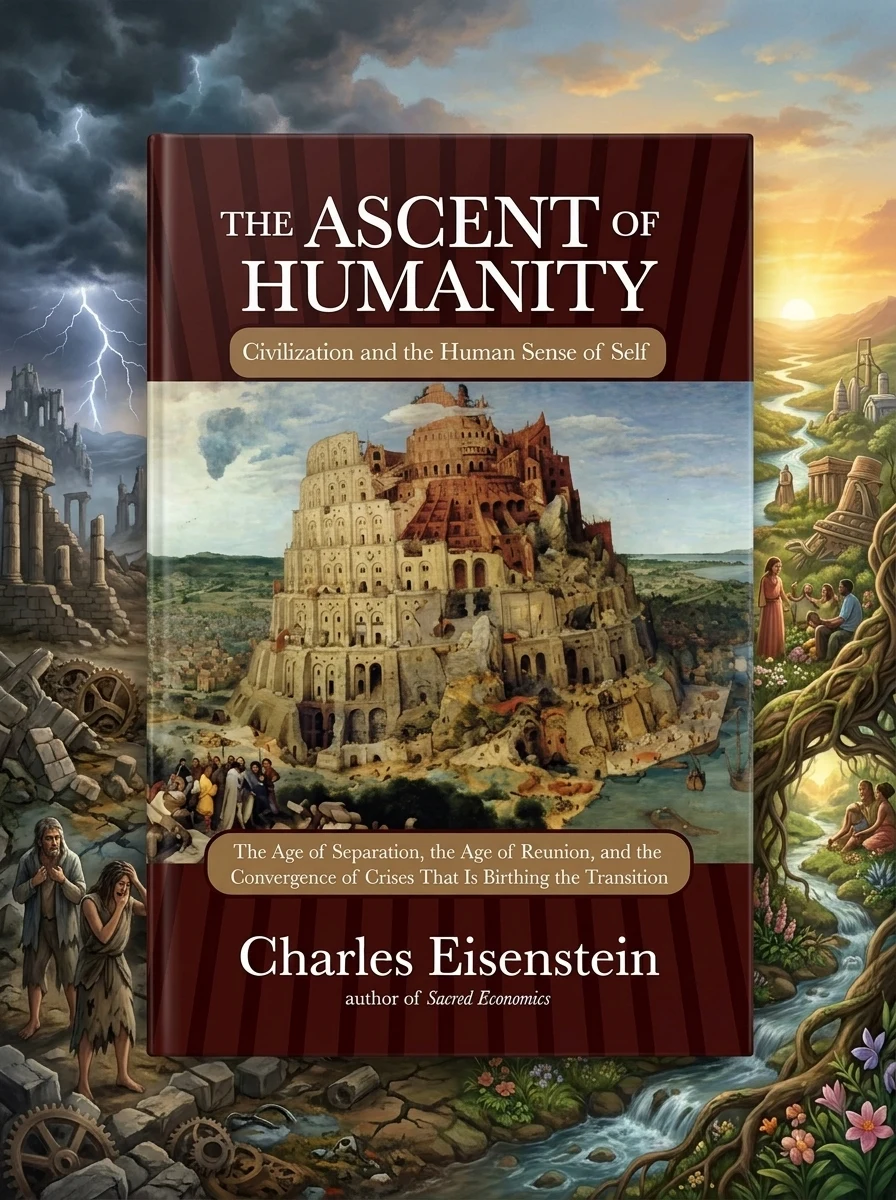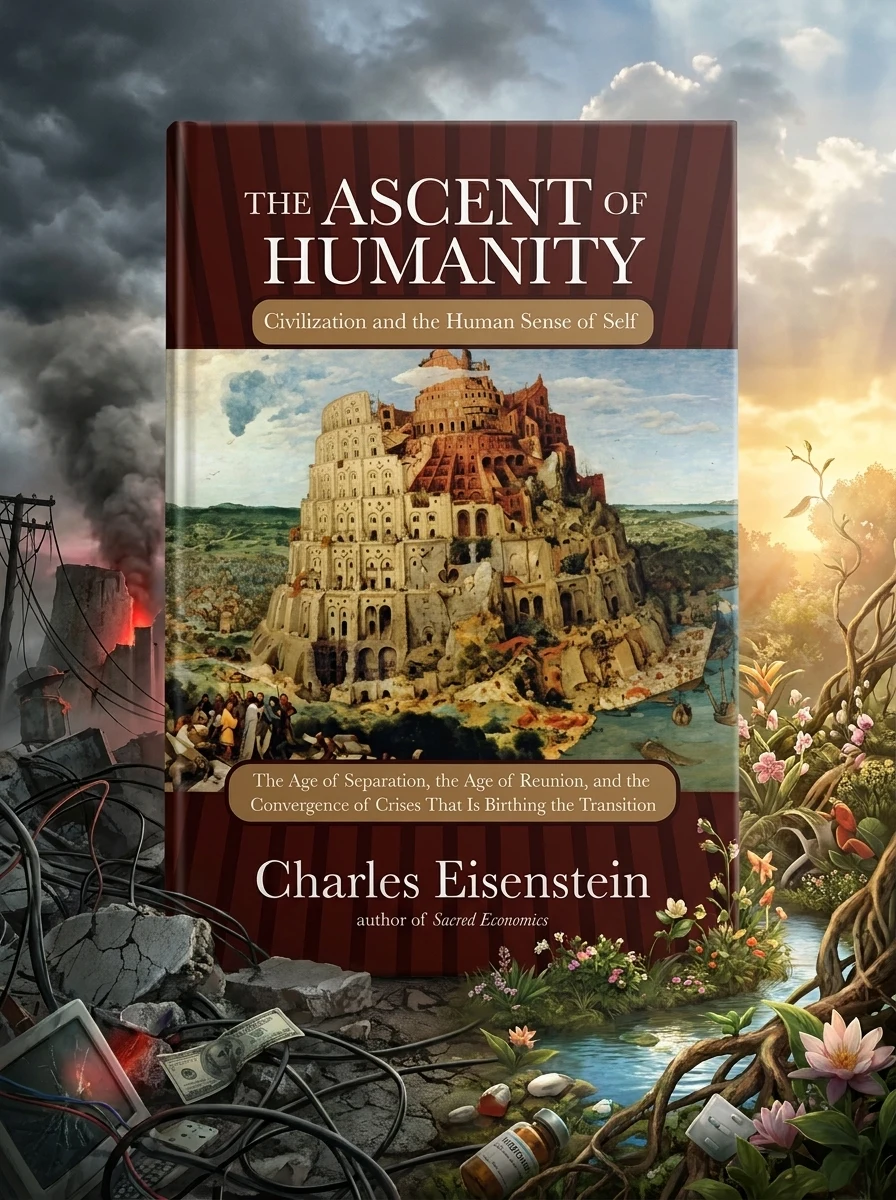
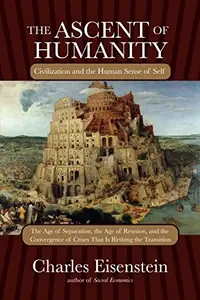
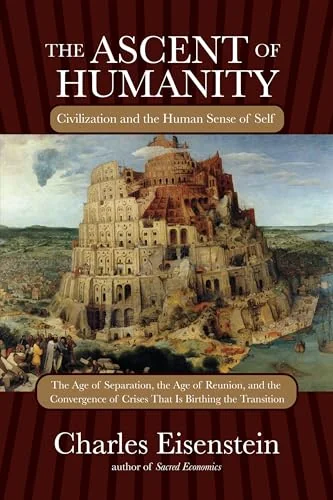
The Ascent of Humanity: Civilization and the Human Sense of Self
Eisenstein, Charles

This edition can be ordered. No arrival date is confirmed.
Our deepest crises stem from a fractured sense of self and world.
Charles Eisenstein brilliantly navigates humanity's journey, revealing how our pervasive illusion of individual separation has profoundly shaped civilization. He meticulously uncovers this foundational disconnect across science, economics, and technology, exposing its role in our current global challenges. Far from a misstep, Eisenstein posits this journey of isolation as an evolutionary phase, a necessary step toward an emergent 'Age of Reunion.' This transformative work invites readers to fundamentally reconsider our societal structures, urging a shift from control-based paradigms to a more integrated, beautiful future rooted in interconnectedness rather than endless expansion.
This work sits firmly within the contemporary esoteric and philosophical discourse on systemic change, bridging the gap between ancient spiritual insights and modern ecological crisis. It aligns with the New Age tradition of seeking holistic solutions to civilizational fractures through a reimagined sense of self.


📝 Description: The Ascent of Humanity: Civilization and the Human Sense of Self
💎 Expert review
📖 Why choose it
Why this book is worth reading
This book is essential for those who feel the deep, intuitive pull toward a more connected existence but struggle to articulate the systemic roots of their disillusionment. Readers seeking to understand the philosophical underpinnings of our current global crises will find profound clarity here. It offers not just criticism, but a hopeful vision of an 'Age of Reunion' for those ready to abandon control-based paradigms. If you are tired of endless expansion and crave a future rooted in interconnectedness, this transformative guide invites you to reconsider your role in society. It is a compassionate call to integrate the fractured sense of self, making it vital for spiritual seekers, ecologists, and anyone yearning for a beautiful, unified world beyond the illusion of separation.
⭐ Reader reviews
Reader rating
Eisenstein presents a compelling narrative that dissects the illusion of individual separation with surgical precision across science and economics. While his vision of an evolutionary phase toward reunion is inspiring, this text demands patience from readers accustomed to quick fixes or strictly empirical data. Those seeking dry academic analysis or those deeply invested in maintaining the status quo of control-based power structures may find the philosophical breadth overwhelming or unsettling. It is best suited for open-minded explorers willing to sit with discomfort. The writing is dense with conceptual weight, requiring active engagement rather than passive consumption. Ultimately, it is a challenging but rewarding journey for those prepared to dismantle their foundational assumptions about civilization and self.
❓ Frequently asked questions
📖 Who should read this
If you sense the systemic cracks in our world and seek a profound re-evaluation of humanity's trajectory, this book offers a crucial lens. It's for those ready to question foundational beliefs and embrace a radically interconnected, more beautiful future, moving beyond conventional solutions.
🎯 Key themes and symbolism
The Fragmented Self
Eisenstein argues that our modern understanding of self as isolated and distinct from others and nature is not inherent, but a powerful illusion. This fundamental separation, he demonstrates, underpins many of society's most pressing issues, influencing everything from our economic systems to our personal relationships and spiritual lives, leading to a profound sense of alienation.
Civilizational Crisis & Interconnection
The book meticulously links the 'illusion of the separate self' to the converging global crises we face today—environmental degradation, social inequality, and technological discontents. Eisenstein reveals how our relentless pursuit of individual gain and control, born from this perceived separation, pushes both humanity and the planet to the brink of collapse, demanding a radical re-evaluation of our collective path.
Emergence of Reunion
Despite the daunting challenges, Eisenstein offers a hopeful vision of an 'Age of Reunion.' He suggests our current turmoil is not merely decline but a painful birth pangs of a new consciousness, a collective awakening to our intrinsic interconnectedness. This shift entails moving beyond old models of management and control, fostering a civilization designed for beauty, empathy, and holistic integration.
💬 Quotes from the book
“The edifice of modern civilization, built upon the sand of individualism, now cracks under the weight of its own isolation.”
“True progress isn't found in building higher, but in deepening our roots into the shared soil of existence.”
📜 Historical context
📚 Glossary
- Illusion of the Separate Self
- Age of Reunion
- Babelian Efforts
📔 Questions to reflect on
- Reflect on a personal experience where you felt deeply connected to others or nature. How did this feeling contrast with moments of perceived isolation?
- Consider a current societal challenge (e.g., climate change, economic inequality). How might the 'illusion of the separate self' contribute to its persistence?
- Envision a world where the 'Age of Reunion' has fully blossomed. What changes would you observe in your daily life, community, and global interactions?
✍️ More books by this author Eisenstein, Charles
All books by this author →

🏛 Books from this publisher North Atlantic Books
All books from this publisher →



You might also like
See more →