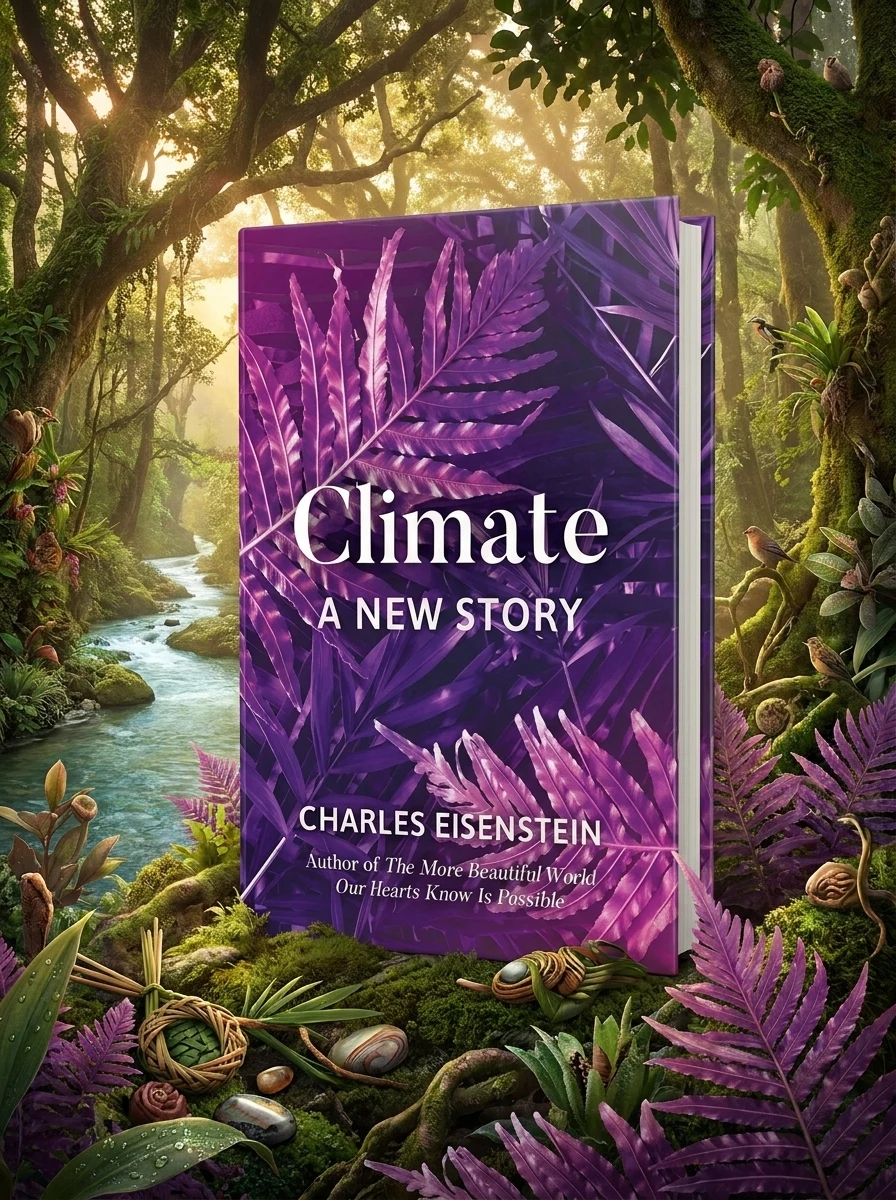


Climate: A New Story
Eisenstein, Charles

This edition can be ordered. No arrival date is confirmed.
Beyond carbon credits, discover a sacred path to healing our planet.
Charles Eisenstein challenges the conventional environmental narrative, urging readers to transcend a reductionist, battle-oriented mindset. He meticulously details how quantifying the natural world, often through metrics like carbon credits, diminishes our innate connection to it. Instead, Eisenstein proposes a profound paradigm shift, advocating for the recognition of all natural entities—rivers, forests, creatures—as inherently sacred and valuable. By expanding our focus beyond singular issues and fostering deep emotional bonds with the earth, this work illuminates a more integrated and compassionate approach to environmental stewardship, moving beyond fear-driven narratives toward genuine connection and actionable care.
This work emerges from the contemporary eco-spiritual movement, bridging esoteric philosophy with modern environmental discourse. It aligns with traditions that view nature not as a resource but as a sacred entity deserving of reverence and emotional connection.


📝 Description: Climate: A New Story
💎 Expert review
📖 Why choose it
Why this book is worth reading
Readers seeking a spiritual alternative to dry policy debates will find profound comfort here. If you feel exhausted by fear-based environmental messaging and disconnected from the natural world, this book offers a healing path. It is ideal for those who value deep emotional bonds with rivers and forests over cold metrics like carbon credits. By shifting focus from reductionist battles to sacred stewardship, it empowers individuals to act out of genuine love rather than anxiety. This volume is perfect for anyone ready to transcend conventional narratives and embrace a compassionate, integrated approach to caring for our planet, restoring the innate sense of connection that modernity often obscures.
⭐ Reader reviews
Reader rating
Eisenstein’s argument is compelling for those weary of transactional environmentalism, offering a refreshing shift toward sacredness. However, readers preferring concrete policy solutions or hard scientific data may find this approach too abstract or emotional. It does not suit those who view nature solely through the lens of utility or economic exchange. The text demands an openness to paradigm shifts rather than immediate actionable checklists. While inspiring for spiritual seekers, it may frustrate pragmatists looking for specific technical fixes to ecological crises, as it prioritizes internal transformation over external regulatory frameworks.
❓ Frequently asked questions
📖 Who should read this
If you're weary of conventional environmental discourse and seek a deeper, more spiritually resonant approach to ecological challenges, this book is for you. It offers a refreshing perspective for anyone yearning to move beyond guilt and fear, towards a profound, heartfelt connection with our living planet.
🎯 Key themes and symbolism
Beyond Quantitative Reductionism
Eisenstein critically examines how reducing nature to mere data points, economic values, or isolated problems detaches humanity from its intrinsic sanctity. This theme explores how such a narrow, analytical perspective inadvertently hinders genuine healing, fostering a combative mentality rather than nurturing holistic understanding, respect, and integration with the natural world's profound complexity.
The Sacredness of Nature
This book passionately advocates for recognizing the inherent spiritual and material value of ecosystems, waterways, and diverse wildlife. It posits that authentic environmental stewardship springs from a deep, personal reverence for life itself, transcending utilitarian justifications such as carbon sequestration or species preservation solely for human benefit, instead embracing nature's intrinsic worth.
Reframing Ecological Action
Challenging the pervasive 'war on climate change' narrative, Eisenstein suggests this approach often creates division and limits effective solutions. He proposes shifting towards integrative strategies that cultivate meaningful emotional and psychological bonds with the environment. This reframing inspires genuine care and proactive steps rooted in love and connection, rather than being driven by fear or a sense of inevitable doom.
💬 Quotes from the book
“When we reduce a forest to its carbon sequestration potential, we lose sight of its soul, its vibrant community of life.”
“True environmentalism isn't born from fear of catastrophe, but from the quiet awe inspired by a river, a forest, a wild creature.”
📜 Historical context
📚 Glossary
- Quantification
- Biocentric
- War Mentality
📔 Questions to reflect on
- Reflect on a personal experience in nature that ignited a sense of wonder or connection within you. How did that moment shape your perspective on the environment?
- Consider an environmental issue you care deeply about. How might your approach change if you viewed it through a lens of 'sacred connection' rather than 'fighting a problem'?
- Eisenstein suggests our 'fight' mentality hinders healing. What personal 'fights' might you transform into 'integrative connections' in your own life?
✍️ More books by this author Eisenstein, Charles
All books by this author →

🏛 Books from this publisher North Atlantic Books
All books from this publisher →




You might also like
See more →