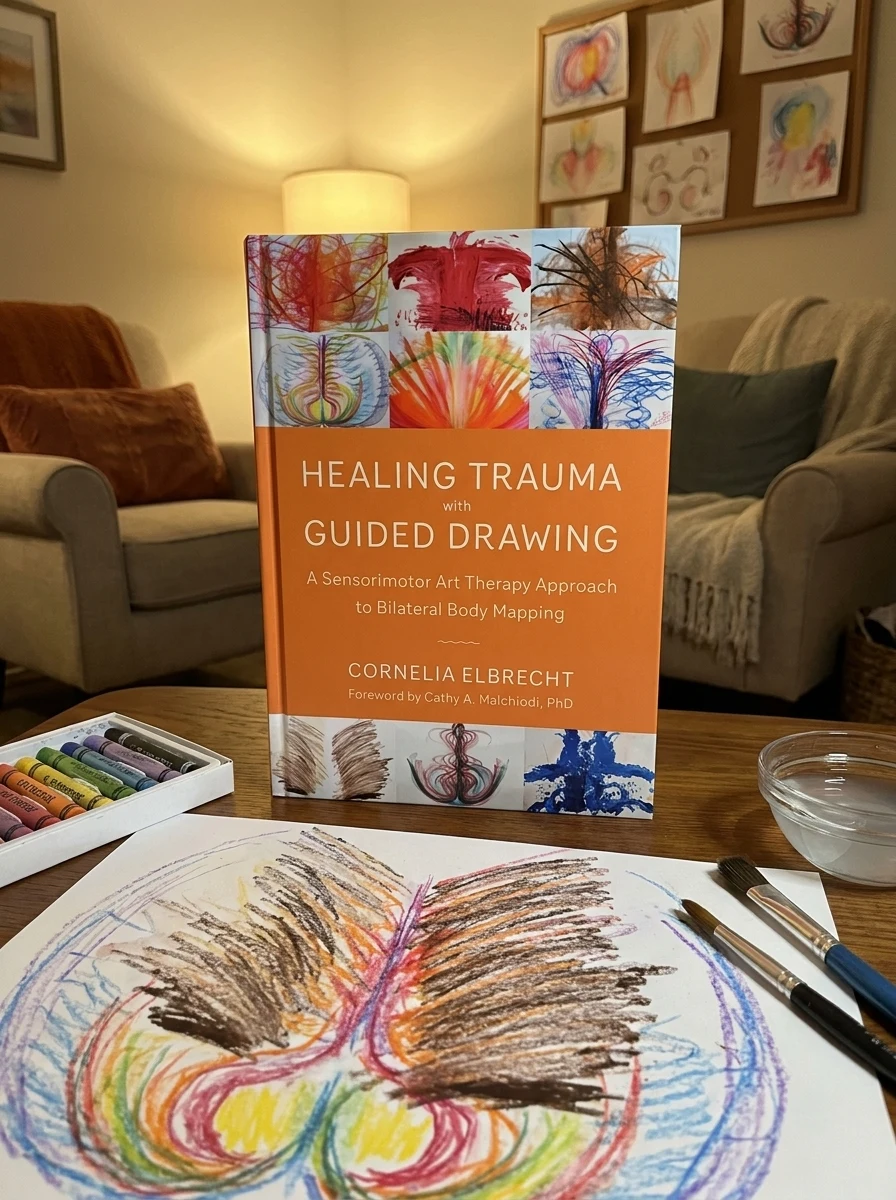
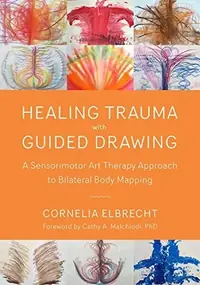
Healing Trauma with Guided Drawing: A Sensorimotor Art Therapy Approach to Bilateral Body Mapping


Stock reported in the catalog; fulfillment is confirmed with your request.
Unbind trauma through bilateral scribbles and closed-eye mapping to reclaim bodily sovereignty.
Cornelia Elbrecht introduces a radical departure from traditional art therapy by prioritizing somatic sensation over symbolic interpretation. Through guided drawing techniques that engage both hands and close the eyes, clients access their felt sense directly. This method utilizes bilateral scribbling to externalize physical tension and unspoken emotions without the burden of language. By interpreting archetypal shapes and employing massage-like movements, practitioners help clients discharge stored stress and repair psychological boundaries. This sensorimotor approach empowers individuals with complex trauma to move from helplessness to active regulation, offering a vital bridge between artistic expression and nervous system healing.
This work sits at the intersection of contemporary somatic psychology and esoteric body-mapping traditions, bridging clinical trauma recovery with intuitive, non-verbal spiritual practices.


📝 Description: Healing Trauma with Guided Drawing: A Sensorimotor Art Therapy Approach to Bilateral Body Mapping
💎 Expert review
📖 Why choose it
Why this book is worth reading
Readers grappling with complex trauma and the limitations of verbal therapy will find profound relief in this sensorimotor approach. By prioritizing felt sensation over symbolic interpretation, Elbrecht offers a vital pathway for those who feel stuck in helplessness. The technique of bilateral scribbling allows individuals to externalize physical tension and unspoken emotions without the burden of language, reclaiming bodily sovereignty. It is ideal for practitioners and clients seeking to bridge artistic expression with nervous system healing, empowering users to move from passive suffering to active regulation through closed-eye mapping and archetypal interpretation.
⭐ Reader reviews
Reader rating
Elbrecht provides a radical departure from traditional art therapy by focusing on somatic sensation rather than symbolic analysis. This method effectively utilizes bilateral scribbling to discharge stored stress, offering a practical tool for repairing psychological boundaries. However, it does not suit readers seeking intellectual abstraction or those who prefer strictly verbal cognitive processing. The reliance on physical movement and closed-eye exercises may feel awkward or inaccessible to individuals with severe motor impairments or those deeply skeptical of non-verbal modalities. It is best for those willing to engage their bodies directly in the healing process.
❓ Frequently asked questions
📖 Who should read this
Ideal for somatic practitioners, art therapists, and bodyworkers seeking non-verbal tools to help clients process complex trauma through physical sensation rather than cognitive analysis.
🎯 Key themes and symbolism
Bilateral Body Mapping
Somatic Experiencing
Nonverbal Trauma Processing
💬 Quotes from the book
“Clients draw with both hands and eyes closed as they focus on their felt sense.”
“Repair boundary breaches through massage-like movements.”
📜 Historical context
📚 Glossary
- Felt Sense
- Bilateral Mapping
- Sensorimotor
📔 Questions to reflect on
- Where do you feel resistance in your body when you attempt to create without visual guidance?
- How does the sensation of bilateral movement alter your emotional state compared to unilateral action?
- What archetypal shapes emerge when you let go of conscious intent and follow physical impulse?
🏛 Books from this publisher North Atlantic Books
All books from this publisher →




You might also like
See more →