
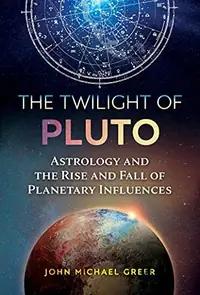
The Twilight of Pluto: Astrology and the Rise and Fall of Planetary Influences
Greer, John Michael

This edition can be ordered. No arrival date is confirmed.
Uncover the hidden astrological currents shaping our world through planetary demotions.
John Michael Greer offers a compelling astrological thesis: just as a planet's discovery heralds new influences, its reclassification or disappearance from the astronomical canon signals a decline in its energetic impact. This work delves into the ebb and flow of cosmic forces, arguing that a planet's demotion initiates a roughly three-decade period during which its previously potent astrological symbolism gradually fades from collective consciousness and individual experience. Greer meticulously charts Pluto's journey from discovery to its 2006 reclassification, projecting the eventual cessation of its pervasive influence by 2036, alongside other historical examples like Ceres.
This work situates itself within the modern esoteric tradition of astrology, specifically addressing the intersection of astronomical classification and occult symbolism in contemporary times. It engages with ongoing debates regarding how planetary reclassifications impact spiritual and psychological frameworks.


📝 Description: The Twilight of Pluto: Astrology and the Rise and Fall of Planetary Influences
💎 Expert review
📖 Why choose it
Why this book is worth reading
Readers fascinated by the intersection of astronomy and occultism will find this book a compelling exploration of how planetary status influences collective consciousness. Those interested in the evolving nature of astrological symbolism, particularly regarding Pluto and Ceres, will appreciate Greer’s thesis on the gradual fading of energetic impacts following demotion. It offers a unique perspective for practitioners who seek to understand the temporal dynamics of cosmic forces and their diminishing effects over decades. By linking historical reclassifications with current astrological shifts, the book provides valuable insight for those navigating the changing landscape of planetary influences.
⭐ Reader reviews
Reader rating
Greer presents a provocative thesis that may alienate traditionalists who view astrological symbols as immutable regardless of scientific categorization. The argument relies heavily on the correlation between astronomical status and energetic potency, which might feel speculative to readers preferring established doctrinal frameworks. However, for those open to dynamic models of cosmic influence, the analysis is rigorous and thought-provoking. It does not suit individuals seeking definitive, static astrological rules or those uninterested in the philosophical implications of planetary demotions. The work is best appreciated as a theoretical exploration rather than a practical manual.
❓ Frequently asked questions
📖 Who should read this
If you're an astrologer, a student of Western esotericism, or simply curious about the subtle energetic undercurrents that shape human history and consciousness, this book offers a paradigm-shifting perspective. Prepare to rethink foundational astrological assumptions.
🎯 Key themes and symbolism
Planetary Influence Cycles
Greer meticulously outlines a cyclical model where planetary discoveries introduce new astrological archetypes and energies into human experience, while their subsequent demotion initiates a slow, thirty-year fading of these once-dominant influences, fundamentally reshaping our understanding of cosmic connection.
Pluto's Astrological Arc
The book offers an in-depth examination of Pluto's specific journey, from its 1930 discovery and the rise of its profound transformative and subterranean associations, through its 2006 reclassification, predicting the ultimate dissolution of its distinct astrological impact by the mid-2030s.
Historical Astrological Precedents
Beyond Pluto, Greer draws upon historical cases such as Ceres, detailing how its brief, influential period as a planet aligned precisely with the Romantic era. These examples provide empirical support for his theory, illustrating the consistent pattern of planetary reclassification mirroring shifts in human culture and psychology.
💬 Quotes from the book
“The cosmos, in its grand design, does not merely add new colors to its palette with each discovery; it also subtly erases old ones when our perception of them shifts.”
“To understand Pluto's fading grip, one must look not merely to its orbital path, but to the collective psyche's changing narrative around what constitutes 'planet' itself.”
📜 Historical context
📚 Glossary
- Planetary Demotion
- Planetary Influence
- Hermetism
📔 Questions to reflect on
- Reflect on a significant historical period in your lifetime. Can you identify any cultural or societal shifts that might align with the waxing or waning of a particular planetary archetype, even if not directly tied to a demotion?
- Consider your own astrological chart. How might your understanding of Pluto's influence, or that of other "demoted" bodies, change if you consider its energies to be on a gradual decline?
- If human consensus and scientific reclassification can alter astrological influence, what does this imply about the nature of reality and our subjective relationship with cosmic forces?
✍️ More books by this author Greer, John Michael
All books by this author →


🏛 Books from this publisher Inner Traditions International
All books from this publisher →





You might also like
See more →