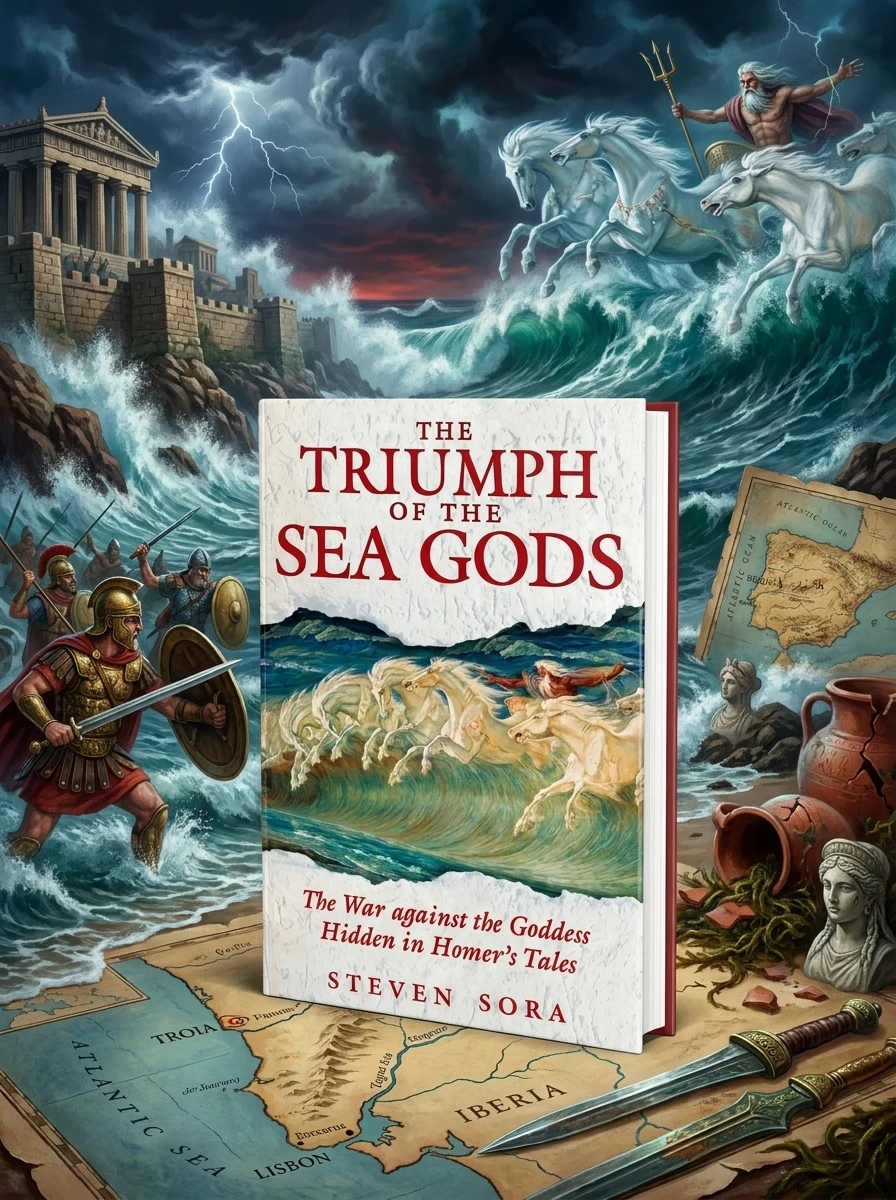
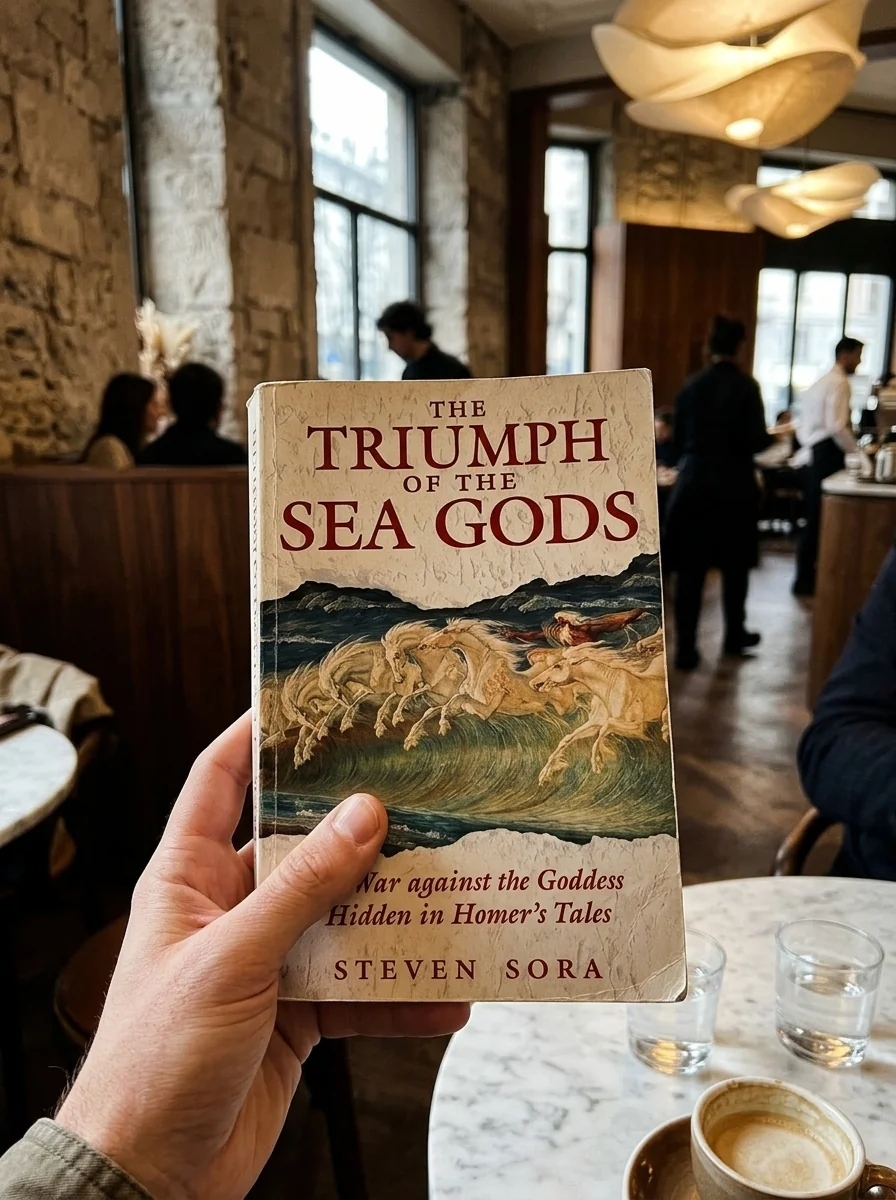
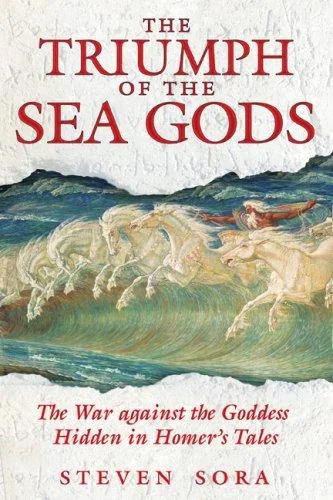
The Triumph of the Sea Gods: The War Against the Goddess Hidden in Homer's Tales
✍️ Sora, StevenSteven Sora radically reinterprets Homer's iconic tales, arguing that their true setting isn't the Mediterranean, but the Iberian Peninsula around 1200 BCE. He posits that a catastrophic sea-level rise led to the invasion of advanced 'Atlantean' sea peoples, who clashed with the goddess-worshipping cultures of the Atlantic coast. This conflict, with Troy located near modern-day Lisbon, marked a profound spiritual and political turning point, demonizing the feminine principle and reshaping the course of Western civilization and mythology, including the very narrative structure of Homeric epics.


Praise for this book
“Steve Sora boldly confronts one of the seminal events of Western civilization to debunk long-held assumptions concerning the Trojan War. The fresh perspective that emerges removes the tale from its classical location on the Aegean shores of Asia Minor and moves it to the lost civilization described by Plato, a task Sora accomplishes with dramatic clarity and thought-provoking credibility.”
📝 Description: The Triumph of the Sea Gods: The War Against the Goddess Hidden in Homer's Tales
📑 What's inside
- Acknowledgments
- Introduction: The Real War against Troy
- 1 Homer and Greek "History"
- 2 Homer and "Greek" Literature
- 3 From the True Cradle to a Watery Grave
- 4 Crossroads: The War against the Goddess
- 5 The Real Troy: Home of Sea Gods and Sun Kings
- 6 Out of Troy
- 7 Atlantis in Iberia: The Homeland of Ulysses
- 8 Tales of Brave Ulysses
- Epilogue Notes Bibliography Index
💎 Expert review
📖 Why choose it
Why this book is worth reading
Readers fascinated by the intersection of geology, mythology, and ancient history will find this book a compelling alternative narrative. It offers a fresh perspective for those weary of traditional Mediterranean-centric views of Homer’s epics. If you enjoy radical reinterpretations of classical texts that link myth to tangible environmental shifts, this volume provides a provocative framework. It is particularly suited for individuals interested in the demonization of the feminine principle within Western civilization and how catastrophic events might have reshaped spiritual paradigms. The book invites readers to look beyond the standard narrative and consider the profound impact of sea-level rises on cultural memory.
⭐ Reader reviews
Reader rating
Sora presents a bold, albeit highly speculative, argument that relegates Troy to Iberia and attributes Homeric themes to Atlantean invasions. While intellectually stimulating for open-minded seekers of esoteric history, this work demands a suspension of standard archaeological evidence. It is not suitable for traditional classicists or readers who prefer strictly documented historical accounts over mythological speculation. The reliance on the 'Atlantean' narrative may feel repetitive to those well-versed in similar pseudo-historical theories. However, for those willing to engage with its radical premise, it offers a unique, albeit controversial, lens through which to view the origins of Western mythology and the perceived shift in gender dynamics within ancient spiritual practices.
❓ Frequently asked questions
📖 Who should read this
If you're a seeker of forbidden knowledge, a revisionist historian, or someone who questions established narratives of ancient history and myth, this book is for you. Prepare to have your understanding of Homer and Western civilization profoundly challenged.
🎯 Key themes and symbolism
Homeric Reimagination
Sora challenges conventional classical scholarship by relocating the Trojan War from the Aegean to the Atlantic, specifically connecting it to ancient Celtic myths. He presents compelling evidence to suggest that Homer's narratives are not literal accounts of Mediterranean adventures, but rather adapted echoes of a much older, Western European conflict, dramatically shifting our understanding of foundational Western literature.
The Matriarchal Fall
This work delves into a pivotal spiritual transformation, chronicling the subjugation of ancient goddess-worshipping societies by a more patriarchal, sea-faring culture. Sora argues that this historical shift, triggered by the Atlantean invasion, led to the systematic demonization of the feminine principle, profoundly influencing subsequent myths and societal structures, as exemplified in narratives like Pandora's Box.
Ancient Climate Catastrophe
A central premise of Sora's theory is the impact of a significant sea-level rise around 1200 BCE. He demonstrates how this environmental cataclysm spurred mass migrations and invasions, particularly by the 'Atlantean' sea peoples. This event, he suggests, was not merely a localized disaster but a continent-wide upheaval that reshaped coastlines, cultures, and political power structures across vast regions.
📜 Historical context
📚 Glossary
- Atlantean Sea People
- Goddess-Worshipping Cultures
- Geographical Incongruities
📔 Questions to reflect on
- How might a re-location of Homer's Troy to the Atlantic coast fundamentally alter our understanding of early European history and its cultural development?
- Consider the proposed shift from goddess-worshipping to patriarchal societies. What echoes of this alleged transformation do you observe in contemporary myths, religions, or societal structures?
- If environmental catastrophes like sea-level rise were indeed pivotal in ancient conflicts, how might this perspective influence our interpretation of other foundational myths or historical 'mysteries'?