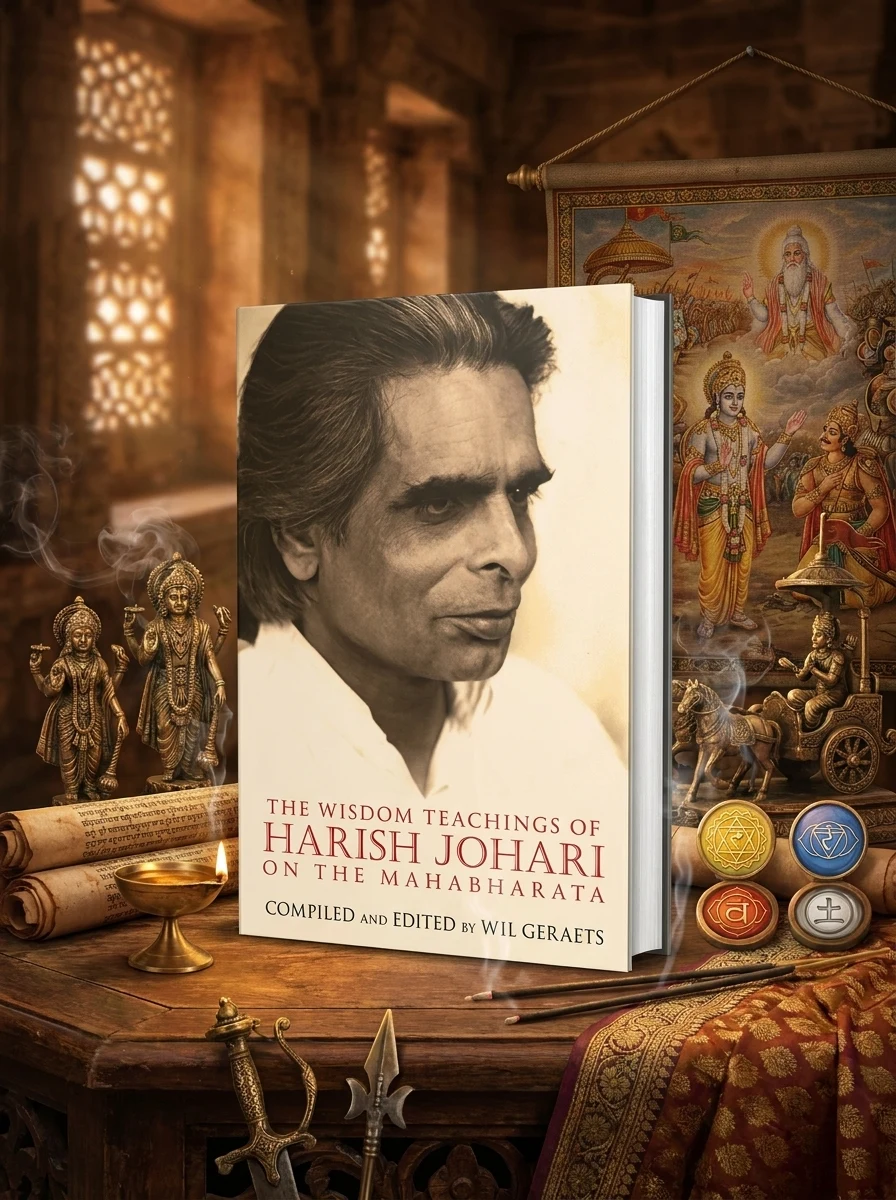
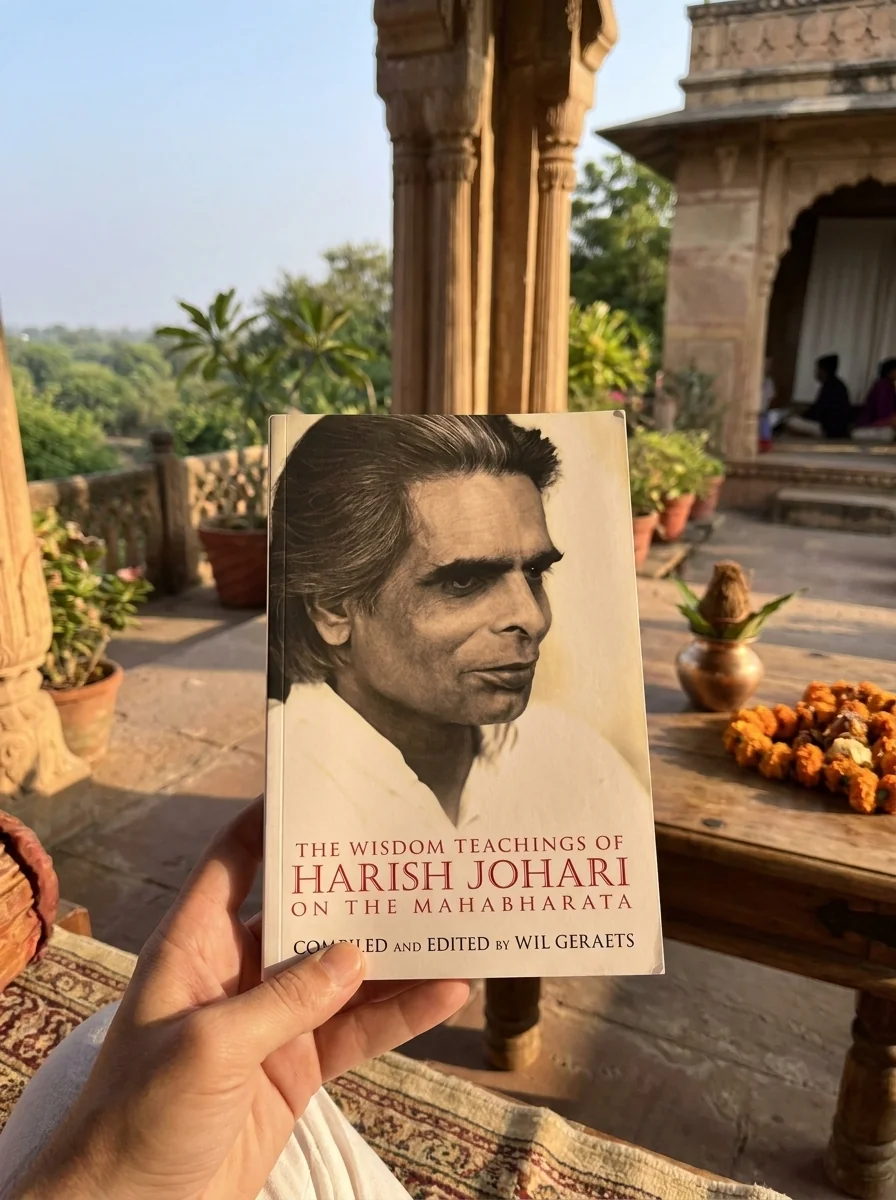
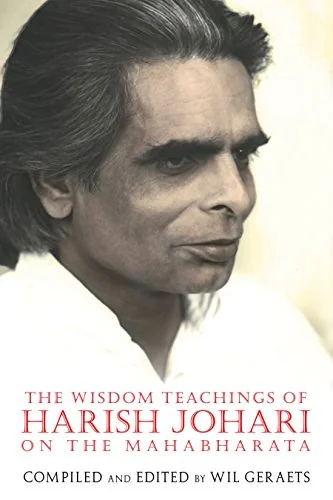
The Wisdom Teachings of Harish Johari on the Mahabharata
This compelling volume distills the profound insights of Tantric scholar Harish Johari into the timeless epic, the Mahabharata. Moving beyond mere storytelling, Johari illuminates how its iconic characters embody fundamental aspects of human awareness, offering guidance on navigating life's moral complexities. The book reinterprets dharma for contemporary relevance, providing a fresh perspective on the Bhagavad Gita's core philosophy. It delves into the energetic interplay of elements and chakras, exploring the underlying forces driving conflict and resolution within this vast narrative.


Praise for this book
“. . . very strongly recommended, core addition to personal and academic library collections on Hinduism and Indian Philosophy in genera, and the works of Harish Johari in particular.”
📝 Description: The Wisdom Teachings of Harish Johari on the Mahabharata
📑 What's inside
- Preface Acknowledgments Introduction
- Part One
- Setting the Scene
- 1 Dharma in the Mahabharata and in Life
- 2 The Four Ages of Time
- 3 Power and Penance
- 4 Wish-fulfilling Trees and Cows
- 5 Curses and Promises
- Part Two
- The Story of "Great India"
- 6 Shantanu, Ganga, and the Birth of Bhishma
- 7 Satyavati, Shantanu, and Bhishma's Terrible Vow
- 8 Tangled Dynasty
- 9 The Birth and Abandonment of Karna
- 10 Birth of the Kauravas and Pandavas
- 11 Drona, Drupada, and the Legacy of Revenge
- 12 How the Pandavas Got Married
- 13 Yudhishthira Gambles and Loses Everything
- 14 Forest Exile
- 15 Devayani and Kacha
- 16 Arjuna in Heaven
- 17 Preparations for War
- Part Three
- The Bhagavad Gita
- 18 Arjuna Refuses to Fight
- 19 Fighting for Justice and Truth
- 20 Krishna Shows Arjuna His Glorious Shape
- Part Four
- War and Its Aftermath
- 21 The Start of the War
- 22 Corpses of Three Generations
- 23 Kunti Loses Her First Son
- 24 Duryodhana's Defeat
- 25 Picking Up the Pieces
- 26 Arrival of Kali Yuga
- Epilogue: Mahabharata and the Game of Life Index About Harish Johari
💎 Expert review
📖 Why choose it
Why this book is worth reading
You will find profound value in this volume if you seek to transcend the literal narrative of the Mahabharata and access its deeper metaphysical layers. Ideal for those interested in Tantric philosophy, this book offers a unique lens through which to view human awareness and moral complexity. By mapping iconic characters to fundamental aspects of consciousness, Johari provides practical guidance for navigating life’s ethical dilemmas with clarity. Readers who appreciate the energetic interplay of chakras and elements will discover how these forces drive both conflict and resolution in the epic. This text is essential for anyone looking to reinterpret dharma for contemporary relevance while gaining a fresh perspective on the Bhagavad Gita’s core philosophy.
⭐ Reader reviews
Reader rating
Wil Geraets effectively channels Harish Johari’s Tantric expertise to illuminate the Mahabharata’s cosmic truths, making it a compelling resource for occult and philosophical enthusiasts. The text succeeds in revealing how the epic’s characters embody aspects of human awareness, offering fresh insights into dharma. However, this is not a casual retelling or an introductory guide to Hindu mythology. Readers seeking straightforward plot summaries or historical analysis may find the dense focus on chakras, elements, and metaphysical forces abstract and inaccessible. It demands a reader already comfortable with esoteric concepts and willing to engage with complex philosophical reinterpretations rather than simple storytelling.
❓ Frequently asked questions
📖 Who should read this
If you seek the profound philosophical underpinnings of humanity's greatest epics, or wish to apply ancient wisdom to contemporary challenges, this book is for you. It offers deep insights into human consciousness, ethical living, and the energetic forces shaping our world.
🎯 Key themes and symbolism
Consciousness and Archetypes
Johari expertly unpacks the Mahabharata's central figures, revealing them not merely as historical or mythical beings but as potent archetypes representing distinct facets of human consciousness. Through their trials and triumphs, readers gain a deeper understanding of their own inner landscape and the universal patterns that govern thought, emotion, and action.
Dharma for Modernity
This work reimagines the ancient concept of dharma, or righteous living, making it profoundly relevant to our current global challenges. Johari's interpretation sheds light on contemporary societal issues and personal ethical dilemmas, demonstrating how the Mahabharata's principles offer a timeless framework for navigating moral choices and striving for balance.
Energetics of Conflict
Johari delves into the esoteric underpinnings of the Mahabharata's epic conflicts, linking the story's events to the interplay of subtle energies, elemental forces, and the body's chakra system. This unique perspective unveils the deeper, metaphysical causes of war and discord, offering profound insights into energetic dynamics.
📜 Historical context
📚 Glossary
- Mahabharata
- Bhagavad Gita
- Dharma
📔 Questions to reflect on
- Consider a personal conflict you've faced. Which Mahabharata character's dilemma or resolution resonates most with your experience, and what insight does it offer?
- How might applying a "dharma for modernity" perspective change your approach to a current ethical challenge in your community or personal life?
- Reflect on the interplay of elements and chakras described. Can you identify an energetic imbalance within yourself that might be contributing to internal or external discord?