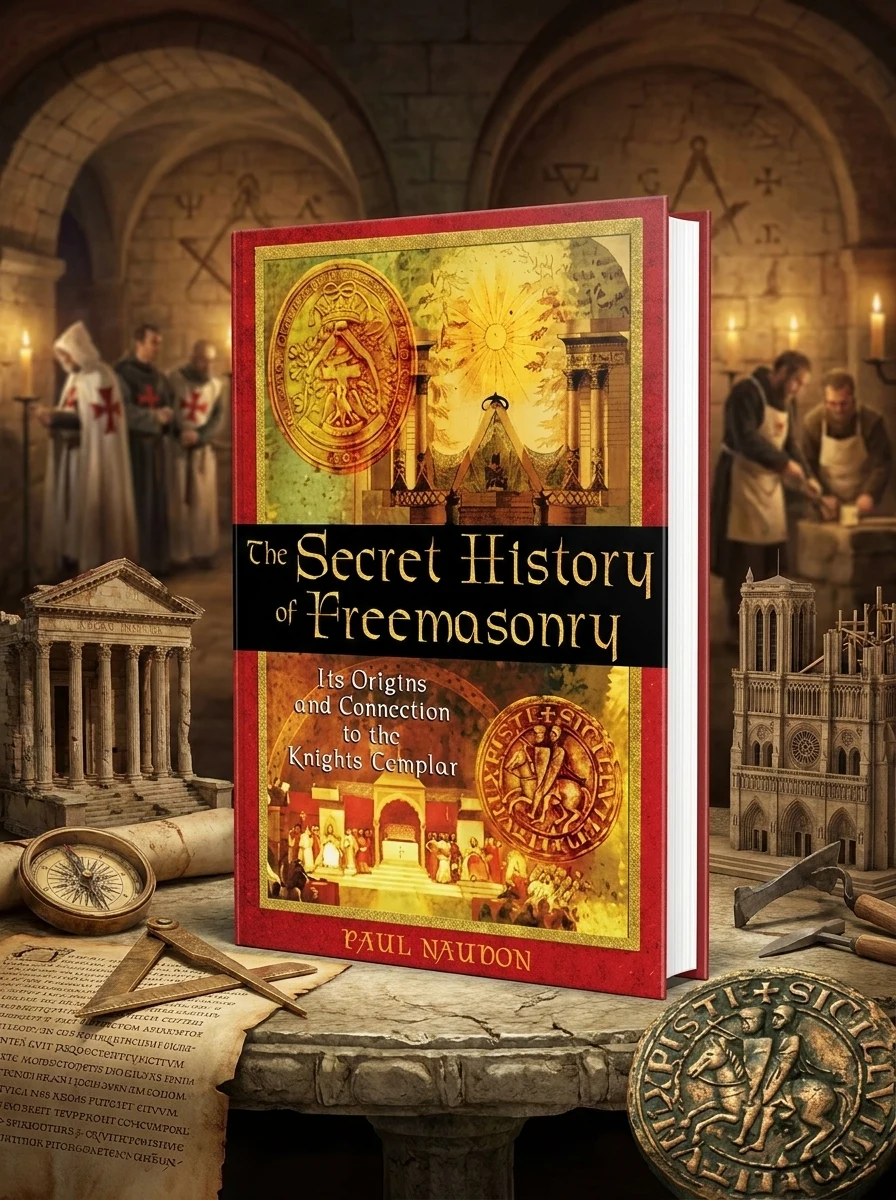
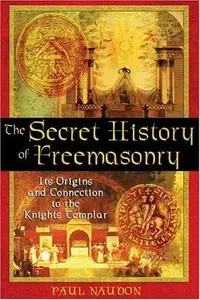
The Secret History of Freemasonry: Its Origins and Connection to the Knights Templar


This edition can be ordered. No arrival date is confirmed.
Unearth the hidden lineage linking medieval stonemasons to the Templars in this revelatory historical account.
Paul Naudon challenges the prevailing academic consensus that severs the tie between operative and speculative Masonry. By examining obscure medieval archives across Europe, particularly in Paris, he demonstrates that medieval builders lived under the direct protection and jurisdiction of the Knights Templar. This proximity granted them unique legal exemptions and fostered an intimate spiritual bond. The text reconstructs this forgotten continuity, arguing that modern lodge traditions are not arbitrary inventions but the living descendants of these sacred, state-exempt brotherhoods, effectively bridging the historical gap skeptics claim is unbridgeable.
This work resides within the tradition of esoteric historiography that seeks to reconnect fragmented spiritual lineages often dismissed by secular academia. It contributes to the ongoing discourse surrounding the mystical roots of Western secret societies.


📝 Description: The Secret History of Freemasonry: Its Origins and Connection to the Knights Templar
💎 Expert review
📖 Why choose it
Why this book is worth reading
Readers fascinated by the intersection of medieval history and spiritual mysticism will find this book a compelling exploration of hidden connections. It is ideal for those who feel that standard academic accounts lack depth regarding the sacred nature of fraternal orders. If you have long suspected that modern Masonic rituals preserve ancient, protected traditions, Naudon’s evidence offers a satisfying resolution to that curiosity. This text appeals to seekers who value archival discovery as a means to validate spiritual continuity. It provides a robust framework for understanding how legal exemptions and spiritual bonds shaped the evolution of brotherhoods. Those interested in the Knights Templar’s enduring influence will appreciate the detailed reconstruction of their relationship with stonemasons. It is a vital resource for anyone wishing to understand the foundational myths that continue to inspire contemporary esoteric practice.
⭐ Reader reviews
Reader rating
First purchase from this shop. It pairs well with more modern commentaries on the same tradition. If you're drawn to this subject, don't hesitate.
This has been on my wishlist for months. The typesetting is comfortable for study, with good margins for notes. Every rereading turns up something I missed. The font runs small in the appendices. Good, with the caveats above.
Ordered this after seeing it referenced in another book I was studying. The ideas are old but land with surprising force today. A few pages arrived with light corner wear, though nothing serious. Still worth having on the shelf.
Naudon presents a passionate argument that challenges dry academic skepticism, offering a narrative rich in spiritual significance rather than mere political history. However, readers seeking strictly empirical, peer-reviewed historical data may find the reliance on obscure archives and interpretive leaps frustrating. This book is not for those who demand secular, objective historiography devoid of metaphysical bias. It suits enthusiasts of esoteric traditions who are willing to accept alternative interpretations of medieval jurisdiction as valid spiritual evidence. Skeptics of secret society lore might view the conclusions as speculative rather than conclusive. Ultimately, it is a powerful read for believers in hidden lineages but may disappoint those requiring conventional historical rigor.
❓ Frequently asked questions
📖 Who should read this
Readers interested in the authentic roots of esoteric traditions, those skeptical of modern Masonic mythology, and historians seeking primary source evidence for medieval guild structures and their spiritual evolution.
🎯 Key themes and symbolism
Operative to Speculative Continuity
Templar-Masonic Alliance
Medieval Legal Exemptions
💬 Quotes from the book
“The masons of medieval Paris were not merely workers; they were residents of the Templar censive, enjoying liberties from both church and state.”
“Historians often scoff at the Lodge-Temple relationship, yet the archives reveal an intimate connection.”
📜 Historical context
📚 Glossary
- Operative Masonry
- Speculative Masonry
- Censive
📔 Questions to reflect on
- How does the concept of 'legal exemption' in medieval times mirror the psychological 'safe space' sought by modern esoteric groups?
- In what ways does the physical act of building (operative) influence the metaphorical construction of self (speculative)?
- Why might institutional history deliberately obscure the links between powerful medieval orders and later fraternal societies?
🏛 Books from this publisher Inner Traditions International
All books from this publisher →




You might also like
See more →