US shipping Secure card payment Occult and esoteric books

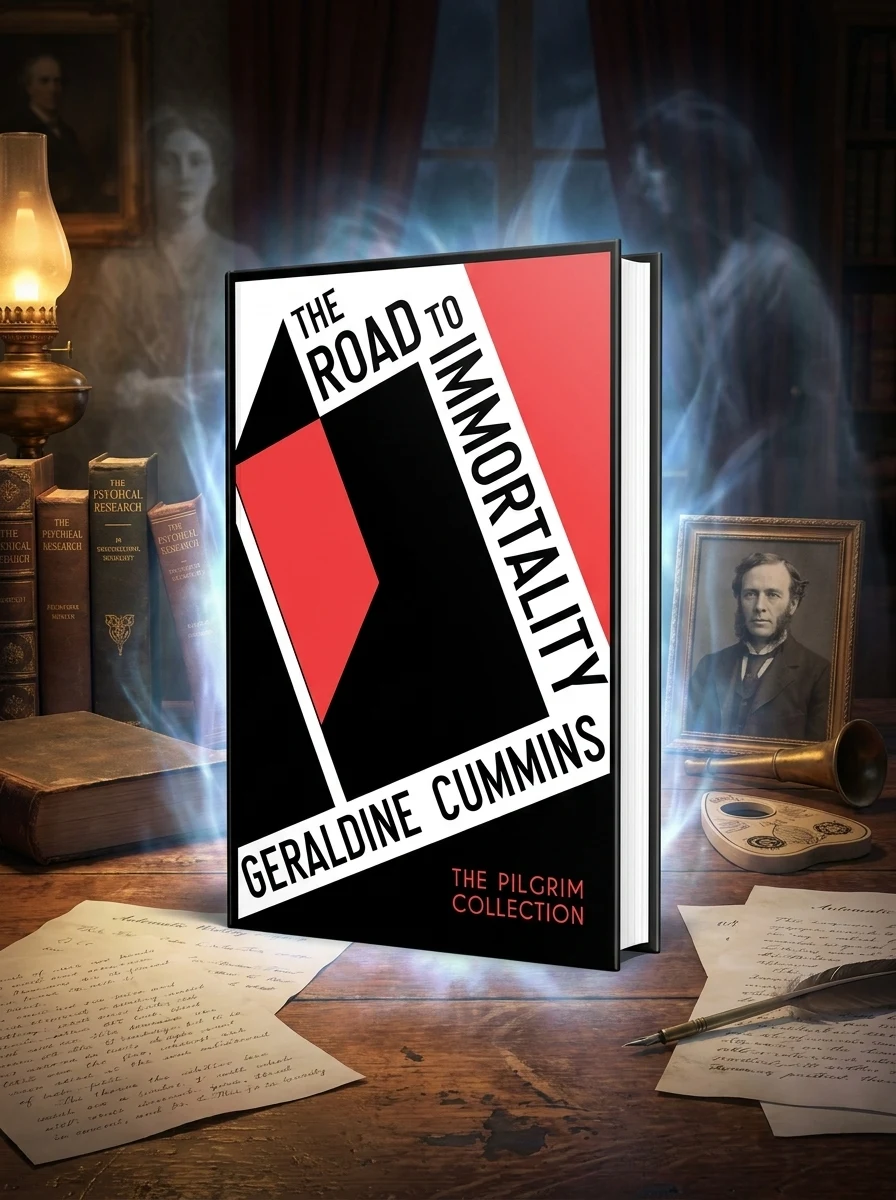
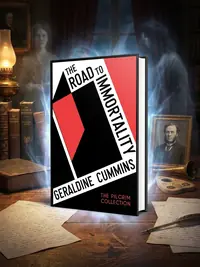
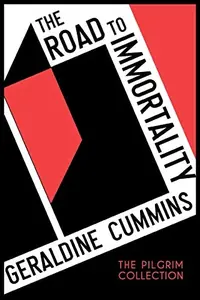
The Road to Immortality

Cummins, Geraldine
Reader rating
4.6
(1 reviews) 41 sold
In stock

Stock reported in the catalog; fulfillment is confirmed with your request.

📚 ABOUT THE BOOK

Journey beyond the veil with a pioneering mind's posthumous message.

Step into a rare dialogue with the departed as renowned psychologist F.W.H. Myers, a key figure in psychical research, purportedly transmits his insights on the afterlife. Through the automatic writing of medium Geraldine Cummins, Myers shares his continued consciousness and attempts to bridge the divide between worlds. This extraordinary account, emerging in the 1920s, offers a detailed, first-hand perspective on the nature of post-mortem existence and the intricate mechanisms of communication from beyond, providing a unique glimpse into spiritualist thought.

Key themes
Survival of Consciousness Automatic Writing & Mediumship The Afterlife Vision
Historical context

This work stands as a significant artifact of early twentieth-century spiritualism, reflecting the period's intense fascination with psychical research and the potential for communication between the living and the dead. It embodies the era's attempt to reconcile scientific inquiry with metaphysical belief through the practice of automatic writing.


Difficulty
●● Moderate
Fans will love it
F.W.H. Myers · Sir Arthur Conan Doyle · Frederick W.H. Myers' Society for Psychical Research · Early 20th-century spiritualist literature
🕊️ Spiritualism
🏛 White Crow Books 📅 2012 📖 112 pages 📔 Paperback 📐 Paperback ISBN: 9781908733467
Fun fact
This remarkable volume offers a unique window into the spiritualist movement's intellectual heart, presenting an incredibly detailed and articulate vision of the afterlife. While not for the strictly materialistic reader, those open to exploring the boundaries of consciousness will find its insights profound and historically significant. Cummins' role as a channel for a mind as formidable as Myers' elevates this work beyond typical mediumistic accounts, positioning it as an essential text for understanding early 20th-century psychical inquiry and the enduring human quest for answers about what lies beyond.

📝 Description: The Road to Immortality

The Road to Immortality provides the reader with a sublime vision of the afterlife, allegedly communicated from 'other side' by the eminent psychologist and psychic researcher Frederic William Henry Myers. Myers was one of the founders of the Society of Psychical Research and he spent much of his life researching the survival of consciousness, so it is not surprising that having passed away in 1901, if he found himself conscious of his surroundings, he would try to communicate with his colleagues and loved ones still in the flesh. According to a renowned automatic writing medium Geraldine Cummins, this happened in the 1920's. Communicating through Cummins, Myers stated: "We communicate an impression through the inner mind of the medium. It receives the impression in a curious way. It has to contribute to the body of the message; we furnish the spirit of it. In other words, we send the thoughts and the words usually in which they must be framed, but the actual letters or spelling of the words is drawn from the medium's memory. Sometimes we only send the thoughts and the medium's unconscious mind clothes them in words." Discarnate messengers such as Silver Birch have spoken about the group-soul and Myers went into great detail about the subject. "When I was on earth, I belonged to a group-soul, but its branches and the spirit - which might be compared to the roots - were in the invisible," "Now, if you would understand psychic evolution, this group-soul must be studied and understood. For instance, it explains many of the difficulties that people will assure you can be removed only by the doctrine of reincarnation. You may think my statement frivolous, but the fact that we do appear on earth to be paying for the sins of another life is, in a certain sense, true. It is our life and yet not our life. In other words, a soul belonging to the group of which I am a part lived that previous life which built up for me the framework of my earthly life, lived it before I had passed through the gates of birth." Myers further explained that the group soul might contain twenty souls, a hundred, or a thousand. "The number varies," he said. "It is different for each man. But what the Buddhist would call the karma I had brought with me from a previous life is, very frequently, not that of my life, but of the life of a soul that preceded me by many years on earth and left for me the pattern which made my life. I, too, wove a pattern for another of my group during my earthly career. Myers added that the Buddhist's idea of rebirth, of man's continual return to earth, is but a half-truth. "And often half a truth is more inaccurate than an entire misstatement. I shall not live again on earth, but a new soul, one who will join our group, will shortly enter into the pattern or karma I have woven for him on earth." Myers likened the soul to a spectator caught within the spell of some drama outside of its actual life, perceiving all the consequences of acts, moods, and thoughts of a kindred soul. He further pointed out that there are an infinite variety of conditions in the invisible world and that he made no claim to being infallible. He called it a "general rule" based on what he had learned and experienced on the Other Side.

💎 Expert review

💎
Esoterica Books editorial team
Occult literature desk
This volume is essential for scholars of spiritualism and enthusiasts of early psychical research, offering a firsthand account of purported post-mortem communication. However, it may not suit readers seeking empirical scientific proof or those with a staunchly materialist worldview, as the content relies entirely on mediumistic transmission rather than observable data. Skeptics might find the premise challenging to accept without prior belief in spiritualist doctrines. It is best approached as a historical and philosophical document within the esoteric tradition, rather than a factual report. Readers expecting conventional narrative plots may be disappointed by its discursive nature.
✓ EDITOR'S REVIEW

📖 Why choose it

📖

Why this book is worth reading

Readers deeply curious about the intersection of psychology and the paranormal will find this book profoundly engaging. It offers a unique opportunity to engage with the philosophical musings of F.W.H. Myers, presented through Geraldine Cummins’s mediumship, providing a tangible sense of continuity in consciousness after death. Those interested in the historical development of spiritualist thought or the mechanics of automatic writing will appreciate the detailed insights into post-mortem existence. It serves as a rare dialogue that bridges worlds, appealing to those who seek evidence of life beyond the veil through the lens of a pioneering mind from psychical research.

⭐ Reader reviews

The starting rating comes from the team Esoterica Books —
⭐ Esoterica editorial review Editorial rating 4.7/5
★★★★
If you are drawn to the profound mysteries of consciousness beyond death, or fascinated by the historical intersections of science and spiritualism, this unique volume offers unparalleled depth. It's a must-read for students of psychical research and seekers of esoteric wisdom.

Reader rating

4.6
Based on 1 reviews
5
0
4
1
3
0
2
0
1
0
E
Esoterica Books editorial team

This volume is essential for scholars of spiritualism and enthusiasts of early psychical research, offering a firsthand account of purported post-mortem communication. However, it may not suit readers seeking empirical scientific proof or those with a staunchly materialist worldview, as the content relies entirely on mediumistic transmission rather than observable data. Skeptics might find the premise challenging to accept without prior belief in spiritualist doctrines. It is best approached as a historical and philosophical document within the esoteric tradition, rather than a factual report. Readers expecting conventional narrative plots may be disappointed by its discursive nature.

❓ Frequently asked questions

While presented as genuine communications, its authenticity rests on the subjective experiences of the medium. It's best approached as a historical document of spiritualist belief and a profound exploration of potential post-mortem existence, rather than empirical science.
Frederic William Henry Myers was a prominent British classical scholar, poet, and a pioneering co-founder of the Society for Psychical Research. He spent his life rigorously investigating phenomena like telepathy, clairvoyance, and the survival of consciousness after death, making him a fitting figure for such posthumous communication.

📖 Who should read this

If you are drawn to the profound mysteries of consciousness beyond death, or fascinated by the historical intersections of science and spiritualism, this unique volume offers unparalleled depth. It's a must-read for students of psychical research and seekers of esoteric wisdom.

🎯 Key themes and symbolism

Survival of Consciousness

This book directly explores the concept that personal awareness persists beyond physical death. It presents the alleged experiences of F.W.H. Myers, who dedicated his life to this very question, now communicating from a discarnate state, offering his 'proof' and observations on the continuous journey of the self after the body's demise.

Automatic Writing & Mediumship

The text details the specific method through which Myers' messages are received: automatic writing by Geraldine Cummins. It delves into the mechanics of this communication, explaining how discarnate entities impress thoughts and words upon the medium's mind, utilizing her memory and vocabulary to form coherent messages, thereby illuminating the process of mediumship.

The Afterlife Vision

Beyond mere contact, the book offers a sublime and intricate vision of the afterlife itself. Myers' communications describe the conditions, environment, and nature of existence on the 'other side.' It's not just about survival, but what that survival entails, painting a picture of consciousness in a new, expanded state, and the potential for growth and connection.

💬 Quotes from the book

“We communicate an impression through the inner mind of the medium. It receives the impression in a curious way. It has to contribute to the body of the message; we furnish the spirit of it.”

“The boundary between realms is thinner than you imagine, and the longing to connect persists beyond the grave.”

📜 Historical context

Published amidst a burgeoning interest in spiritualism and psychical research in the early 20th century, this book stands as a significant document. It emerged from the intellectual currents of figures like F.W.H. Myers, a co-founder of the Society for Psychical Research, whose life's work was dedicated to scientifically investigating the survival of consciousness, making this a pivotal text in that tradition.

📚 Glossary

Automatic Writing
Discarnate
Psychical Research

📔 Questions to reflect on

  1. How does the described process of communication from 'the other side' challenge or confirm your personal beliefs about consciousness and reality?
  2. If F.W.H. Myers' communications are genuine, what implications does this hold for our understanding of identity, memory, and purpose after physical death?
  3. Consider the societal impact this book might have had in the 1920s. How might a contemporary audience react to such claims of posthumous communication today?

🏛 Books from this publisher White Crow Books

All books from this publisher →
You might also like

See more →