US shipping Secure card payment Occult and esoteric books

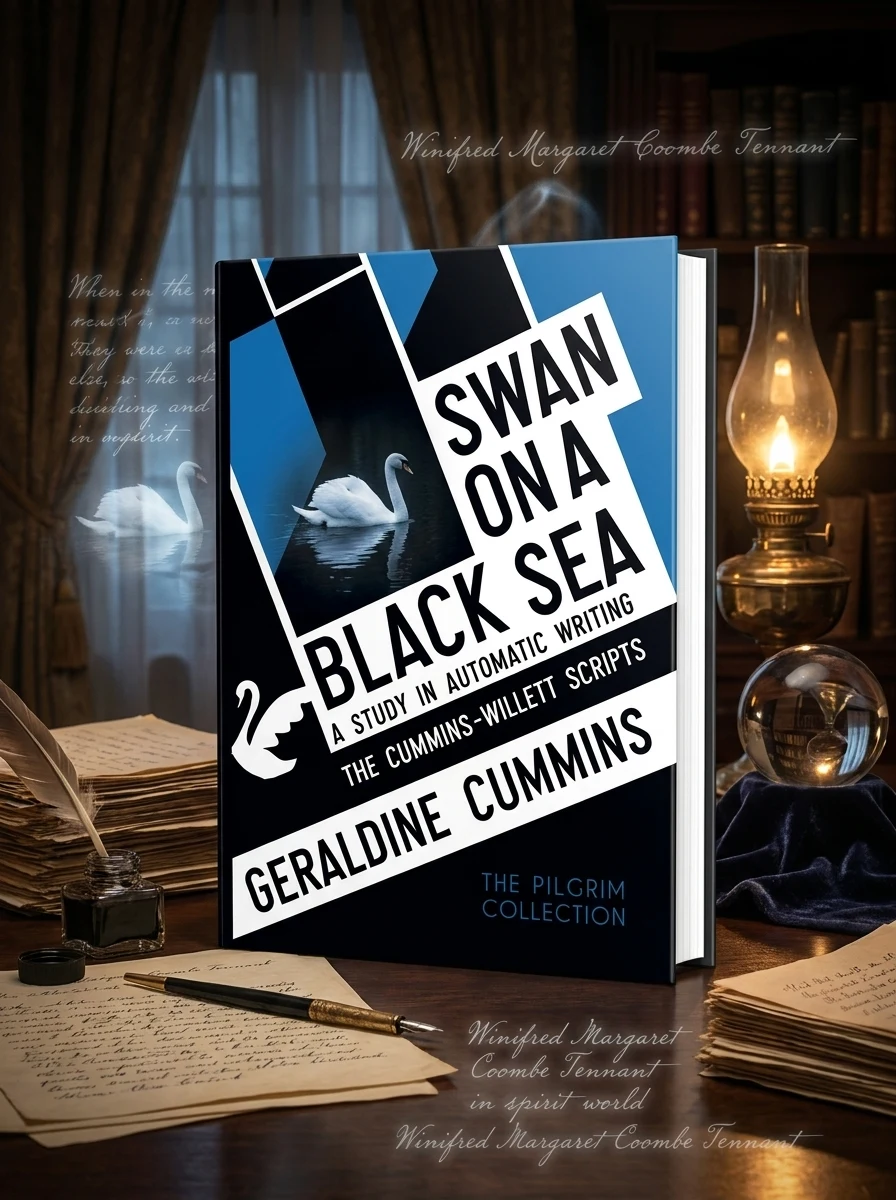
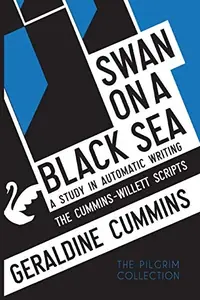
Swan on a Black Sea: A Study in Automatic Writing: The Cummins-Willett Scripts

Cummins, Geraldine
Reader rating
4.5
(1 reviews) 161 sold
In stock

Stock reported in the catalog; fulfillment is confirmed with your request.

📚 ABOUT THE BOOK

Beyond the veil, a pioneering spirit reaches out through unseen hands.

This extraordinary work chronicles the final automatic writing scripts of Geraldine Cummins, capturing communications from the notable British suffragette and philanthropist, Winifred Margaret Coombe Tennant. From 1957 to 1960, Coombe Tennant, using the pseudonym "Mrs. Willett" during her lifetime, conveyed messages from the spirit realm. Her primary motivation was to assure her sons of her continued existence in the afterlife. The book presents forty distinct scripts, offering a unique glimpse into post-mortem consciousness and the enduring nature of familial bonds, relayed through a renowned medium's hand.

Key themes
Messages Beyond the Grave Channeling the Unseen Secret Gifts Revealed
Historical context

This work anchors itself firmly within the mid-twentieth-century spiritualist tradition, specifically highlighting the era's reliance on automatic writing as a primary channel for post-mortem communication. It reflects a period where prominent figures sought to bridge the gap between the living and the dead through documented psychological phenomena.


Difficulty
●● Moderate
Fans will love it
Eleanor Sidgwick · Frederic W.H. Myers · The Cummins-Willett Scripts · Spiritualist literature from the 1950s
🕊️ Spiritualism
🏛 White Crow Books 📅 2013 📖 220 pages 📔 Paperback 📐 Paperback ISBN: 9781908733764
Fun fact
Cummins' "Swan on a Black Sea" stands as a significant document in spiritualist literature, offering direct, detailed "afterlife" accounts from a compelling historical figure. Its strength lies in the raw, personal nature of the scripts, providing a unique window into purported post-mortem consciousness. Those seeking rigorous scientific proof might find it wanting, as its power is in its narrative and experiential claims. However, for enthusiasts of automatic writing and the annals of psychical research, it remains an indispensable, thought-provoking collection that continues to spark debate.

📝 Description: Swan on a Black Sea: A Study in Automatic Writing: The Cummins-Willett Scripts

Swan on a Black Sea is Geraldine Cummins final book which was first published in 1965. The book is an account - an afterlife communication, from the British suffragette and philanthropist, Winifred Margaret Coombe Tennant who passed away in 1956 and first communicated with Cummins in 1957. Coombe Tennant communicated through Cummins using automatic writing; the object being to let her sons know she was still very much alive in the spirit world. The communications are made up of 40 scripts which were communicated between 1957-1960 Throughout her life Coombe Tennant was a talented medium but due to her professional and social standing, she choose to keep her gift a secret from all but a handful of friends, and anonymously she practiced her mediumship under the pseudonym, Mrs. Willet. Her sitters included Sir Oliver Lodge, the renowned British scientist who devoted much of his life to psychical research, and a select number of senior members of the Society for Psychical Research. Relaying her experiences as a travel writer might, reporting back from a distant land, she describes her ability to travel back and forth in time. It's as if her physical life is a film and she is able to "go into her film" at any time or place and examine her physical life - a life review or judgment some might conclude. On October 29, 1958 (script 32) she addressed her skeptical son Henry who was still alive at the time and was finding it difficult to accept that his dead mother was communicating, 'There is a dream sweetness about my present state or place. Yet my environment is familiar and totally real. I live in an existence in form both in human etheric forms and surroundings such as in outline nature and man provide. Yet I can be of them and not of them. I am not wedded to them or welded into them. One's mind can govern and alter conditions in a manner not possible on earth. That is, if one exerts oneself, makes an effort. 'At present I am at home again in the long ago of Wales. You remember my break in life through your father's death. You may recall how I went to live in London in a flat. All that period is not my present environment. 'I am back again in my married life. It is different, though in appearance to my perceptions it is the same outer world of reason, order and sensible arrangements. But it is different, humanly speaking. I am much with Christopher, who is a darling, while your father pairs off with Daff. That is a new experience to me. 'What is novel also is that I appear to be in a kind of kindergarten and in my working hours I relive in memory what earth time has snatched away from me. So in the study of memory I do not remain at Cadoxton. I enter the film of past events and make excursions into different times in my past earth life so as to assimilate it. The scripts are essentially an afterlife memoir of Winifred Coombe Tennant; they provide a fascinating insight into her world beyond the grave and are essential reading for anyone interested in psychical research and life after death.

💎 Expert review

💎
Esoterica Books editorial team
Occult literature desk
This text serves as a specialized archive rather than a casual read, appealing strictly to those with a vested interest in spiritualist history or the specific case of Geraldine Cummins. It is not suitable for skeptics or readers seeking narrative fiction, as it presents raw script transcriptions without extensive interpretive framing. Those expecting theological debate may find the content too narrow, focusing solely on familial reassurance rather than broader metaphysical doctrine. However, for enthusiasts of parapsychology and historical mediumship, it remains an invaluable primary source. The candid presentation allows readers to form their own judgments about the authenticity and nature of the communications, making it a significant, albeit niche, contribution to the literature on automatic writing.
✓ EDITOR'S REVIEW

📖 Why choose it

📖

Why this book is worth reading

Readers deeply interested in the history of spiritualism, particularly those fascinated by the mechanics of automatic writing and the psychological implications of mediumship, will find this volume profoundly compelling. It offers a rare, intimate window into how a renowned British suffragette navigated her transition to the spirit realm to comfort her family. The book is ideal for scholars or enthusiasts who value primary sources over theoretical speculation. By presenting forty distinct scripts, it provides tangible evidence of what practitioners believe to be post-mortem consciousness. Those seeking to understand the emotional weight of bereavement and the historical context of early 20th-century spiritualist movements will gain significant insight into how faith and personal loss intersected during this pivotal time in esoteric history.

⭐ Reader reviews

The starting rating comes from the team Esoterica Books —
⭐ Esoterica editorial review Editorial rating 4.5/5
★★★★
For those drawn to the mysteries of the afterlife, spirit communication, or the historical accounts of psychical research, this book offers a compelling narrative. If you seek detailed transmissions from a departed soul, particularly one with a unique perspective on existence, prepare to be…

Reader rating

4.5
Based on 1 reviews
5
0
4
1
3
0
2
0
1
0
E
Esoterica Books editorial team

This text serves as a specialized archive rather than a casual read, appealing strictly to those with a vested interest in spiritualist history or the specific case of Geraldine Cummins. It is not suitable for skeptics or readers seeking narrative fiction, as it presents raw script transcriptions without extensive interpretive framing. Those expecting theological debate may find the content too narrow, focusing solely on familial reassurance rather than broader metaphysical doctrine. However, for enthusiasts of parapsychology and historical mediumship, it remains an invaluable primary source. The candid presentation allows readers to form their own judgments about the authenticity and nature of the communications, making it a significant, albeit niche, contribution to the literature on automatic writing.

❓ Frequently asked questions

No, it is presented as a genuine record of automatic writing scripts received by Geraldine Cummins from the spirit of Winifred Margaret Coombe Tennant, a historical figure.
The primary goal of the spirit communications was for Winifred Coombe Tennant to convey to her sons that her consciousness persisted beyond her physical death.

📖 Who should read this

For those drawn to the mysteries of the afterlife, spirit communication, or the historical accounts of psychical research, this book offers a compelling narrative. If you seek detailed transmissions from a departed soul, particularly one with a unique perspective on existence, prepare to be captivated.

🎯 Key themes and symbolism

Messages Beyond the Grave

Explore the profound possibility of consciousness persisting after death. The book meticulously documents Coombe Tennant's efforts to reach her living sons, providing what she asserts is direct evidence of an enduring personal identity and the continuity of life beyond the physical, challenging conventional notions of mortality.

Channeling the Unseen

Delve into the fascinating method of automatic writing, where a medium's hand moves seemingly independently, guided by an external intelligence. Cummins’ work showcases this technique as a conduit for detailed, personal, and urgent communications from the deceased, illustrating its potential as a bridge between worlds.

Secret Gifts Revealed

Discover the intriguing story of Mrs. Willett, a pseudonym for Winifred Coombe Tennant, who practiced her potent mediumistic abilities discreetly due to her prominent social standing. This narrative sheds light on the often-private lives of powerful psychics who navigated societal expectations while pursuing their esoteric gifts.

💬 Quotes from the book

“The illusion of linear time dissolves here; I traverse the tapestry of my earthly life, not as memory, but as a living, breathing landscape I can enter and depart at will.”

“My sons, know this truth that burns within me: I am not gone. The thread of our love, though stretched, remains unbroken, a vibrant pulse in the eternal now.”

📜 Historical context

Swan on a Black Sea emerges from the golden age of psychical research, a period marked by intense scientific and public interest in spiritualism and mediumship. Published in 1965, it represents a late-stage contribution to the extensive documentation efforts by groups like the Society for Psychical Research, offering a firsthand account of cross-dimensional communication that challenged the materialist views prevalent at the time.

📚 Glossary

Automatic Writing
Mediumship
Psychical Research

📔 Questions to reflect on

  1. How might your understanding of time and memory change if you believed you could revisit past moments as vividly as suggested in the scripts?
  2. Consider the societal pressures that might lead someone with extraordinary abilities, like Winifred Coombe Tennant, to practice them in secret. What are the implications of such secrecy?
  3. If you could receive an afterlife communication from a loved one, what questions would you ask, and what assurances would you hope to receive?

✍️ More books by this author Cummins, Geraldine

All books by this author →
🏛 Books from this publisher White Crow Books

All books from this publisher →
You might also like

See more →