US shipping Secure card payment Occult and esoteric books

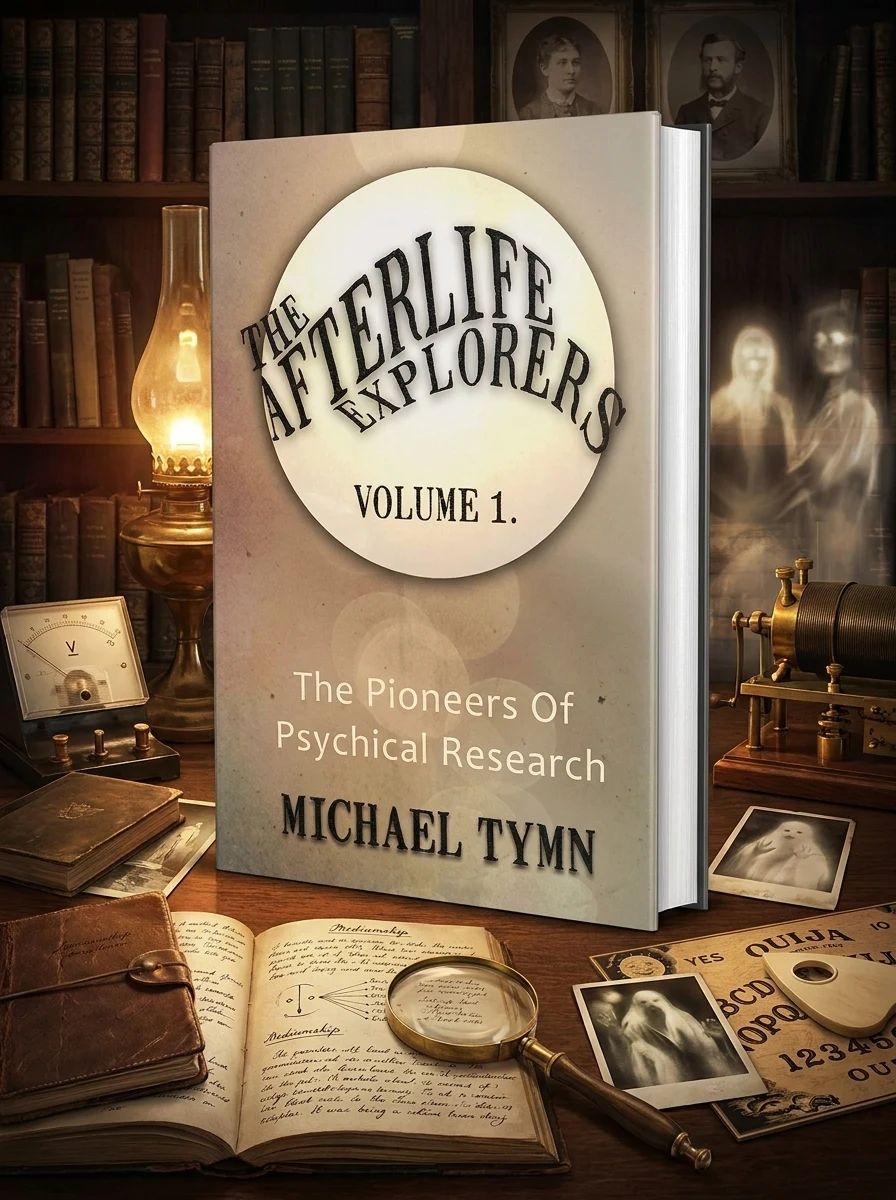
The Afterlife Explorers: Vol. 1: The Pioneers of Psychical Research

Tymn, Michael
Reader rating
4.7
(1 reviews) 45 sold
In stock

Stock reported in the catalog; fulfillment is confirmed with your request.

📚 ABOUT THE BOOK

Unearth the forgotten golden age of afterlife exploration and psychical discovery.

Step back in time with Michael Tymn to an era when dedicated scholars and scientists bravely delved into the mysteries of life beyond death. This volume meticulously chronicles the pioneering efforts of early psychical researchers, highlighting their groundbreaking investigations into mediumship and spirit communication. Tymn persuasively argues that the phenomena observed during this period, particularly before 1930, exhibited a dynamism and evidential weight often unmatched by later studies. Discover why the author believes these foundational inquiries offer unparalleled insights into the persistence of consciousness.

Key themes
Pioneering Psychical Era Evidential Mediumship Explored Research's Historical Decline
Historical context

This work sits firmly within the tradition of historical psychical research and spiritualist literature, documenting the early twentieth-century movement where scientific inquiry intersected with metaphysical curiosity. It serves as a chronicle for those interested in the intellectual history of parapsychology and the golden age of mediumship studies.


Difficulty
●● Moderate
Fans will love it
Sir Arthur Conan Doyle · William James · Harry Houdini's skeptical works · The Society for Psychical Research archives
🕊️ Spiritualism
🏛 White Crow Books 📅 2012 📖 172 pages 📔 Paperback 📐 Paperback ISBN: 9781908733009
Fun fact
Tymn's 'The Afterlife Explorers' is a meticulously researched and passionately argued journey into the foundational years of psychical investigation. It excels at resurrecting fascinating historical accounts and articulating a compelling case for the unique quality of early evidence. While those seeking an overview of modern parapsychology or definitive, universally accepted scientific proof might be left wanting, this volume offers an invaluable perspective for anyone interested in the historical quest for understanding consciousness beyond death, positioning itself as a vital contribution to the study of spiritualism's scientific origins.

📝 Description: The Afterlife Explorers: Vol. 1: The Pioneers of Psychical Research

I have been asked many times why so much of what I write about - life after death, psychical research, and related paranormal subjects is taken from research done a hundred or more years ago, and why I don't write more about modern mediums and researchers. Part of the reason is that there has been relatively very little research looking at evidence of survival after death since 1930. But that is a secondary reason. The primary reason is that I am convinced that the phenomena observed by the pioneers of psychical research, especially in the area of mediumship and, concomitantly, in the area of spirit communication, were much more dynamic and evidential than those of today. Sometime around 1920, when Professor James Hyslop, one of the key pioneers, died, the research reached a point of diminishing returns. The scientists and scholars engaged in the research began to realize that they were continually reinventing the wheel and would never succeed in producing evidence to satisfy either the scientific fundamentalists or the religious fundamentalists. As strong as the evidence was, it did not offer the absolute proof the skeptics demanded. The pioneers were followed by researchers, who, having witnessed the derision heaped on their predesessors by materialistic "know-nothings," were concerned with their reputations in academic circles. Since consciousness survival had come to be a taboo subject in academia, the new breed of researcher focused on ESP - often going out of their way to avoid the survival of consciousness issue. In fact, a fair percentage of parapsychologists, while accepting the reality of ESP, rejected the spirit or survival hypothesis, concluding that all such phenomena were somehow produced by the subconscious of the individuals involved in their experiments. Such a conclusion was much more academically and scientifically acceptable and made sure funds for further research were available. To even hint at the spirit hypothesis was to invite disdain. While a few later researchers delved into the area of past-life studies, their work received little attention from mainstream science and was ignored or resisted by orthodox religions. When, during the 1970s, research began in the field of near-death experiences, the researchers, wanting to be scientifically proper, focused more on the positive effects of the NDE than on the survival implications. It was not until late in the 1990s, when Dr. Gary Schwartz of the University of Arizona, began investigating the clairvoyant type of mediumship that survival research again resurfaced. But Schwartz came under attack by many scientific fundamentalists and research in this area was further discouraged. This volume, intended as the first of four volumes, covers the period before 1882, the year the Society for Psychical Research (SPR) was organized and more formal scientific methods were employed. The pre-1882 researchers were by no means ignorant of the scientific methods necessary to validate mediums, and it becomes clear to the discerning reader that these pioneers were very much on guard against deception and mindful of other explanations, including the subconscious theories. It also becomes apparent to the serious student of this subject that the earliest researchers went beyond the evidential aspects of mediumship and recorded many messages concerning the afterlife environment and the meaning of this life. They served as the foundation for a whole new philosophy, one that made some sense of the afterlife and gave meaning to this life.

💎 Expert review

💎
Esoterica Books editorial team
Occult literature desk
Michael Tymn offers a persuasive and meticulously researched account of early psychical researchers who bravely explored spirit communication. The book excels in highlighting the dynamism of pre-1930 studies, arguing convincingly for their evidential weight compared to later, more skeptical eras. However, it is not suited for hardline materialists or those seeking new empirical data rather than historical analysis. Readers expecting modern scientific breakthroughs may find the focus on past methodologies too academic. It is best appreciated by those already sympathetic to spiritualist principles or those studying the history of parapsychology as a cultural phenomenon.
✓ EDITOR'S REVIEW

📖 Why choose it

📖

Why this book is worth reading

Readers fascinated by the intersection of science and spirituality will find this volume an essential resource. It appeals to those who seek historical evidence for consciousness survival beyond physical death, offering a detailed look at the scholars who first dared to investigate the unknown with rigorous methodology. If you are intrigued by the golden age of psychical research or wish to understand the foundational arguments for mediumship before modern skepticism took hold, this book provides compelling context. It is ideal for historians of science, spiritualists seeking validation of early efforts, and anyone curious about how dedicated investigators approached the mysteries of life beyond death with both courage and intellectual integrity.

⭐ Reader reviews

The starting rating comes from the team Esoterica Books —
⭐ Esoterica editorial review Editorial rating 4.7/5
★★★★
If you're fascinated by the historical roots of paranormal investigation, seek a deeper understanding of early spiritualism, or are curious about the compelling evidence gathered by pioneering minds, this volume is an essential addition to your library. Prepare to have your perceptions of life…

Reader rating

4.7
Based on 1 reviews
5
0
4
1
3
0
2
0
1
0
E
Esoterica Books editorial team

Michael Tymn offers a persuasive and meticulously researched account of early psychical researchers who bravely explored spirit communication. The book excels in highlighting the dynamism of pre-1930 studies, arguing convincingly for their evidential weight compared to later, more skeptical eras. However, it is not suited for hardline materialists or those seeking new empirical data rather than historical analysis. Readers expecting modern scientific breakthroughs may find the focus on past methodologies too academic. It is best appreciated by those already sympathetic to spiritualist principles or those studying the history of parapsychology as a cultural phenomenon.

❓ Frequently asked questions

Tymn contends that the phenomena observed by early psychical pioneers, especially in mediumship, were significantly more dynamic and provided stronger evidence than what has been recorded in more recent times.
While it explores compelling historical evidence, the book acknowledges the inherent difficulties early researchers faced in providing 'absolute proof' that would satisfy both scientific and religious fundamentalists, focusing instead on the strength of the evidence as it was perceived then.

📖 Who should read this

If you're fascinated by the historical roots of paranormal investigation, seek a deeper understanding of early spiritualism, or are curious about the compelling evidence gathered by pioneering minds, this volume is an essential addition to your library. Prepare to have your perceptions of life after death challenged.

🎯 Key themes and symbolism

Pioneering Psychical Era

This book illuminates the formative years of psychical research, presenting the dedicated individuals who, a century ago, applied scientific methodologies to paranormal phenomena. It showcases their rigorous attempts to document and understand what lay beyond conventional perception, laying the groundwork for future explorations into consciousness and survival.

Evidential Mediumship Explored

Tymn argues for the exceptional quality of spirit communication and mediumship observed during the early 20th century. The text delves into specific instances and research findings that, in the author's view, presented compelling, dynamic evidence of survival, urging readers to re-evaluate these historical accounts for their profound implications.

Research's Historical Decline

The author examines the critical juncture around 1920 when psychical research began to wane, postulating that investigators grew weary of the endless cycle of attempting to satisfy absolute skeptics. It explores the reasons why the pursuit of definitive, universally accepted proof became an insurmountable hurdle, leading to a shift in research focus.

💬 Quotes from the book

“The raw, unfiltered phenomena witnessed by early psychical investigators presented an undeniable challenge to materialist dogma, a vibrancy rarely seen in later decades.”

“Though the evidence was compelling, it ultimately failed to satisfy the fundamentalists of both science and religion, highlighting the inherent limits of 'proof' in such realms.”

📜 Historical context

Emerging during a profound period of spiritual questioning and scientific advancement, early psychical research in the late 19th and early 20th centuries sought to apply scientific rigor to spiritualist claims. This book places Tymn's work within the tradition of scholars who re-examine these foundational efforts, highlighting a time when prominent intellectuals earnestly investigated the survival of consciousness using methods considered cutting-edge for their era.

📚 Glossary

Psychical Research
Mediumship
Spirit Communication

📔 Questions to reflect on

  1. Considering the author's argument, what constitutes 'strong evidence' for survival after death in your personal view, and why might that differ from what others accept?
  2. If you were a psychical researcher in the early 20th century, what specific phenomena would you prioritize investigating, and what methods would you employ?
  3. How might the pursuit of 'absolute proof' hinder rather than help our understanding of subtle or non-physical realities, as suggested by the historical context of psychical research?

🏛 Books from this publisher White Crow Books

All books from this publisher →
You might also like

See more →