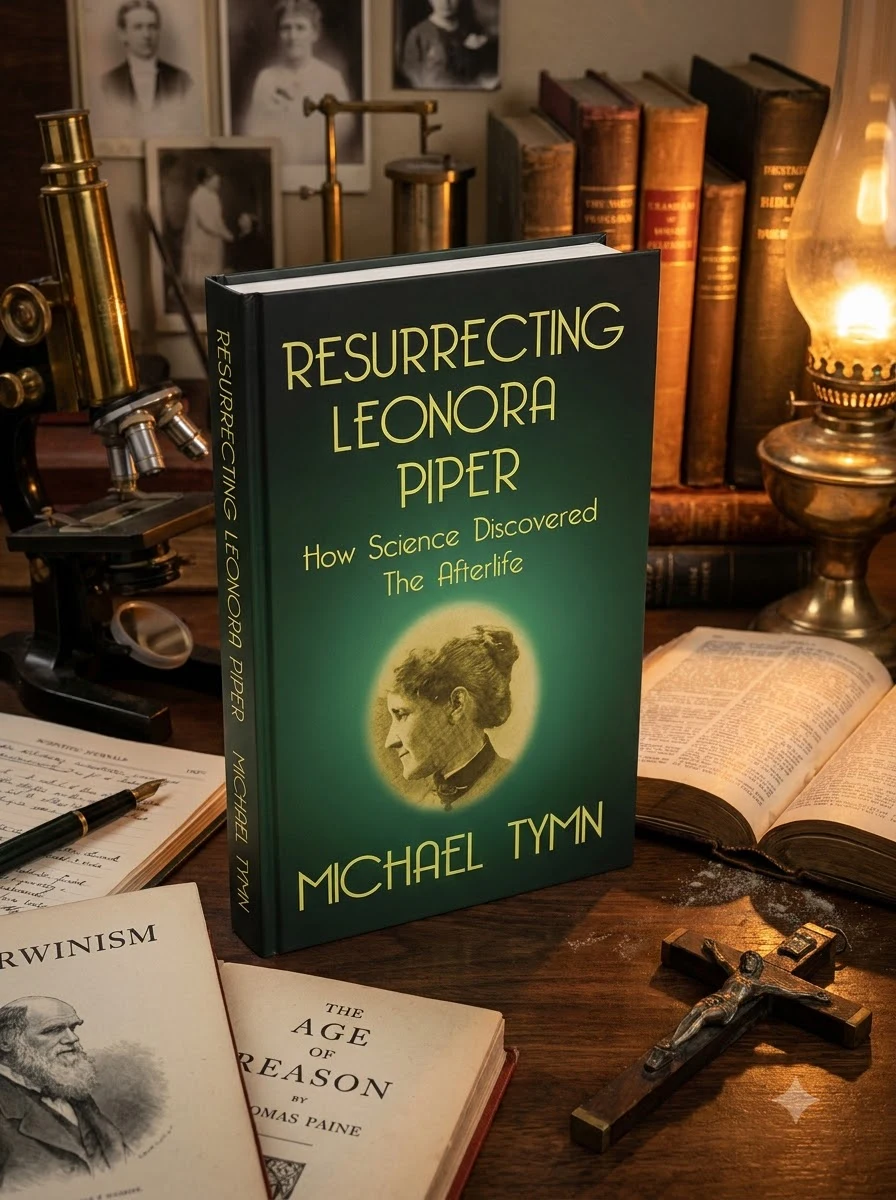
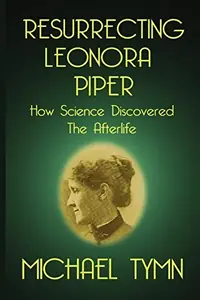
Resurrecting Leonora Piper: How Science Discovered the Afterlife
Tymn, MichaelStock reported in the catalog; fulfillment is confirmed with your request.
Could scientific inquiry truly prove the existence of an afterlife through one remarkable medium?
This compelling volume delves into the extraordinary case of Leonora Piper, a celebrated trance medium whose abilities became the subject of intense scientific scrutiny during an era of profound intellectual upheaval. As traditional religious beliefs waned under the dual pressures of burgeoning rationalism and Darwinian thought, the quest for empirical evidence of life after death became paramount. Michael Tymn meticulously chronicles how leading minds turned to Piper, hoping her phenomena could bridge the chasm between spiritual longing and scientific skepticism, offering a fascinating look at how science grappled with the supernatural.
This work sits at the intersection of late Victorian spiritualism and the emerging field of psychical research, reflecting an era where rationalism challenged traditional religious dogma. It explores how scientific inquiry attempted to validate supernatural phenomena during a time of profound intellectual upheaval.


📝 Description: Resurrecting Leonora Piper: How Science Discovered the Afterlife
💎 Expert review
📖 Why choose it
Why this book is worth reading
Readers fascinated by the historical tension between faith and empiricism will find this book deeply engaging. It offers a unique perspective on how leading intellectuals of the past grappled with the unknown, using Leonora Piper as a lens to examine broader societal shifts. Those interested in the biography of extraordinary individuals who bridged two worlds—the spiritual and the scientific—will appreciate Tymn’s meticulous chronicle. It is particularly rewarding for those who enjoy narratives about the quest for evidence in an age where Darwinian thought was reshaping our understanding of life, providing a compelling look at how science once tried to measure the immeasurable.
⭐ Reader reviews
Reader rating
Tymn provides a thorough account of Piper’s case, appealing to history buffs and skeptics alike. However, readers seeking hard, reproducible scientific data or modern paranormal investigations may find the historical context too dense or the conclusions unconvincing by contemporary standards. It is not for those who prefer definitive answers over nuanced historical exploration. The book shines in its contextualization of intellectual upheaval rather than proving the afterlife. It suits those comfortable with ambiguity and interested in how rationalism coexisted with spiritual longing, but it may disappoint readers looking for a straightforward defense of psychic phenomena without the heavy historical baggage.
❓ Frequently asked questions
📖 Who should read this
If you're fascinated by the intersection of science and spirituality, the history of psychic research, or the cultural shifts that birthed modern occultism, this book is for you. It offers a unique window into a pivotal era where the boundaries of belief were fiercely debated and scientifically probed.
🎯 Key themes and symbolism
Erosion of Faith
The book explores the dramatic decline of mainstream religious adherence in the late 19th century, predating Darwin's influence. It highlights how thinkers like Thomas Paine challenged orthodox theology, leaving many educated individuals questioning the very existence of God and any form of post-mortem existence, setting the stage for alternative spiritual inquiries.
Rise of Spiritualism
This theme details the emergence of Spiritualism, tracing its origins to the 1848 Hydesville phenomena. It positions Spiritualism not merely as a new religious movement, but as a direct response to the era's spiritual vacuum, offering tangible, albeit controversial, communication with the deceased and a different kind of 'proof' for an afterlife.
Scientific Investigation
Central to the narrative is the unprecedented scientific examination of psychic phenomena, particularly through the mediumship of Leonora Piper. The book delves into how researchers, seeking to apply empirical methods to the unseen, rigorously tested Piper's claims, attempting to validate or debunk the possibility of genuine communication from beyond the grave.
💬 Quotes from the book
“In an age where faith faltered before the onslaught of reason, Leonora Piper became an unexpected crucible for the ultimate question: does consciousness persist beyond the veil?”
“The meticulous records of scientific societies, often dismissive of the ethereal, found themselves grappling with phenomena that defied easy categorization, forcing a reevaluation of what constituted 'proof.'”
📜 Historical context
📚 Glossary
- Spiritualism
- Rationalism
- Darwinism
📔 Questions to reflect on
- How did the rise of scientific thought in the 19th century challenge your own understanding of spirituality or the supernatural?
- If you were a scientist in Piper's era, what methods would you employ to investigate claims of communication with the deceased, and what would constitute 'proof' for you?
- Reflect on how cultural and intellectual shifts, like those described in the book, shape our collective beliefs about life, death, and the unknown.
✍️ More books by this author Tymn, Michael
All books by this author →
🏛 Books from this publisher White Crow Books
All books from this publisher →



You might also like
See more →


 91
91