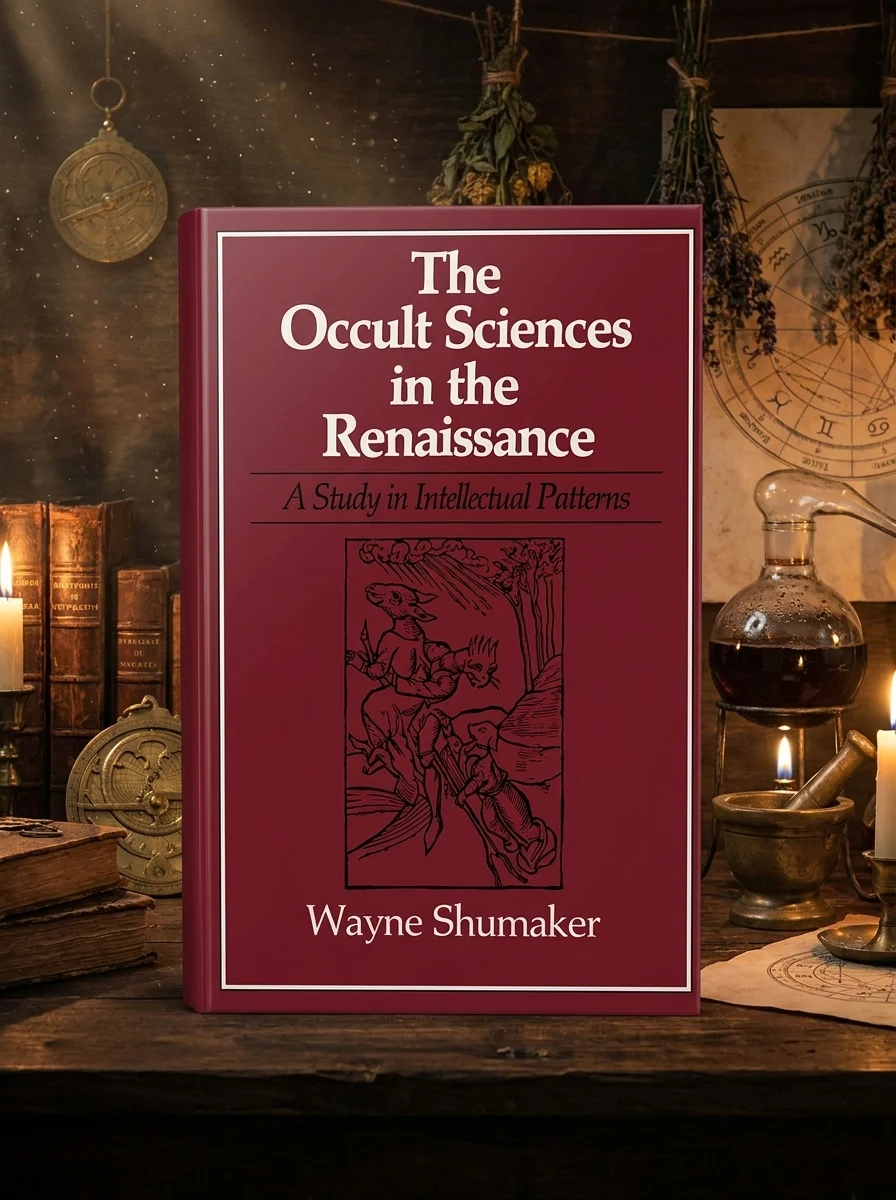
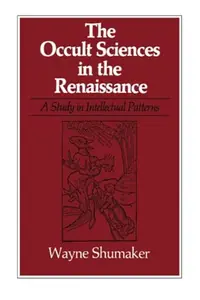
The Occult Sciences in the Renaissance: A Study in Intellectual Patterns - Ingram Academic Shumaker, Wayne
Stock reported in the catalog; fulfillment is confirmed with your request.
Uncover the hidden intellectual currents that shaped the Renaissance mind.
Shumaker's seminal work meticulously disentangles the intricate web of esoteric thought prevalent during the Renaissance. Far from dismissing these practices as mere superstition, he illuminates how five distinct occult sciences — astrology, alchemy, natural magic, kabbalah, and divination — were deeply integrated into the era's intellectual landscape. This study reveals the rigorous, albeit often misunderstood, methodologies and philosophical underpinnings that characterized these pursuits, positioning them as critical precursors to modern scientific inquiry and spiritual awakening.
This work anchors itself within the rich tradition of Renaissance intellectual history, exploring the profound intersection of esoteric practices and early modern scientific thought. It serves as a vital bridge between historical occultism and the philosophical foundations of contemporary spiritual inquiry.


📝 Description: The Occult Sciences in the Renaissance: A Study in Intellectual Patterns - Ingram Academic Shumaker, Wayne
💎 Expert review
📖 Why choose it
Why this book is worth reading
This book is an essential resource for scholars and serious enthusiasts eager to understand the intellectual architecture of the Renaissance. It offers a rigorous examination of how astrology, alchemy, natural magic, kabbalah, and divination were not mere superstitions but sophisticated philosophical systems. Readers seeking to trace the lineage of modern scientific inquiry back to its esoteric roots will find this study invaluable. Shumaker’s meticulous disentangling of these complex currents provides clarity on how these misunderstood methodologies shaped the era's mindset. It is perfect for those who wish to move beyond surface-level descriptions and engage with the deep, interconnected web of thought that defined the period's spiritual and intellectual awakening.
⭐ Reader reviews
Reader rating
Shumaker delivers a seminal, meticulously researched study that recontextualizes Renaissance occultism as rigorous intellectual work rather than simple superstition. The analysis of five distinct sciences offers profound insights into the era’s philosophical underpinnings. However, this text is dense and academic, unsuitable for casual readers seeking accessible narratives or practical magical instruction. It demands patience and a willingness to engage with complex historical patterns. While it brilliantly illuminates the precursors to modern science and spirituality, those looking for light reading or immediate esoteric application will likely find the scholarly tone and intricate dissection of intellectual currents too demanding and dry for their preferences.
❓ Frequently asked questions
📖 Who should read this
If you're curious about the true intellectual tapestry of the Renaissance, beyond its more commonly celebrated facets, this book is essential. It offers a scholarly yet accessible entry point for understanding how esoteric thought fueled both scientific inquiry and spiritual exploration during a transformative era.
🎯 Key themes and symbolism
Renaissance Intellectual Currents
Delves into how the period's burgeoning humanism and scientific curiosity intertwined with esoteric traditions. Shumaker demonstrates that figures often celebrated for their rationality also engaged deeply with practices like alchemy and astrology, seeing them not as antithetical to knowledge but as alternative pathways to understanding the cosmos and human existence.
Occult Practice Analysis
Offers a structured examination of five principal occult sciences of the Renaissance. The book meticulously outlines their theoretical foundations, practical applications, and the intellectual frameworks through which practitioners sought to manipulate or understand the hidden forces of the universe, providing clarity on complex historical methodologies.
Historical Interconnections
Explores the profound links between Renaissance occultism and the development of early modern science, philosophy, and religion. Shumaker illustrates how these seemingly disparate fields were often mutually influential, challenging modern distinctions and revealing a more holistic, interconnected understanding of knowledge during this pivotal historical era.
💬 Quotes from the book
“The Renaissance mind, far from compartmentalizing reason and revelation, often saw the arcana of nature as a divine script awaiting decipherment, where astrological charts and alchemical transmutations were but different grammars of the same cosmic language.”
“Alchemy, beyond its material pursuits, served as a profound metaphorical framework for spiritual purification and philosophical understanding, a testament to the era's holistic approach to both the physical and the metaphysical.”
📜 Historical context
📚 Glossary
- Renaissance
- Occult Sciences
- Intellectual Patterns
📔 Questions to reflect on
- How did the Renaissance integration of occult sciences inform or hinder the eventual rise of empirical science?
- Consider how modern distinctions between 'science' and 'superstition' might obscure our understanding of historical intellectual frameworks.
- If you lived in the Renaissance, which of the five occult sciences would you be most drawn to study, and why?
🏛 Books from this publisher University of California Press
All books from this publisher →
 89
89
You might also like
See more →