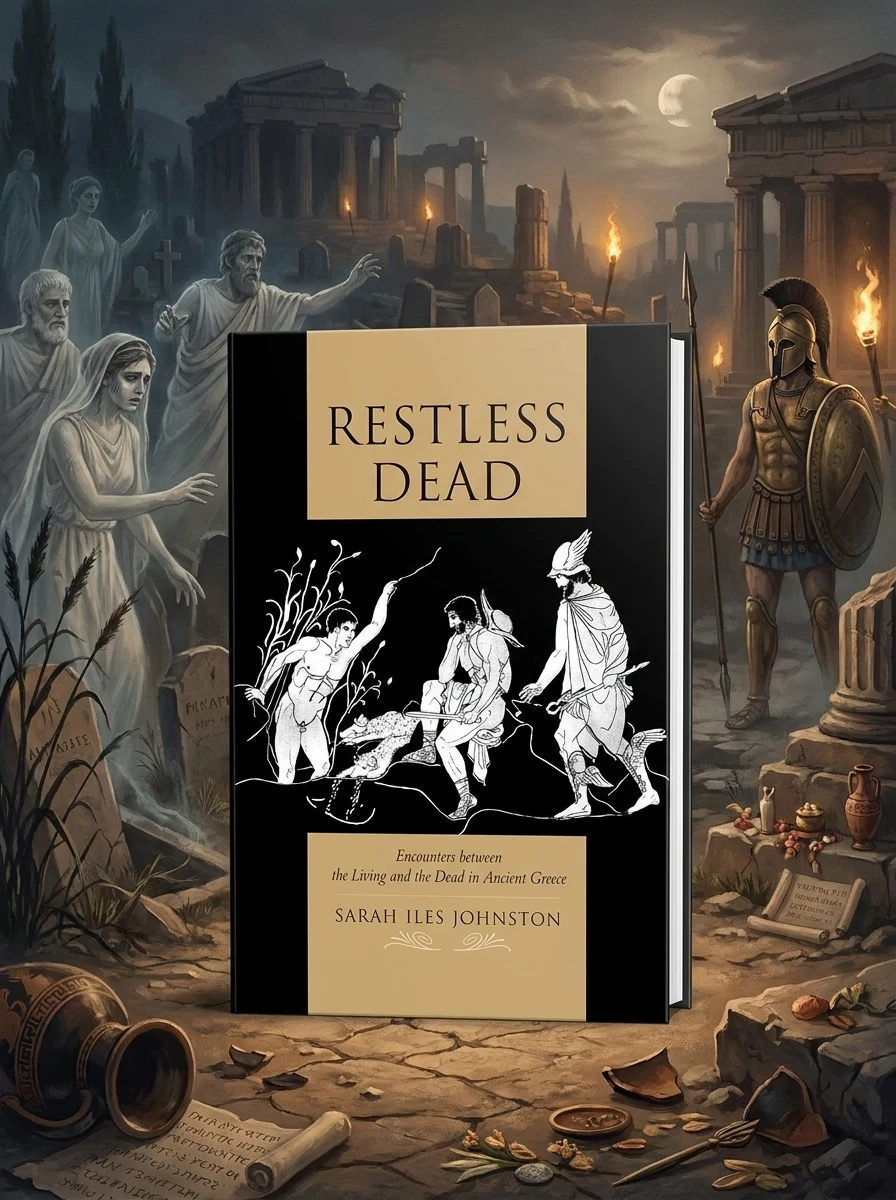
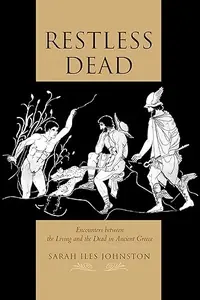
Restless Dead: Encounters Between the Living and the Dead in Ancient Greece
Johnston, Sarah IlesStock reported in the catalog; fulfillment is confirmed with your request.
Unearth the spectral evolution of the dead in ancient Greece and their profound societal power.
Sarah Iles Johnston meticulously explores how ancient Greek perceptions of the departed shifted dramatically through the Archaic and Classical periods. This compelling study reveals how societal transformations, such as the emergence of the *polis* and cross-cultural exchanges, reshaped funerary practices and beliefs. Johnston demonstrates that the realm of the dead was a dynamic mirror of the living world, reflecting its tensions, reinforcing its values, and ultimately becoming a potent force wielded by those who understood its mysteries. Drawing on both classical texts and newly discovered sources, this work offers a rich, nuanced understanding of spectral interactions.
This scholarly work anchors itself within the rich tradition of classical studies and ancient Greek historiography, specifically examining the intersection of religion, sociology, and funerary practices during the Archaic and Classical periods. It contributes to the broader academic discourse on how societal structures like the polis influenced spiritual beliefs and spectral interactions.


📝 Description: Restless Dead: Encounters Between the Living and the Dead in Ancient Greece
💎 Expert review
📖 Why choose it
Why this book is worth reading
Scholars of ancient history, classicists, and serious enthusiasts of esoteric traditions will find immense value in this rigorous examination of Greek necromancy. Readers seeking to understand the profound societal power wielded by the dead will appreciate Johnston’s nuanced analysis of how funerary practices evolved alongside political shifts. It is essential for those interested in the dynamic mirror between the living world and the spectral realm, offering a deep dive into cross-cultural exchanges and the mysteries understood by those who navigated these tensions effectively.
⭐ Reader reviews
Reader rating
Johnston provides a meticulous, academically dense exploration of ancient Greek perceptions of the departed, relying heavily on classical texts and newly discovered sources. While intellectually robust for specialists in classical studies and religious history, this volume is not suited for casual readers or those seeking accessible, narrative-driven ghost stories. It demands patience with scholarly rigor and sociological theory rather than offering immediate entertainment or simple mythological retellings, making it a specialized tool for understanding societal transformations through the lens of the dead.
❓ Frequently asked questions
📖 Who should read this
If you are captivated by the intersections of ancient history, religious studies, and the enduring human fascination with the afterlife, this book is for you. It offers profound insights into Greek cultural anthropology and the historical development of beliefs surrounding death and spirits.
🎯 Key themes and symbolism
The Specialized Practitioner
Discover the fascinating origins of the *goes*, the ritual specialists who served as intermediaries between the mortal and spectral realms. Johnston delves into their development, detailing how certain individuals gained the unique knowledge and power to commune with and even influence the restless spirits, establishing a vital, if sometimes feared, role within ancient Greek society.
Threat of Unquiet Spirits
Explore the ancient Greek understanding of malevolent ghosts, specifically those of individuals who met an untimely or dishonorable end. This book examines the societal anxieties surrounding these 'restless dead' and the various methods employed to placate or control them, highlighting how such beliefs underscored communal values and fears concerning proper life and death.
Hecate's Shifting Influence
Trace the intriguing evolution of Hecate from a goddess of crossroads and witchcraft to a formidable mistress of ghosts. Johnston connects this transformation to significant female rites of passage and nocturnal rituals, revealing how her cult became deeply intertwined with chthonic powers and the navigation of the liminal space between life and death.
💬 Quotes from the book
“The spectral landscape of ancient Greece was never static; it was a living, breathing reflection of its societal anxieties and aspirations, constantly reshaped by political currents and cultural exchange.”
“To control the dead was, in essence, to control a potent aspect of the living community, granting influence over memory, fear, and the very fabric of social order.”
📜 Historical context
📚 Glossary
- Polis
- Goes
- Erinyes
📔 Questions to reflect on
- How might a society's evolving political structure (like the *polis*) directly influence its understanding of the afterlife and its rituals concerning the dead?
- Consider the 'restless dead' in your own cultural or personal tradition. What causes them to be unquiet, and what measures are taken to bring them peace or avert their malevolence?
- Reflect on a deity or archetypal figure in any mythology whose role shifted significantly over time. What societal changes do you think prompted this transformation, similar to Hecate's evolution?
✍️ More books by this author Johnston, Sarah Iles
All books by this author →
🏛 Books from this publisher University of California Press
All books from this publisher →
 89
89
You might also like
See more → 91
91



 91
91
 91
91