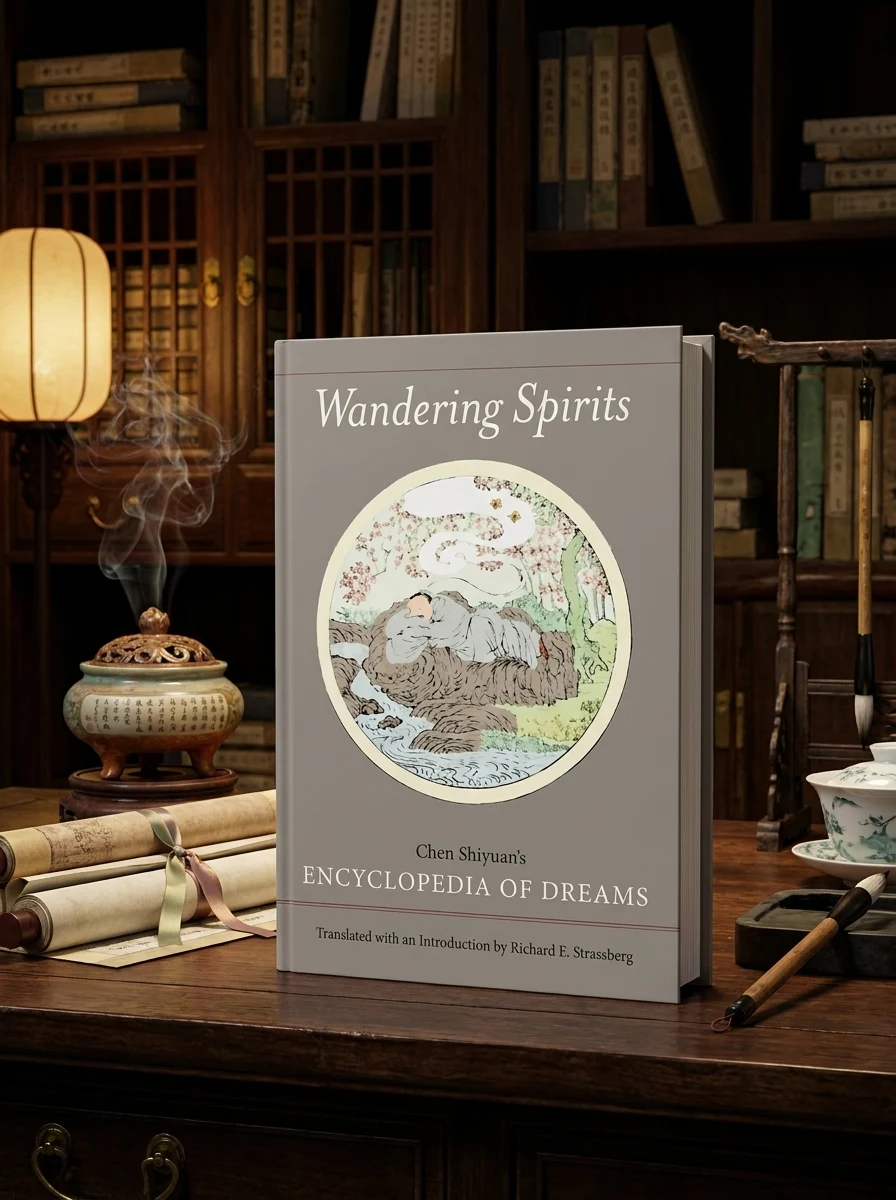
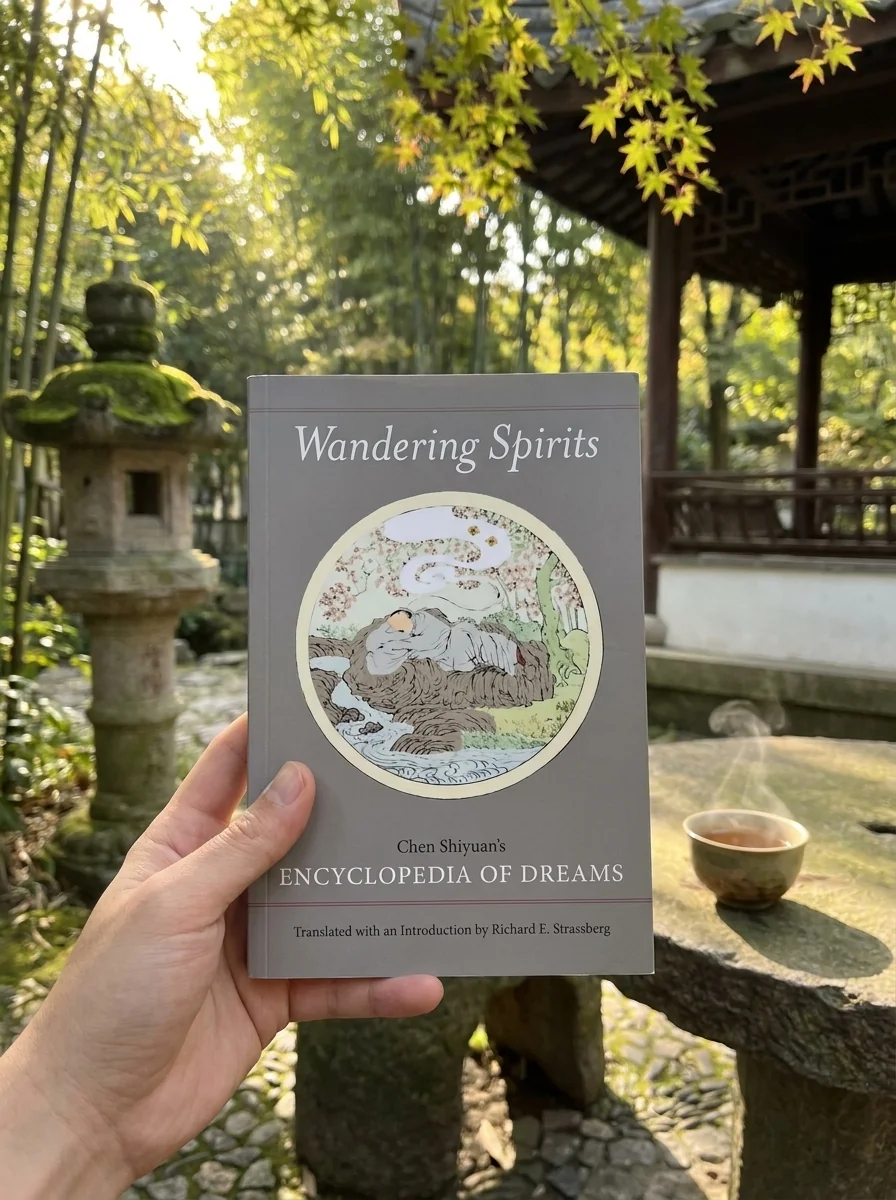
Wandering Spirits: Chen Shiyuan's Encyclopedia of Dreams
✍️ Strassberg, Richard EA scholarly translation of a classic Chinese text on dream interpretation and divination.
Strassberg translates Chen Shiyuan’s Lofty Principles, organizing the material into Inner Chapters covering theoretical frameworks like The Sage and The Disciple of Emptiness. The Outer Chapters catalog specific omens found in nature and daily life. This structure reveals how traditional Chinese culture categorized spiritual messages through both abstract concepts and tangible objects. The inclusion of dynastic timelines helps contextualize these practices within a broader historical narrative.
The text draws on three millennia of Chinese history, focusing on traditional dream culture. It utilizes sources from the Lofty Principles of Dream Interpretation and references Chinese Dynasties to place these mystical practices within their proper historical framework.


Praise for this book
“An important scholarly endeavor.”
📝 Description: Wandering Spirits: Chen Shiyuan's Encyclopedia of Dreams
📑 What's inside
- Preface
- Editorial Notes
- Chinese Dynasties
- Introduction
- lofty principles of dream interpretation by chen shiyuan
- Preface 1
- part i . The Inner Chapters
- 1. The True Controller
- 2. The Long-Willow Method
- 3. Day and Night
- 4. The Various Forms of Divination
- 5. The Disciple of Emptiness
- 6. The Sage
- 7. The Six Types of Dreams
- 8. The Ancient Methods of Interpretation
- 9. Auspicious Events
- 10. Influences and Abnormal Conditions
- part ii . The Outer Chapters
- 1. Heaven
- 2. Sun and Moon
- 3. Thunder and Rain
- 4. Mountains and Rivers
- 5. Forms and Appearances
- 6. Food and Clothing
- 7. Utensils and Things
- 8. Valuables and Goods
- 9. Brush and Ink
- 10. Written Graphs
- 11. The Official Examinations
- 12. Gods and Strange Things
- 13. Longevity and Destiny
- 14. The Feng and Other Birds
- 15. Animals
- 16. Dragons and Snakes
- 17. Turtles and Fish
- 18. Plants and Trees
- 19. Reward and Retribution
- 20. On General Analogies
- List of Sources
- Index to Dream Narratives
- Preface
💎 Expert review
📖 Why choose it
Why this book is worth reading
Readers deeply interested in the esoteric arts of the Far East will find this volume indispensable for its rare window into historical dream understanding. Those seeking to grasp how visions were categorized and utilized for self-knowledge across millennia will appreciate Richard E. Strassberg’s meticulous translation of Chen Shiyuan's compendium. It is essential for scholars and enthusiasts alike who wish to uncover the ancient secrets of Chinese dream interpretation. By revealing the deep societal significance of these practices, the book offers a compelling study that bridges past and present, allowing readers to step into a rich historical tapestry where night visions held profound power.
⭐ Reader reviews
Reader rating
This volume is an essential resource for anyone seeking to understand the esoteric arts of the Far East, particularly through the lens of imperial China. Richard E. Strassberg meticulously unveils Chen Shiyuan's *Lofty Principles of Dream Interpretation*, offering a comprehensive compendium on dreams from that era. However, it does not suit casual readers looking for light entertainment or quick spiritual fixes. The text is dense with historical analysis and cultural context, requiring patience and academic interest. Those seeking straightforward self-help advice will likely find this scholarly approach too rigorous. It is best reserved for those ready to engage with the intricate world of traditional Chinese dream culture and its profound societal implications.
❓ Frequently asked questions
📖 Who should read this
If you're drawn to ancient esoteric traditions, the history of mind-body-spirit practices, or the rich tapestry of Chinese culture, this book is for you. Dive deep into a scholarly yet accessible exploration of dreams, far beyond modern self-help.
🎯 Key themes and symbolism
Ancient Dream Divination
The book meticulously explores the historical methodologies and symbolic frameworks employed in traditional Chinese dream interpretation. It delves into the specific techniques and classifications used by practitioners to decipher nocturnal visions, offering insight into their divinatory and prognostic functions within society.
Cultural Significance of Dreams
This work illuminates the profound role dreams played in Chinese thought and daily life for over three thousand years. It examines how these visions influenced personal decisions, state affairs, and philosophical understanding, demonstrating their integral position within the broader cultural consciousness of the era.
Classical Chinese Scholarship
Beyond mere translation, the book contextualizes Chen Shiyuan's monumental work within the vast landscape of classical Chinese scholarship. It highlights how *Lofty Principles* synthesized existing knowledge and contributed to the ongoing intellectual discourse surrounding the mind, spirit, and cosmos in ancient China.
📜 Historical context
📚 Glossary
- Mengzhan (夢占)
- Chen Shiyuan
- Oneiromancy
📔 Questions to reflect on
- Reflect on a dream you've had recently. How might ancient Chinese methods of interpretation, focused on symbolism and omens, offer a different perspective than modern psychological approaches?
- Consider the idea that dreams can influence waking decisions. In what ways do you think your own dreams, or those of historical figures, might have subtly (or overtly) shaped actions or beliefs?
- If you were to compile your own 'Encyclopedia of Dreams' based on your personal experiences and culture, what key symbols, themes, and interpretive methods would you include?
📖 Read on the blog
✍️ More books by this author Strassberg, Richard E
All books by this author →


🏛 Books from this publisher University of California Press
All books from this publisher →
You might also like
See more →



Have a question about this item?
Ask about the edition, condition, delivery or anything else — we reply by email or phone, usually within a day.
