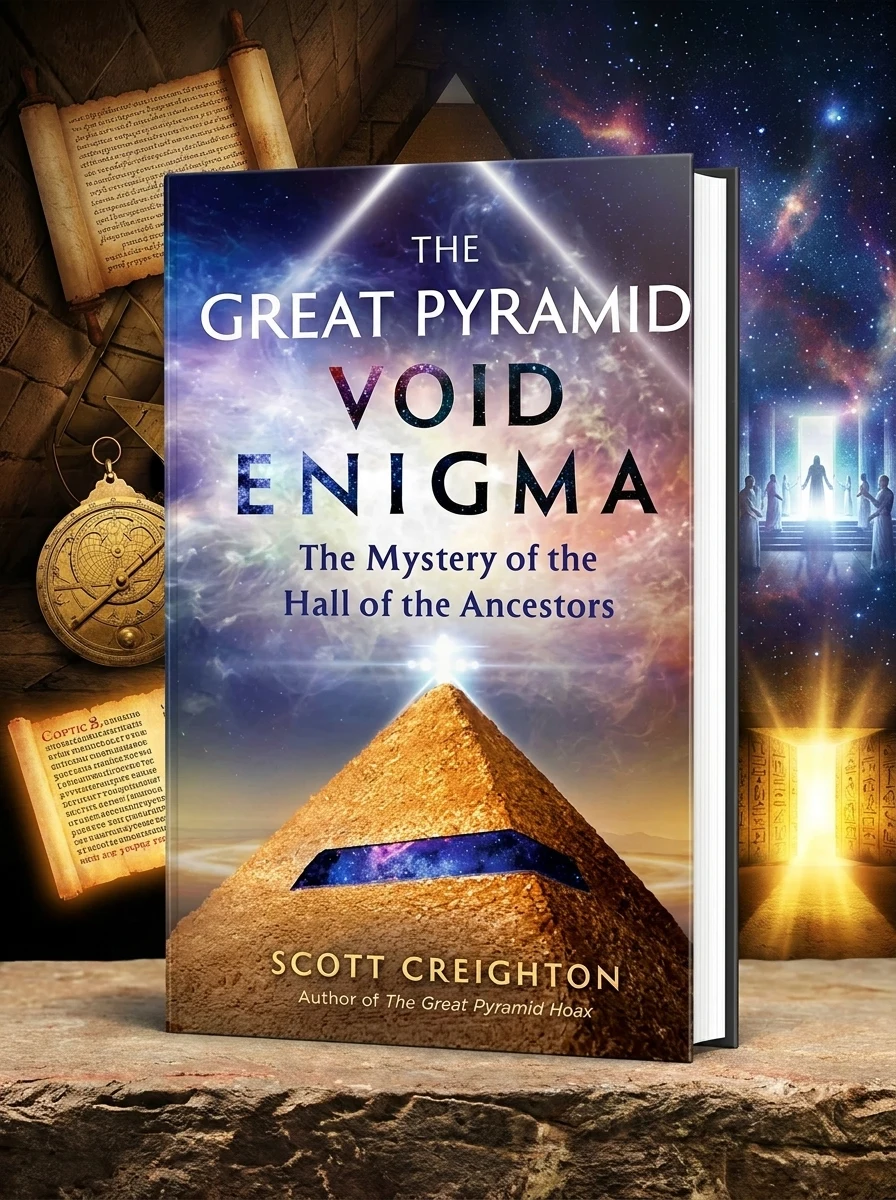
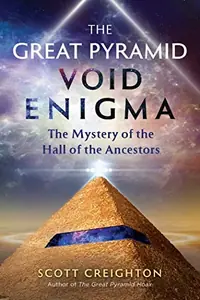
The Great Pyramid Void Enigma: The Mystery of the Hall of the Ancestors
Creighton, Scott

This edition can be ordered. No arrival date is confirmed.
Uncover the Great Pyramid's deepest secret: a hidden chamber designed to save civilization.
Scott Creighton presents a compelling reinterpretation of the Great Pyramid's recently discovered "Big Void." Dismissing conventional explanations, he meticulously argues, drawing upon ancient Coptic-Egyptian texts, astronomy, and archaeological insights, that this colossal internal space was no accident. Rather, it served a dual purpose: both a sacred "Hall of Ancestors" and an ingeniously engineered "recovery vault," constructed by Pharaoh Khufu to safeguard humanity's knowledge and ensure civilization's survival through an anticipated global cataclysm.
This work belongs to the tradition of alternative archaeology and esoteric Egyptology, which reinterprets ancient monuments through non-conventional historical and spiritual lenses. It aligns with modern inquiries into hidden knowledge and the preservation of civilization against cataclysmic events.


📝 Description: The Great Pyramid Void Enigma: The Mystery of the Hall of the Ancestors
💎 Expert review
📖 Why choose it
Why this book is worth reading
Readers fascinated by the intersection of ancient engineering and mystical purpose will find this book deeply rewarding. Scott Creighton offers a compelling narrative that challenges standard archaeological consensus, inviting you to see the Great Pyramid not just as a tomb, but as a sophisticated survival mechanism. If you are intrigued by the possibility that Khufu’s builders possessed advanced foresight regarding global catastrophes, this text provides a detailed exploration of their intentions. It appeals to those who enjoy meticulous argumentation backed by Coptic-Egyptian texts and astronomical data. You will gain a fresh perspective on the Hall of Ancestors as a sacred space and a recovery vault, enriching your understanding of how ancient wisdom might have been safeguarded for future generations in times of crisis.
⭐ Reader reviews
Reader rating
Creighton’s reinterpretation of the 'Big Void' is intellectually stimulating for those open to alternative historical frameworks. However, this book does not suit readers who strictly adhere to mainstream Egyptological consensus or who seek purely academic, peer-reviewed archaeological evidence without esoteric interpretation. Those expecting a dry, conventional history will likely find the reliance on Coptic texts and speculative engineering arguments frustrating rather than illuminating. It is best appreciated by those willing to suspend strict skepticism in favor of exploring the mystical potential of ancient structures. The work succeeds as a passionate argument for hidden knowledge but may feel unbalanced to skeptics who prioritize traditional historical methodologies over the author’s synthesized insights into civilization survival.
❓ Frequently asked questions
📖 Who should read this
If you're drawn to ancient enigmas, question established historical narratives, or seek to understand the esoteric wisdom embedded in monumental structures, this exploration of the Great Pyramid's hidden purpose will captivate your imagination and challenge your perceptions.
🎯 Key themes and symbolism
The Enigmatic 'Big Void'
This book dives deep into the 2017 discovery of a vast, unknown space within the Great Pyramid, known as the 'Big Void.' Creighton challenges the mainstream view that it's simply a structural anomaly, instead positing a deliberate, profound function rooted in ancient foresight and esoteric knowledge, far beyond stress-relief.
Ancient Texts as Key
Creighton masterfully unlocks the mysteries of the pyramid by turning to often-overlooked Coptic-Egyptian texts. These ancient writings, combined with astronomical data and archaeological clues, provide the intellectual framework for understanding the true purpose and design intentions behind the pyramid's most recent and baffling revelation.
Cataclysm and Renewal
At the heart of Creighton's thesis is the idea that the Great Pyramid was conceived as an "indestructible recovery vault." Built in anticipation of a world-altering catastrophe, the book explores how this monumental structure was intended to preserve essential knowledge and artifacts, facilitating the rebirth of Egyptian civilization and guiding future generations.
💬 Quotes from the book
“The conventional wisdom regarding the Great Pyramid crumbles when confronted with the echoes of forgotten texts and the stark reality of its internal design.”
“Far from being a mere structural anomaly, this colossal void speaks of a sophisticated foresight, a sanctuary built not for the dead, but for the preservation of life itself.”
📜 Historical context
📚 Glossary
- Big Void
- Muon Radiography
- Coptic-Egyptian Texts
📔 Questions to reflect on
- How might our understanding of ancient civilizations change if we acknowledge their capacity to predict and prepare for future global cataclysms?
- Consider how modern science, like muon radiography, can unveil secrets that force us to re-evaluate historical narratives. What other ancient sites might hold similar hidden truths?
- If the Great Pyramid was indeed a 'recovery vault,' what knowledge or artifacts would you choose to preserve for future generations facing an uncertain future?
✍️ More books by this author Creighton, Scott
All books by this author →
🏛 Books from this publisher Bear & Company
All books from this publisher →
You might also like
See more →