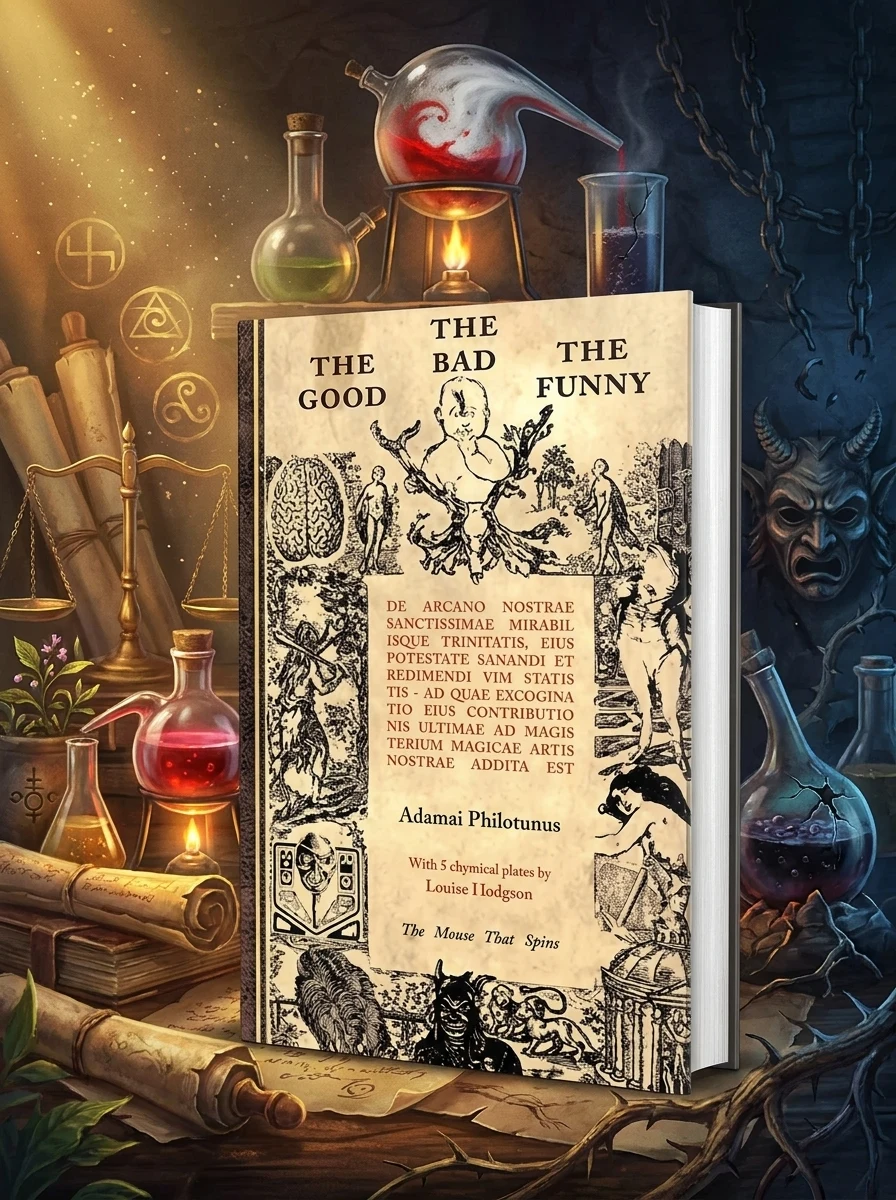
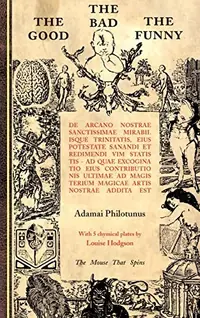
The Good The Bad The Funny: de Arcano Nostrae Sanctissimae Mirabilisque Trinitatis
Philotunus, Adamai; , Dukes, RamseyStock reported in the catalog; fulfillment is confirmed with your request.
Is duality truly a problem to be transcended, or a dynamic to be embraced?
This groundbreaking work by Philotunus and Dukes challenges conventional approaches to conflict, arguing that the stark polarity of "good" and "bad" often stifles growth rather than fostering understanding. Instead of seeking a simplistic unity, the authors propose a radical shift towards trinitarian thought. They introduce a "third principle" akin to the alchemical Mercury, designed to transmute frozen opposition into a vibrant, evolving dynamic, transforming stagnant conflict into a spirited dance rather than a perpetual struggle.
Situated within the realm of modern ceremonial magic, this volume bridges esoteric philosophy with practical psychological frameworks. It reflects a contemporary shift in occult studies that moves beyond rigid dualistic structures toward more dynamic, integrative models of spiritual practice.


📝 Description: The Good The Bad The Funny: de Arcano Nostrae Sanctissimae Mirabilisque Trinitatis
💎 Expert review
📖 Why choose it
Why this book is worth reading
This book is essential for practitioners who feel stifled by traditional binary moralities and seek a more vibrant approach to their craft. If you are tired of viewing conflict as merely something to be resolved or transcended, this work offers a refreshing alternative. It appeals to those interested in alchemical symbolism and trinitarian thought, providing tools to transform stagnant opposition into a spirited dance. Readers who appreciate the complex, often paradoxical nature of esoteric traditions will find profound value in its radical proposal to embrace polarity rather than escape it. It is ideal for magicians looking to deepen their understanding of dynamic forces within their ceremonial workings.
⭐ Reader reviews
Reader rating
The text presents a bold theoretical challenge to conventional occult thought, yet its abstract nature may alienate those seeking straightforward ritual instructions or clear-cut dogma. While the concept of a 'third principle' akin to Mercury is intellectually stimulating, it requires a high tolerance for philosophical ambiguity and non-linear thinking. It does not suit readers who prefer binary moral frameworks or those looking for immediate, tangible results without deep conceptual engagement. However, for the dedicated scholar of esoteric dynamics, it offers a necessary critique of simplistic unity models.
❓ Frequently asked questions
📖 Who should read this
If you're weary of simplistic binaries and yearning for a more nuanced understanding of conflict and consciousness, this book offers a potent intellectual elixir. Seekers of advanced esoteric philosophy, alchemical wisdom, and innovative approaches to personal and societal transformation will find profound insights within these pages.
🎯 Key themes and symbolism
The Peril of Polarity
Many human conflicts stem from rigid dualistic thinking, where opposition solidifies into animosity. This book explores how the fundamental "good/bad" binary can strip away compassion, preventing genuine engagement with differing perspectives and trapping individuals in unyielding standoffs.
Beyond False Unity
Traditional calls for unity, even as a "higher synthesis," are often seen as a regression. The authors contend that such unity sacrifices the inherent potential and energetic tension within duality, opting instead for a stasis that ultimately hinders true progress and transformation.
Embracing the Third Way
Introducing a "third principle," analogous to the alchemical universal solvent or the archetypal Trickster, offers a revolutionary path. This principle actively transforms polarized situations into a fluid, dynamic interplay, shifting the experience of conflict from destructive opposition to a creative, engaging "game."
💬 Quotes from the book
“The crystallisation of opposition into enmity, where one side becomes an utterly irredeemable 'demon,' is the true tragedy of dualistic thought.”
“Our aim is not the tranquil stasis of unity, but the vibrant, mercurial dance where pure conflict transforms into an energetic, dynamic game.”
📜 Historical context
📚 Glossary
- Dualistic Thinking
- Trinitarian Thinking
- Universal Solvent
📔 Questions to reflect on
- Consider a significant conflict in your life. How has dualistic thinking (e.g., "right vs. wrong," "us vs. them") shaped your perception of it?
- Imagine introducing a "third principle" – a mediator, a wildcard, an unexpected element – into that conflict. How might the dynamic shift?
- If human theology had always included a "God, Devil, and Trickster" triad, how might our understanding of morality, fate, and free will be different?
✍️ More books by this author Philotunus, Adamai; , Dukes, Ramsey
All books by this author →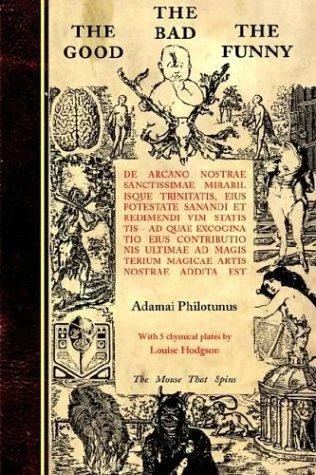
🏛 Books from this publisher Mouse That Spins
All books from this publisher →

You might also like
See more →

 91
91
 91
91
 91
91