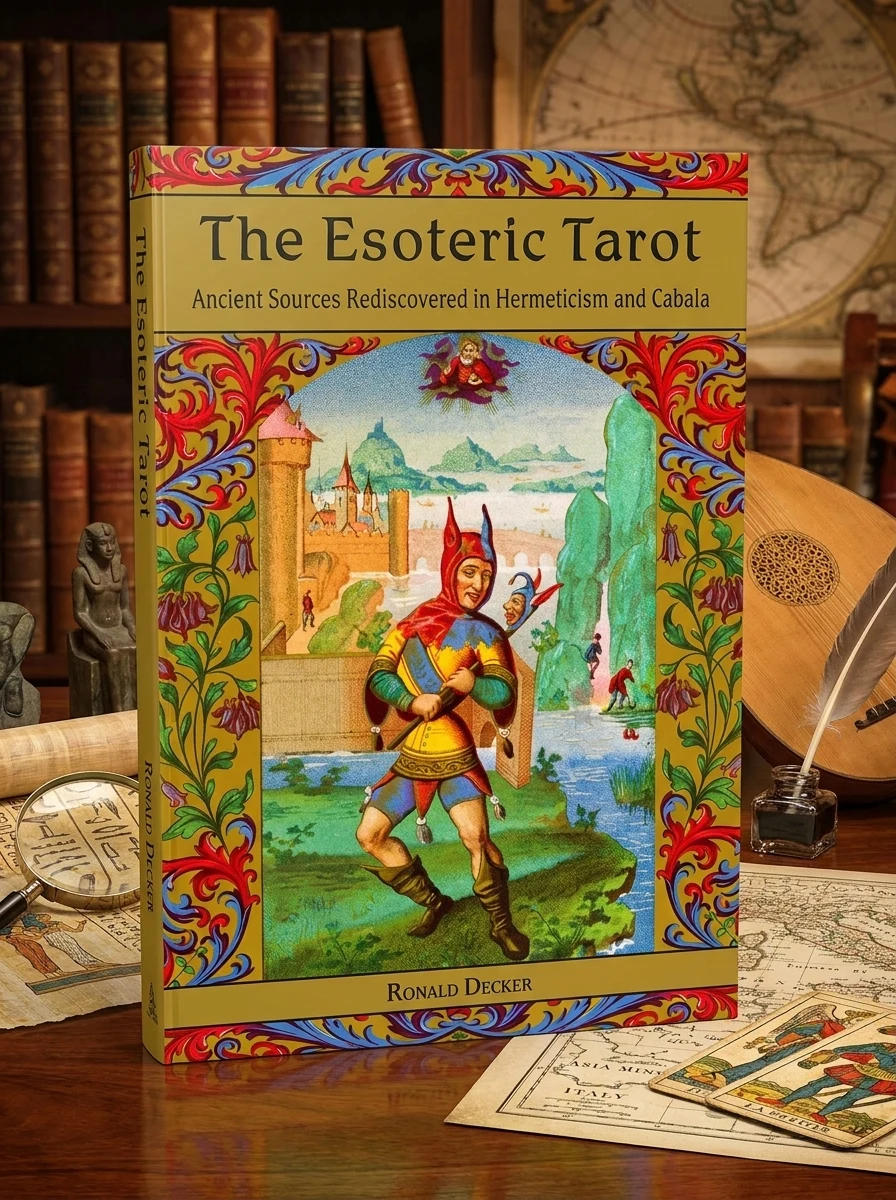
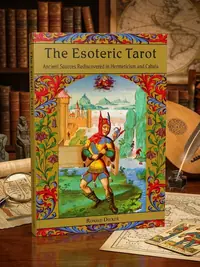
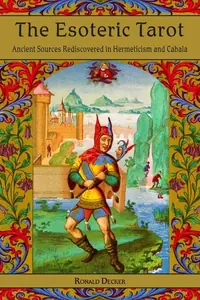
The Esoteric Tarot: Ancient Sources Rediscovered in Hermeticism and Cabalah


This edition can be ordered. No arrival date is confirmed.
Uncover the true, surprising history of Tarot, far beyond ancient Egyptian myths.
Ronald Decker's meticulous scholarship peels back layers of romanticized lore to reveal the authentic origins and evolution of the Tarot. Dispelling the myth of ancient Egyptian roots, this work traces the Minor Arcana to Asian card games and the Major Arcana to 15th-century Italian courtly inventions. Discover how Tarot transitioned from a popular pastime to a divinatory tool only in the 18th century, when Parisian occultists infused its trumps with Hermetic symbolism and later linked the suits to Cabalistic numeric systems. It's an indispensable guide for serious historical inquiry.
This work anchors itself in the rigorous historiography of Western esotericism, challenging long-held romanticized narratives within the tarot community by applying scholarly scrutiny to Hermetic and Cabalistic associations.


📝 Description: The Esoteric Tarot: Ancient Sources Rediscovered in Hermeticism and Cabalah
💎 Expert review
📖 Why choose it
Why this book is worth reading
Serious students of occult history will find immense value in this text, as it liberates the study of tarot from fanciful Egyptian fables and grounds it in verifiable social and cultural shifts. You gain a profound appreciation for how the deck evolved from a secular Italian pastime into a sophisticated divinatory system through the specific interventions of 18th-century Parisian occultists. This book is essential for those who crave intellectual honesty over mystical mystification, offering a clear roadmap of how Hermeticism and Cabalah were retroactively applied to create the symbolic language we recognize today. It rewards patience with deep historical clarity.
⭐ Reader reviews
Reader rating
Decker delivers a meticulous, albeit dry, scholarly correction to popular tarot lore. While indispensable for historians, this book will likely frustrate casual readers or seekers looking for immediate spiritual guidance or mythological wonder. It lacks the poetic resonance and intuitive accessibility preferred by many modern practitioners, focusing instead on cold, hard facts about Italian courtly inventions and Asian card games. Those expecting a mystical journey may find the academic tone distancing. However, for anyone tired of debunked Egyptian myths, it provides a necessary, rigorous foundation that prioritizes historical accuracy over romanticized tradition.
❓ Frequently asked questions
📖 Who should read this
For serious Tarot students, seasoned practitioners, and academic researchers alike, this book offers a rigorous, evidence-based journey into the cards' true past. If you value historical accuracy over romanticized tales, prepare for a revelation that reshapes your understanding.
🎯 Key themes and symbolism
Tarot's Surprising Origins
Decker meticulously details how the four-suited deck originated in Asia Minor before AD 1000, and the Major Arcana, or 'trumps,' were added by Italian courtiers in the 1400s. He asserts that the deck's initial purpose was for games, not divination, fundamentally challenging popular misconceptions of its ancient genesis.
Hermetic Infusion
The book explains how the practice of Tarot divination emerged in the 1700s, spearheaded by a Parisian fortuneteller. This pivotal figure consciously based the Major Arcana's imagery on Hermeticism, integrating elements of Greco-Egyptian alchemy, astrology, numerology, magic, and mysticism, thereby transforming a game into an esoteric tool.
Cabalistic Reinterpretations
While often attributed to ancient Jewish Cabala today, Decker demonstrates that the Minor Arcana acquired their Cabalistic meanings much later, also in the 18th century. He highlights a lost numerical system, likely rooted in Cabala, that informed these later attributions, enriching the deck's symbolic depth.
💬 Quotes from the book
“The Tarot, far from being a relic of pharaonic Egypt, first appeared as a sophisticated card game within the vibrant courts of Renaissance Italy.”
“It was not until an 18th-century Parisian visionary that the Major Arcana were systematically imbued with the rich, symbolic tapestry of Hermetic thought, transforming a pastime into a divinatory art.”
📜 Historical context
📚 Glossary
- Hermeticism
- Cabala
- Major Arcana
📔 Questions to reflect on
- How might understanding the historical evolution of Tarot, from game to divination, alter your personal approach to its use?
- Consider the impact of 'romantic misconceptions' on esoteric traditions. Why do some narratives persist despite historical evidence?
- Decker suggests a 'lost numerical system' connected to Cabala. How do you think such systems contribute to a deck's mystical resonance, even if their precise details are unknown?
🏛 Books from this publisher Quest Books (IL)
All books from this publisher →


You might also like
See more →![Fool's Pilgrimage: Kabbalistic Meditations on the Tarot [With CD]](/img/fool-s-pilgrimage-kabbalistic-meditations-on-the-tarot-with-cd-scene.webp)