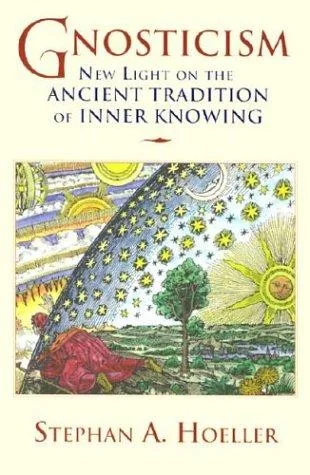
Gnosticism: New Light on the Ancient Tradition of Inner Knowing
✍️ Hoeller, Stephan AA historical survey of Gnosticism and its influence on Western literature and psychology.
This volume examines the origins of Gnosticism, contrasting its emphasis on direct spiritual perception with traditional faith. Dr. Stephan A. Hoeller documents the movement's tumultuous history, detailing how its central focus on personal knowledge sparked political conflict and martyrdom. The text follows the survival of Gnostic thought across time, showing how its core concepts shaped key figures in Western literature and psychology, including Voltaire, Blake, Yeats, Hesse, Melville, and Jung.
Gnosticism originated alongside Judeo-Christianity over two thousand years ago. Its emphasis on direct knowledge created a history of political intrigue and martyrdom, later inspiring modern European and American literary figures.


📝 Description: Gnosticism: New Light on the Ancient Tradition of Inner Knowing
💎 Expert review
📖 Why choose it
Why this book is worth reading
Readers seeking a profound spiritual alternative to conventional dogma will find this book deeply rewarding. Hoeller guides you through the tumultuous history of Gnosticism, revealing how it champions direct personal apprehension of the divine over mere belief. If you are drawn to the idea that divine knowledge is hidden within your own spirit, this text offers an illuminating path. It connects ancient fervor with modern thought, showing its influence on Enlightenment philosophers and literary giants. This book is ideal for those tired of external authority and eager to explore a tradition defined by mystery, endurance, and inner illumination.
⭐ Reader reviews
Reader rating
Hoeller provides a compelling narrative of Gnosticism’s dramatic trajectory, from political conflict to enduring influence on seminal thinkers. The text effectively highlights the tradition's core premise: direct personal apprehension of the divine. However, readers seeking strict historical academic rigor or those committed exclusively to mainstream Judeo-Christian orthodoxy may find the esoteric focus less appealing. It is not for those who prefer clear-cut doctrinal answers without philosophical nuance. Yet, for the spiritually curious, it serves as a vital bridge between ancient mystery traditions and contemporary inner work, offering clarity on a often misunderstood spiritual lineage.
❓ Frequently asked questions
📖 Who should read this
If you're drawn to spiritual paths that prioritize personal experience over doctrine, or you seek to understand the esoteric undercurrents of Western intellectual history, this book is for you. It's an essential read for anyone curious about direct divine perception.
🎯 Key themes and symbolism
Direct Inner Knowing
This book fundamentally explores 'gnosis,' the central tenet of Gnosticism, which posits that ultimate truth and divine connection are achieved not through blind faith or external dogma, but through a profound, personal, and intuitive understanding. Hoeller delves into how this emphasis on direct perception distinguishes Gnosticism and forms the cornerstone of its spiritual practice and worldview.
A Dramatic History
Hoeller vividly recounts the often-perilous journey of Gnosticism through history. From its origins to its suppression, the narrative is filled with episodes of intense spiritual passion, clashes with established religious and political powers, martyrdom, and the enduring mystery of its hidden survival. Readers will discover the human drama behind this frequently misunderstood tradition.
Enduring Cultural Impact
Beyond its historical narrative, the book highlights Gnosticism's remarkable and often clandestine influence on Western thought and culture. Hoeller draws connections to a diverse pantheon of influential figures, demonstrating how Gnostic ideas have resonated and reappeared in the works of poets, philosophers, and psychologists, proving its timeless appeal to seekers of deeper wisdom.
📜 Historical context
📚 Glossary
- Gnosis
- Gnosticism
- Inner Knowing
📔 Questions to reflect on
- Consider a time in your life when you experienced a profound, intuitive insight that felt like a direct 'knowing.' How did this experience differ from simply believing something?
- If direct inner knowing were the primary path to spiritual truth, how might our current religious and societal structures need to adapt or change?
- Reflect on a historical figure or artist you admire. Can you identify any themes in their work or life that resonate with the Gnostic emphasis on hidden knowledge or individual enlightenment?
![Fool's Pilgrimage: Kabbalistic Meditations on the Tarot [With CD]](/img/fool-s-pilgrimage-kabbalistic-meditations-on-the-tarot-with-cd-scene.webp)





![Magical Christianity: The Power of Symbols for Spiritual Renewal, with a CD of Guided Meditations [With CD]](/img/magical-christianity-the-power-of-symbols-for-spiritual-renewal-with-a-cd-of-guided-meditations-with-scene.webp)