Hermeticism
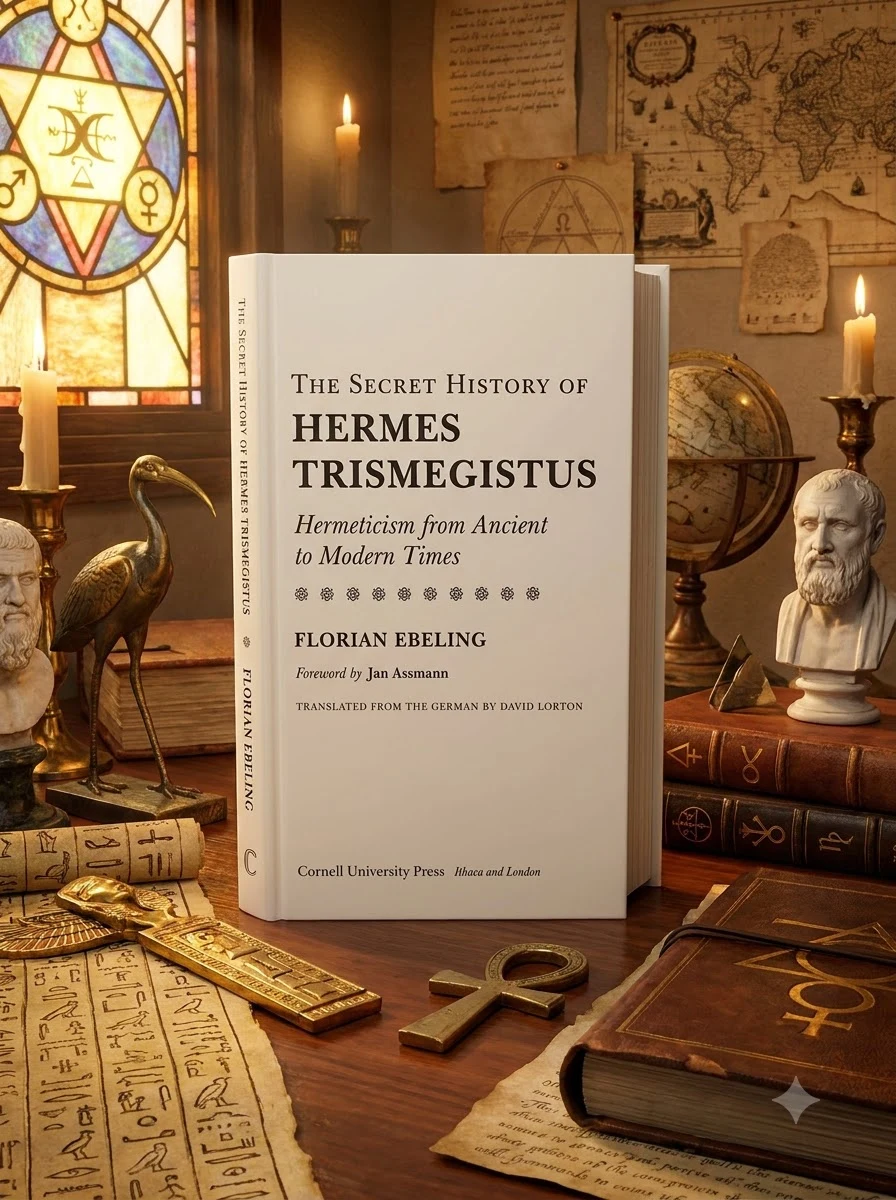
Hermeticism is the religious and philosophical tradition based on writings attributed to Hermes Trismegistus, above all the Greek Corpus Hermeticum and the Latin Asclepius, composed in Roman Egypt in the first centuries CE. It teaches that the human mind is kin to the divine Mind and can return to it through knowledge.
Where the word comes from
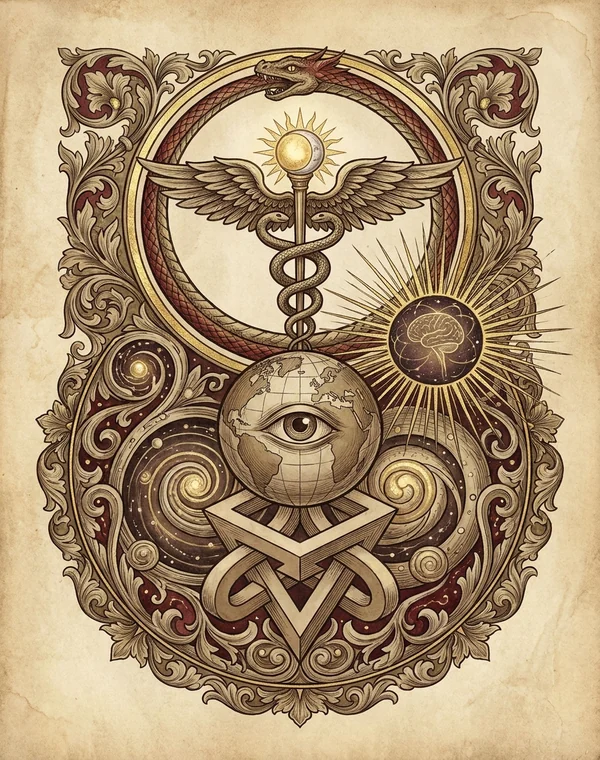
The name comes from Hermes Trismegistus, "Hermes the thrice-great", a figure born from the identification of the Greek god Hermes with the Egyptian Thoth, god of writing, wisdom and magic. Greek-speaking Egyptians of the Hellenistic and Roman periods credited him with a large body of revealed wisdom. "Hermetic" later also came to mean "sealed" (as in a hermetically sealed alchemical vessel), a sense that grew out of the alchemists' devotion to Hermes.
In depth
Hermeticism rests on a body of texts, the Hermetica, written in Greek (and some in Latin and Coptic) in Egypt, mostly between the first and third centuries CE. They are presented as dialogues in which Hermes teaches his disciples Tat, Asclepius and Ammon, or in which Hermes himself receives revelation.
The texts
Scholars divide the Hermetica into two groups. The "technical" Hermetica deal with astrology, alchemy, magic and the properties of plants and stones. The "philosophical" Hermetica deal with God, the cosmos and the soul. The most important of the philosophical works are the seventeen Greek treatises of the Corpus Hermeticum, opening with the Poimandres, in which a divine Mind appears to the narrator and describes the creation of the world and the fall and return of the human soul; the Latin Asclepius, a dialogue that survived through the Middle Ages; and several Coptic texts found in 1945 at Nag Hammadi, including the Discourse on the Eighth and Ninth.
Core teachings
God is described as Mind (Nous), the source of all things, beyond description yet revealed in the order of the cosmos. The world is good, beautiful and full of divine life, which sets Hermeticism apart from Gnostic traditions that saw the material world as a prison. The human being has a double nature: mortal through the body, immortal through the mind, which descended from the divine realm through the planetary spheres and can ascend again.
The means of ascent is gnōsis, knowledge in the sense of direct spiritual recognition rather than information. The treatises speak of rebirth (Corpus Hermeticum XIII), of the soul shedding the vices given by each planetary sphere on its return, and of reaching the "Eighth" and "Ninth" spheres, where the soul joins the powers praising God. Reverence, study, silence and hymns are the practices recommended.
The Renaissance revival
The Greek Corpus Hermeticum reached Florence around 1460. Cosimo de' Medici ordered Marsilio Ficino to translate it before finishing Plato, because Hermes was believed to be older than Moses. Ficino's Latin version, printed in 1471 as the Pimander, made Hermes a central authority of Renaissance thought. Pico della Mirandola, Lodovico Lazzarelli, Cornelius Agrippa and later Giordano Bruno all drew on it.
In 1614 the scholar Isaac Casaubon showed from its language and ideas that the Corpus Hermeticum was written in the Christian era, not in remote antiquity. The dating did not end its influence. Rosicrucianism, alchemy, Freemasonry and nineteenth-century occult orders all claimed Hermetic descent, and the Hermetic Order of the Golden Dawn (1888) put the name at the centre of modern ceremonial magic. Frances Yates' Giordano Bruno and the Hermetic Tradition (1964) made the Renaissance story a major subject for historians.
Hermeticism today
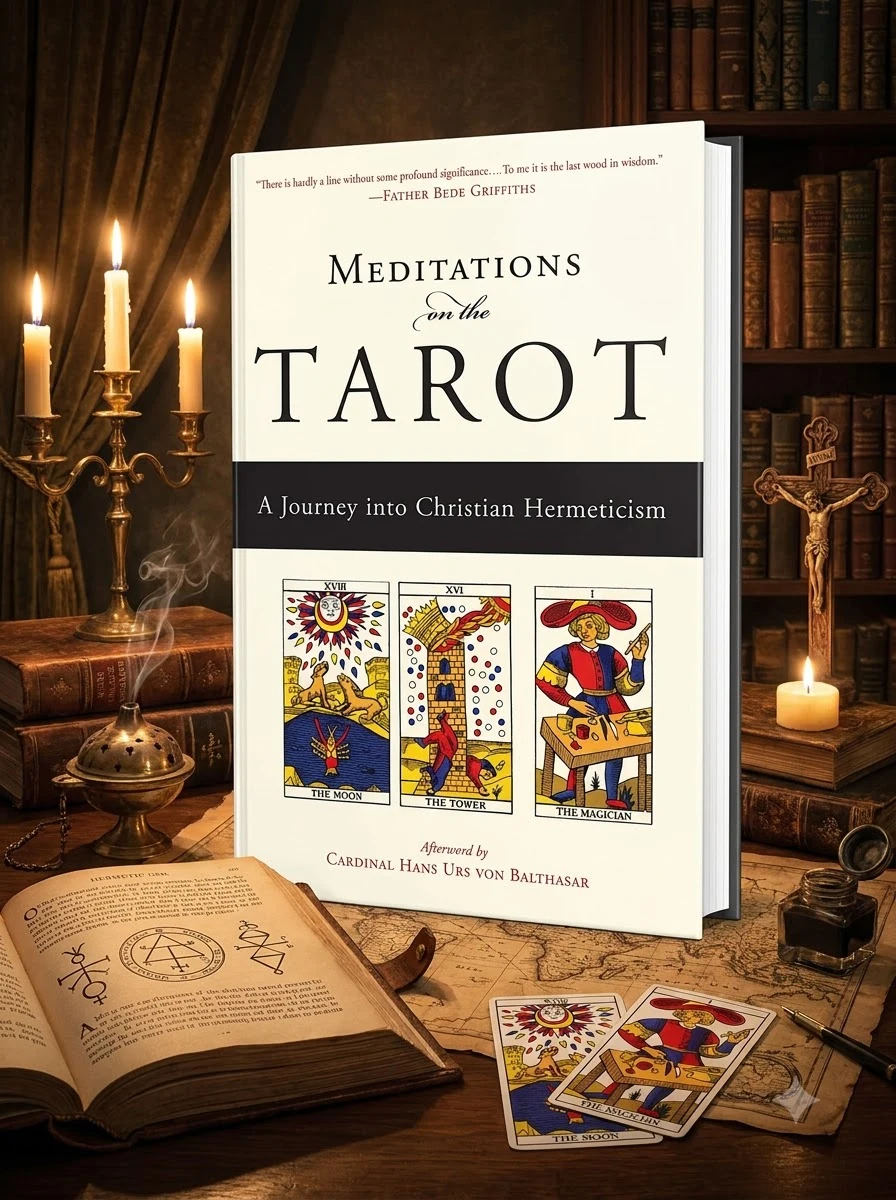
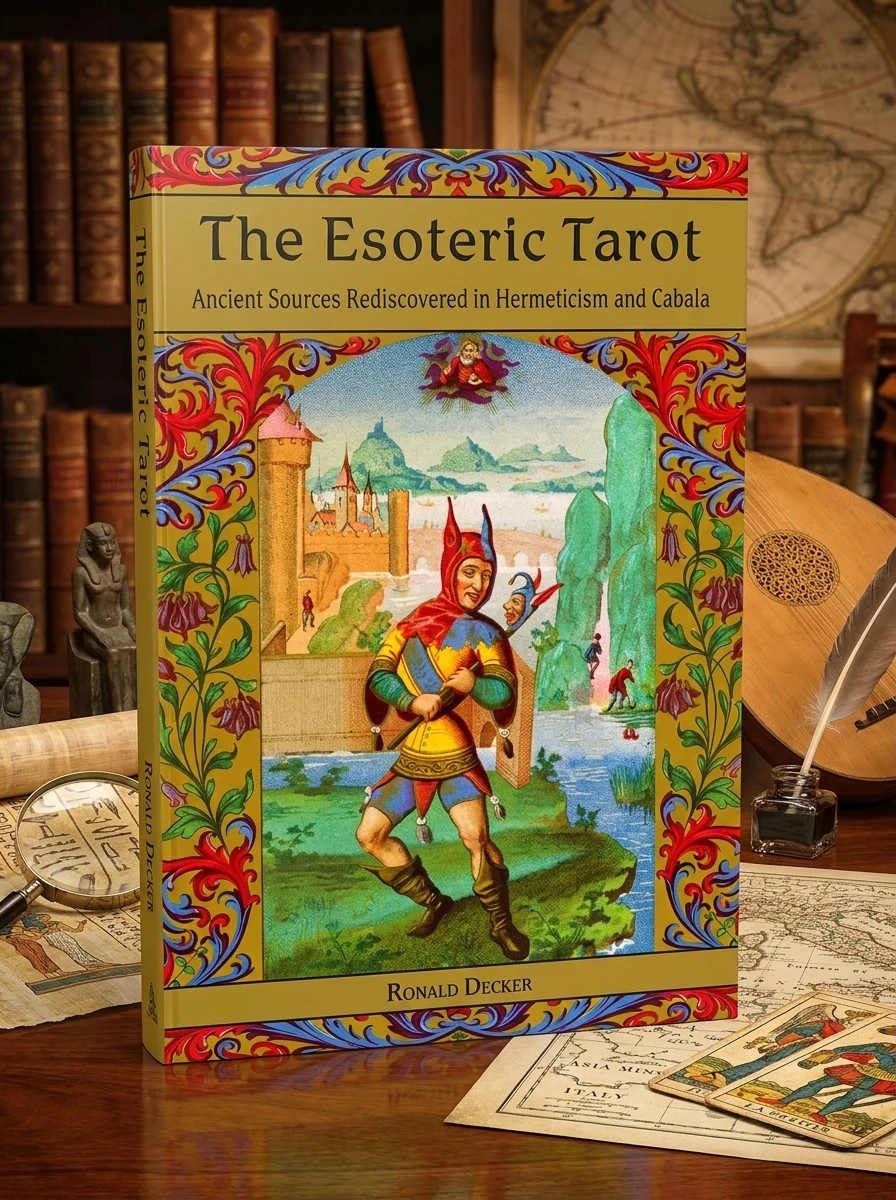
The word now covers three things: the ancient texts and their philosophy; the broader tradition of Western esotericism that claimed Hermes as its patron; and popular modern Hermeticism shaped by the Emerald Tablet and The Kybalion's seven principles. It helps to keep them distinct.
How different paths see it
Where it appears
Corpus Hermeticum (2nd to 3rd century CE). The seventeen Greek treatises, opening with the Poimandres.
Asclepius (Latin). The Hermetic dialogue known throughout the Middle Ages.
Discourse on the Eighth and Ninth (Nag Hammadi Codex VI). A Coptic Hermetic text found in 1945.
Pimander (Marsilio Ficino, printed 1471). The Latin translation that launched the Renaissance revival.
Giordano Bruno and the Hermetic Tradition (Frances Yates, 1964). The classic modern study of Hermeticism in the Renaissance.
What it means today
Readers often come to Hermeticism through The Kybalion or the slogan "as above, so below" and are surprised by the ancient texts, which are devotional, often lyrical, and less concerned with mental power than with reverence. The Poimandres and Corpus Hermeticum XIII are the best places to feel the difference.
The tradition's lasting appeal is its optimism. It takes the world seriously as divine, and the human mind seriously as capable of knowing that divinity. That combination fed the Renaissance, early modern science and modern esotericism alike.
A good reading path: Brian Copenhaver's translation of the Hermetica (with the Asclepius), then Garth Fowden's The Egyptian Hermes for historical context, then the Emerald Tablet and The Kybalion, read with the dates in mind.