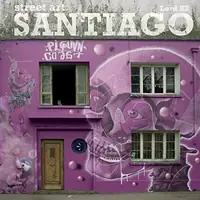
Street Art Santiago Chile
This edition can be ordered. No arrival date is confirmed.
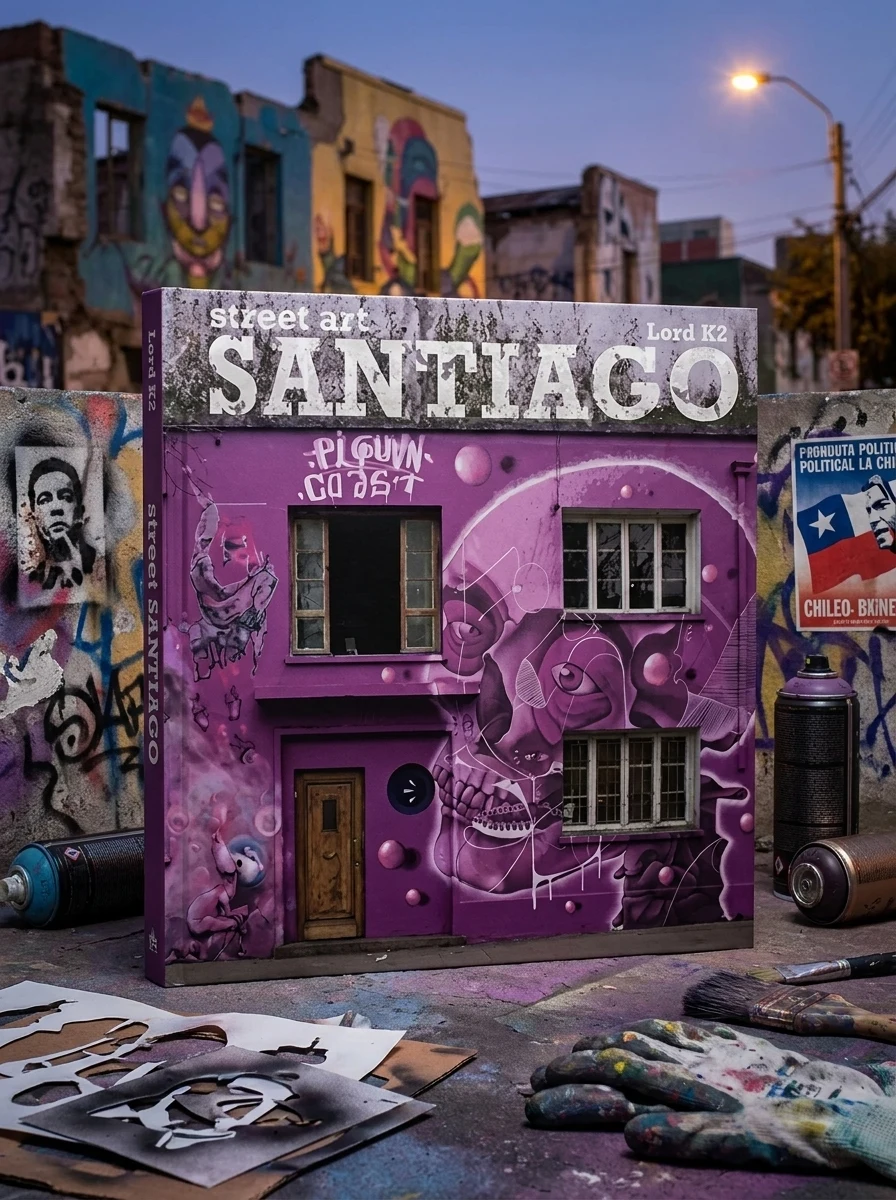
Chile's concrete veins pulse with political rebellion captured in Lord K2's stunning photographic archive.
This volume serves as both visual chronicle and sociological study of Santiago’s underground art scene. Lord K2 traverses fourteen distinct districts, pairing over two hundred arresting photographs with eighty intimate dialogues with local creators. The work traces how imported styles from America, Europe, and Brazil merged with indigenous expression. It reveals how murals evolved from state-sponsored socialist propaganda into potent weapons of dissent. The text illuminates the resilient spirit of artists who transformed urban walls into canvases for freedom after decades of authoritarian rule.
This work sits at the intersection of documentary photography and sociological analysis, bridging the gap between visual art history and political discourse in post-authoritarian Latin America. It contributes to the broader tradition of urban studies that examine how public space becomes a site for cultural memory and resistance.


📝 Description: Street Art Santiago Chile
💎 Expert review
📖 Why choose it
Why this book is worth reading
Readers with a deep interest in the intersection of art and politics will find profound value in this volume. It is ideal for those who wish to understand how visual culture can serve as a mechanism for societal healing after authoritarian rule. The intimate dialogues offer a rare glimpse into the minds of creators who turned concrete into canvases for freedom. You will gain insight into the complex fusion of imported global styles with indigenous expression, witnessing how dissent was weaponized through beauty. This book is essential for anyone seeking to comprehend the resilient spirit of Santiago’s underground scene and the enduring power of street art as a tool for rebellion and identity formation.
⭐ Reader reviews
Reader rating
Added this to my reference shelf. There's real depth here that reveals itself on a second reading. Five stars from me.
Grabbed this during a weekend order. The historical context alone makes it worth the price. I appreciated how the argument builds steadily from first principles. Well worth it.
Needed this for my research. The text itself is dense but rewarding — you get out what you put in. A few pages arrived with light corner wear, though nothing serious. Solid, if not essential.
This volume offers a compelling visual chronicle of Santiago’s political evolution through its walls, yet it may not suit readers seeking purely aesthetic appreciation without historical weight. Those uninterested in sociological analysis or the nuances of post-dictatorship reconstruction might find the eighty dialogues dense rather than engaging. It is best for those willing to engage with the heavy context of state-sponsored propaganda turning into dissent. While the photographic archive is stunning, the book demands attention to the political undercurrents. It is a serious study of resilience, not a casual coffee table book. If you prefer art divorced from its turbulent origins, this may feel too grounded in reality.
❓ Frequently asked questions
📖 Who should read this
Readers fascinated by the intersection of urban culture and political history will find this essential. It appeals to photographers, sociologists, and travelers seeking to understand the soul of Santiago through its most visible and defiant artistic expressions.
🎯 Key themes and symbolism
Art as Political Weapon
The book argues that street art in Santiago was not merely aesthetic but a crucial tool for ideological resistance. Murals shifted from projecting state power to challenging oppressive regimes, giving voice to marginalized communities through bold visual rhetoric and symbolic imagery.
Cultural Hybridity and Influence
K2 explores how global graffiti movements intersected with local Chilean traditions. By examining influences from American hip-hop, European stencil work, and Brazilian styles, the text shows how foreign techniques were adapted to express unique national struggles and cultural identities.
Post-Dictatorship Urban Revival
Focusing on the period after 1990, the narrative highlights the explosion of creative energy following Pinochet's fall. It documents how previously suppressed artistic expressions flourished in tight-knit communities, turning neglected neighborhoods into vibrant hubs of cultural production and social cohesion.
💬 Quotes from the book
“The walls speak louder than the politicians who built them.”
“Ink is the blood of the city's memory.”
📜 Historical context
📚 Glossary
- Stencil Graffiti
- Muralist Brigades
- Underground Scene
📔 Questions to reflect on
- How does public art in your city reflect current social tensions?
- Consider a wall in your neighborhood; what story does it tell?
- How might art serve as resistance in times of political repression?
🏛 Books from this publisher Schiffer Publishing
All books from this publisher →
 89
89



You might also like
See more → 91
91
 91
91

 91
91
 91
91
 91
91