Stiffs, Skulls & Skeletons: Medical Photography and Symbolism (UK)
This edition can be ordered. No arrival date is confirmed.
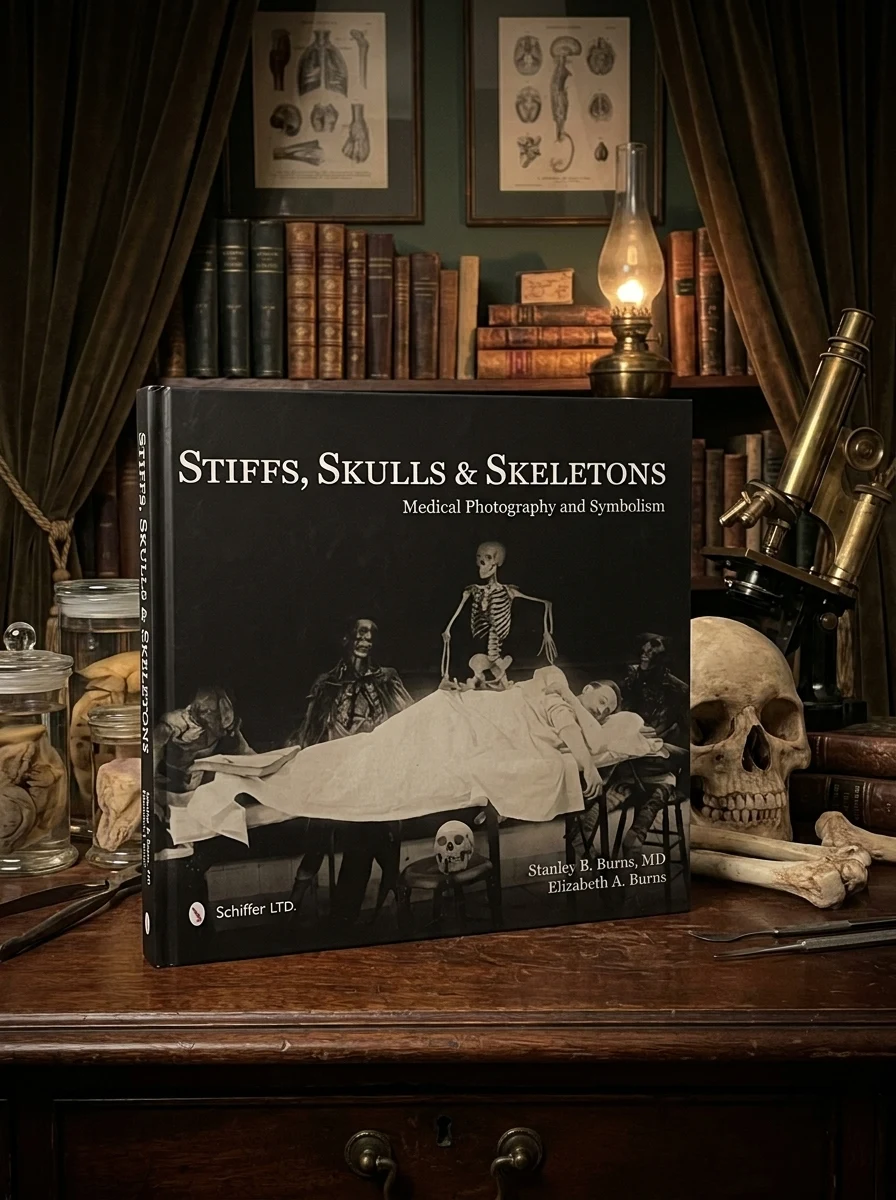
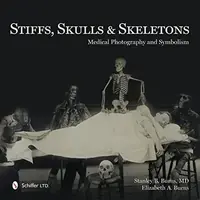
A haunting gallery of 400 rare images exploring the macabre history of medical photography and skeletal obsession.
Stanley B. Burns, MD, presents a profound visual archive that dissects the nineteenth-century fixation with mortality. This volume transcends mere curiosity, offering a scholarly examination of postmortem portraiture, dissection records, and early X-ray explorations. It delves into the now-forgotten pastime of skull collecting, revealing how these artifacts fueled racial and psychological profiling. With over four hundred previously unpublished photographs, this work serves as an essential cultural document. It bridges the gap between clinical science and artistic symbolism, providing a comprehensive look at how we once visualized death and anatomy with such intense, unflinching detail.
This volume sits at the intersection of medical history and macabre artistry, documenting the nineteenth-century fixation with mortality through the lens of early scientific visualization. It serves as a critical cultural document bridging clinical science and artistic symbolism in the study of death.


📝 Description: Stiffs, Skulls & Skeletons: Medical Photography and Symbolism (UK)
💎 Expert review
📖 Why choose it
Why this book is worth reading
Readers fascinated by the shadowed corners of scientific history will find this collection indispensable. Stanley B. Burns offers a profound visual archive that dissects the nineteenth-century fixation with mortality, moving beyond mere curiosity to provide scholarly examination. It is ideal for those interested in postmortem portraiture, dissection records, and early X-ray explorations. The book reveals how skull collecting fueled racial and psychological profiling, offering a comprehensive look at how we once visualized death with unflinching detail. By bridging clinical science and artistic symbolism, it provides an essential cultural document for anyone seeking to understand the intense, haunting history of medical photography and skeletal obsession.
⭐ Reader reviews
Reader rating
Was skeptical at first. Some chapters demand a slow, careful read, and that's exactly the point. It assumes more background than a beginner might have. Solid, if not essential.
Exactly what I was looking for. There's real depth here that reveals itself on a second reading. The typesetting is comfortable for study, with good margins for notes.
As someone who reads a lot in this field, I can be picky. Not a light read, but far more accessible than I feared. The historical context alone makes it worth the price.
My third book from this store and this one might be the best. It's become a regular reference in my practice. There's real depth here that reveals itself on a second reading. Good, with the caveats above.
This exceeded my expectations. The typesetting is comfortable for study, with good margins for notes. I appreciated how the argument builds steadily from first principles. My only quibble is the cover feels thinner than expected. Happy enough with the purchase.
This edition finally does the material justice. The text itself is dense but rewarding — you get out what you put in. Not a light read, but far more accessible than I feared. One of my better finds this year.
Stanley B. Burns presents a profound visual archive that dissects the nineteenth-century fixation with mortality. This volume transcends mere curiosity, offering a scholarly examination of postmortem portraiture, dissection records, and early X-ray explorations. It delves into the now-forgotten pastime of skull collecting, revealing how these artifacts fueled racial and psychological profiling. With over four hundred previously unpublished photographs, this work serves as an essential cultural document. However, readers seeking lighthearted entertainment or purely aesthetic photography without historical weight will find little appeal here. It is a dense, academic exploration that demands attention to its clinical and symbolic contexts, making it unsuitable for those uncomfortable with the raw visualization of anatomy and death.
❓ Frequently asked questions
📖 Who should read this
Ideal for historians of medicine, macabre art enthusiasts, and scholars of visual culture who seek to understand the intersection of mortality, science, and aesthetic obsession in the pre-modern era.
🎯 Key themes and symbolism
Victorian Mortuary Aesthetics
The book analyzes how 19th-century society romanticized death through photography, turning grief into a curated visual art form that blurred the lines between mourning and medical documentation.
Anatomical Iconography
Burns traces the evolution of skeletal imagery from scientific study to symbolic representation, showing how bones became metaphors for knowledge, mortality, and the human condition.
Skull Collecting History
It exposes the disturbing practice of accumulating skulls for racial and psychological studies, contextualizing this morbid hobby within the broader scientific and pseudoscientific trends of the era.
💬 Quotes from the book
“The skeleton was not merely a biological structure but a canvas for the era's deepest fears and curiosities about human identity.”
“In the darkroom, death was not ended but preserved, transformed into a tangible object of study and aesthetic contemplation.”
📜 Historical context
📚 Glossary
- Postmortem Photography
- Phrenology
- X-ray Radiography
📔 Questions to reflect on
- How does the aestheticization of death in these photographs challenge your modern understanding of privacy and grief?
- In what ways do the skeletal studies in this book reveal more about the observers than the observed?
- Reflect on the boundary between scientific curiosity and morbid fascination as depicted in the skull collecting section.
🏛 Books from this publisher Schiffer Publishing
All books from this publisher →
 89
89

You might also like
See more → 91
91
 91
91
 91
91

 91
91
 91
91