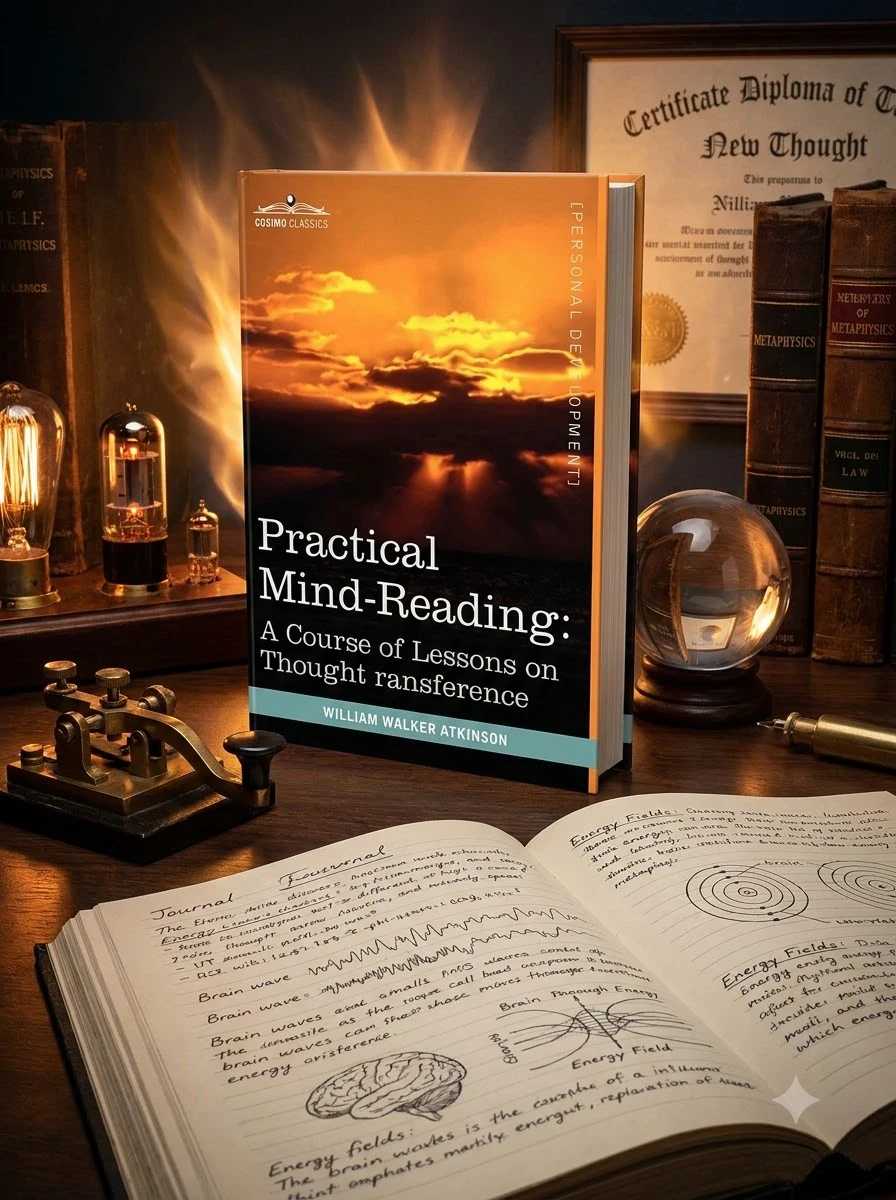
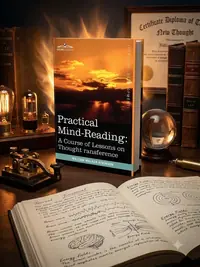
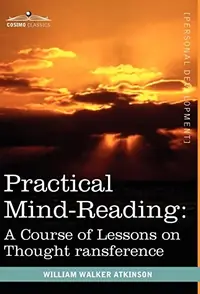
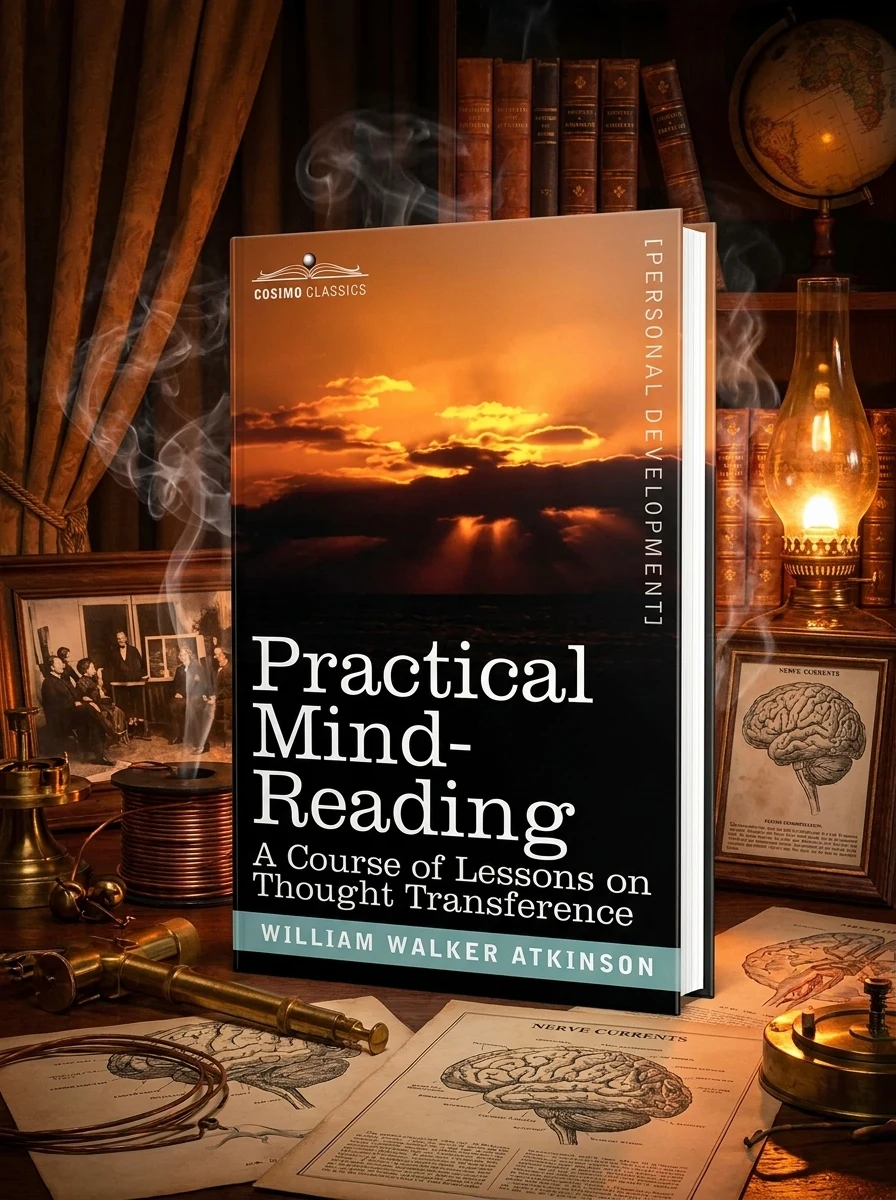
Practical Mind-Reading: A Course of Lessons on Thought Transference
Atkinson, William WalkerStock reported in the catalog; fulfillment is confirmed with your request.
Unlock the hidden power of your mind to perceive and transmit thoughts.
Delve into the fascinating principles of thought transference with this foundational work from the early 20th century. William Walker Atkinson, a key figure in the New Thought movement, presents a systematic course designed to awaken and develop your latent psychic abilities. This guide moves beyond mere theory, offering practical lessons and exercises to cultivate what was considered the cutting edge of mental science during its time. Discover how to project your thoughts and receive those of others, exploring the profound implications of 'mind over matter' for personal insight and interpersonal connection.
This text emerges from the early 20th-century New Thought movement, positioning thought transference as a practical application of mental science rather than mere mysticism. It reflects the era's growing interest in harnessing latent psychic abilities for personal insight and interpersonal connection.


📝 Description: Practical Mind-Reading: A Course of Lessons on Thought Transference
💎 Expert review
📖 Why choose it
Why this book is worth reading
Readers seeking to unlock the hidden power of their minds will find this course invaluable for its systematic approach to developing latent psychic abilities. It is ideal for those interested in the foundational principles of thought transference and the practical application of mental science. By offering concrete lessons and exercises, it empowers individuals to project thoughts and receive those of others. This book serves as a bridge between theory and practice, making complex esoteric concepts accessible. It is perfect for seekers of personal insight who wish to explore the profound implications of mind over matter in everyday life.
⭐ Reader reviews
Reader rating
Atkinson delivers a structured guide that demystifies thought transference through actionable exercises rather than abstract philosophy. While it offers clear steps for awakening psychic potential, it may not suit readers skeptical of New Thought principles or those seeking rigorous scientific validation for paranormal claims. The tone is instructional and earnest, appealing to believers in mental science but potentially alienating strict empiricists. It remains a fascinating historical document for understanding early 20th-century occult practices, providing a unique window into the period's view of mental power and its practical uses in fostering deeper interpersonal connections through perceived telepathic links.
❓ Frequently asked questions
📖 Who should read this
If you're drawn to the historical roots of psychic phenomena, curious about the practical applications of early 20th-century mental science, or seeking to explore the untapped potential of your own mind, this foundational text offers a structured path to understanding and developing thought transference.
🎯 Key themes and symbolism
New Thought Foundations
Rooted deeply in the tenets of the New Thought movement, the book champions the transformative power of the mind. It emphasizes the concept of "mind over matter," suggesting that mental focus and belief can shape one's reality and influence others, laying groundwork for personal empowerment.
Cultivating Psychic Abilities
Far from a theoretical treatise, Atkinson's work serves as a practical manual for developing latent psychic faculties. It offers a progressive curriculum for improving concentration, intuition, and sensitivity, aiming to unlock the reader's inherent capacity for extrasensory perception and mental influence.
💬 Quotes from the book
“The student will find that persistent application to these lessons will awaken faculties long dormant, revealing a new dimension of mental interaction.”
“It is not magic, but a natural law of the mind, which, when understood and applied, yields predictable and powerful results.”
📜 Historical context
📚 Glossary
- Thought Transference
- New Thought Movement
- Mental Science
📔 Questions to reflect on
- Consider a time you felt a strong, inexplicable connection with someone's thoughts or feelings. How might Atkinson's principles explain that experience?
- If you successfully developed thought transference, how would you ethically choose to use this ability? What responsibilities would come with it?
- Reflect on the concept of 'mind over matter' in your own life. Where do you already see its influence, and where might you cultivate it further?
✍️ More books by this author Atkinson, William Walker
All books by this author →


 75
75

🏛 Books from this publisher Cosimo Classics
All books from this publisher → 90
90



 87
87
 90
90
 89
89
You might also like
See more →

 88
88
 82
82
 80
80