US shipping Secure card payment Occult and esoteric books

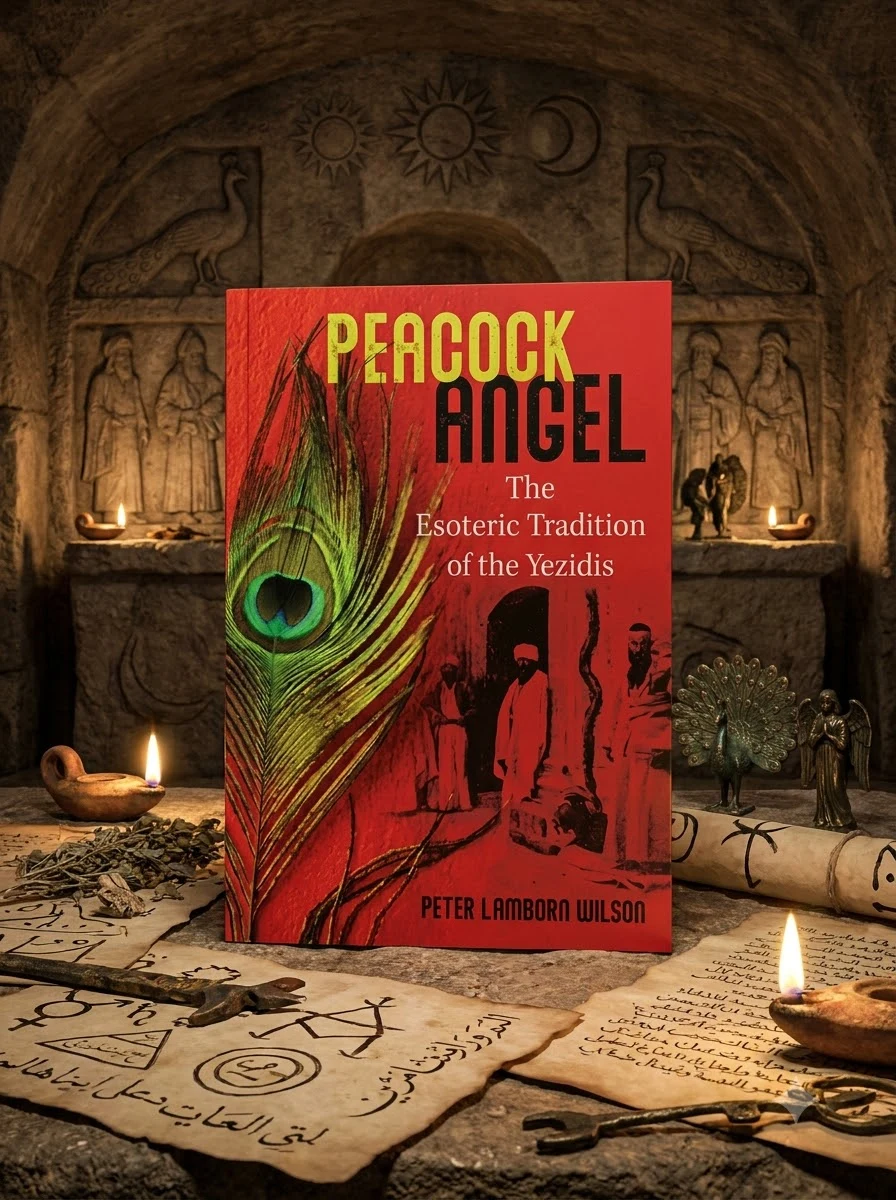
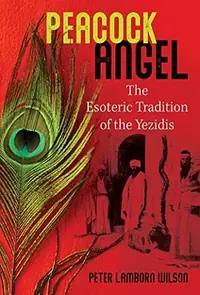
Peacock Angel: The Esoteric Tradition of the Yezidis

Wilson, Peter Lamborn
Reader rating
4.6
(1 reviews) 45 sold
Availability to be confirmed

This edition can be ordered. No arrival date is confirmed.

📚 ABOUT THE BOOK

Unveiling the Peacock Angel: Is the 'Devil' truly divine?

Step into the enigmatic world of the Yezidis, an ancient, secretive people often misunderstood as 'devil-worshippers.' Peter Lamborn Wilson meticulously unravels the complex spiritual tapestry surrounding their veneration of Melek Ta'us, the Peacock Angel. This profound study delves into their unique cosmogony, antinomian doctrines, and rich magical traditions, positioning Yezidism not as an isolated anomaly but as a vital thread in the broader tapestry of esoteric thought. Prepare to challenge preconceptions and discover a path of beauty and spiritual realization.

Key themes
The Peacock Angel Reimagined Esoteric Doctrines Explored Comparative Mysticism & Lore
Historical context

This work situates itself within the broader tapestry of esoteric thought, examining the Yezidi spiritual tradition as a vital thread rather than an isolated anomaly. It challenges historical misconceptions by exploring the complex cosmogony and antinomian doctrines of this secretive people.

Difficulty
●●● Demanding
Fans will love it
Manly P. Hall · G.R.S. Mead · Idries Shah · Theosophical Society writings
🕯️ Occult Philosophy
🏛 Inner Traditions International 📅 2022 📖 272 pages 📔 Paperback 📐 Paperback ISBN: 9781644114124
Fun fact
Wilson's 'Peacock Angel' is an essential, meticulously researched journey into one of the world's most misunderstood and resilient spiritual traditions. It excels in its nuanced reinterpretation of Melek Ta'us and its deep dive into esoteric doctrines, including a pivotal translation. While perhaps too dense for casual readers, serious students of comparative religion, occultism, and Middle Eastern history will find it an indispensable and enlightening contribution, challenging prevailing narratives and revealing profound spiritual depth.

📝 Description: Peacock Angel: The Esoteric Tradition of the Yezidis

An examination of the beliefs and history of the secretive Yezidi sect - Explains how the Yezidis worship Melek Ta'us, the Peacock Angel, an enigmatic figure often identified as "the devil" or Satan, yet who has been redeemed by God to rule a world of beauty and spiritual realization - Examines Yezidi antinomian doctrines of opposition, their cosmogony, their magical lore and taboos, the role of angels, ritual, and symbology, and how the Yezidi faith relates to other occult traditions such as alchemy - Presents the first English translation of the poetry of Caliph Yazid ibn Muawiya, venerated by the Yezidis as Sultan Ezi The Yezidis are an ancient people who live in the mountainous regions on the borders of Turkey, Syria, Iraq, and Iran. This secretive culture worships Melek Ta'us, the Peacock Angel, an enigmatic figure often identified as "the devil" or Satan, hence the sect is known as devil-worshippers and has long been persecuted. Presenting a study of the interior, esoteric dimensions of Yezidism, Peter Lamborn Wilson examines the sect's antinomian doctrines of opposition, its magical lore and taboos, and its relation to other occult traditions such as alchemy. He explains how the historical founder of this sect was a Sufi of Ummayad descent, Sheik Adi ibn Musafir, who settled in this remote region around 1111 AD and found a pre-Islamic sect already settled there. Sheik Adi was so influenced by the original sect that he departed from orthodox Islam, and by the 15th century the sect was known to worship the Peacock Angel, Melek Ta'us, with all its "Satanic" connotations. Revealing the spiritual flowering that occurs in an oral culture, the author examines Yezidi cosmogony, how they are descended from the androgynous Adam--before Eve was created--as well as the role of angels, ritual, alchemy, symbology, and color in Yezidi religion. He also presents the first English translation of the poetry of Caliph Yazid ibn Muawiya, venerated by the Yezidis as Sultan Ezi. Showing the Yezidi sect to be a syncretic faith of pre-Islamic, Zoroastrian, Christian, Pagan, Sufi, and other influences, Wilson reveals how these worshippers of the Peacock Angel do indeed worship "the Devil"--but the devil is not "evil." God has redeemed him, and he rules a world of beauty and spiritual realization.

💎 Expert review

💎
Esoterica Books editorial team
Occult literature desk
Wilson offers a dense, scholarly dissection of Yezidi cosmogony that demands patience and an open mind. While it successfully positions Yezidism within wider esoteric frameworks, it is not for casual readers seeking light folklore or simple religious comparisons. Those expecting a straightforward history will find the antinomian doctrines and complex magical traditions intellectually demanding. The book is best suited for serious students of comparative religion who can handle nuanced theological arguments without needing simplification. It may frustrate readers who prefer clear-cut moral binaries over the intricate, often contradictory spiritual tapestry Wilson presents with such academic rigor and esoteric insight.
✓ EDITOR'S REVIEW

📖 Why choose it

📖

Why this book is worth reading

Readers fascinated by hidden histories and misunderstood spiritual traditions will find this book a revelatory experience. It serves those eager to dismantle the prejudice that equates the Peacock Angel with evil, offering instead a profound look at divine beauty. Anyone interested in antinomian doctrines or the roots of magical traditions will appreciate Wilson’s meticulous unraveling of Yezidism’s cosmic significance. It is ideal for seekers who wish to expand their esoteric knowledge beyond mainstream Western occultism and discover how ancient, secretive peoples preserve vital spiritual realizations often overlooked by conventional religious narratives.

⭐ Reader reviews

The starting rating comes from the team Esoterica Books —
⭐ Esoterica editorial review Editorial rating 4.6/5
★★★★
If you are drawn to the hidden corners of mysticism, comparative religion, or the challenging of spiritual orthodoxies, this book will illuminate a fascinating tradition. It's for those eager to explore ancient wisdom, understand misunderstood faiths, and delve into the esoteric heart of Middle…

Reader rating

4.6
Based on 1 reviews
5
0
4
1
3
0
2
0
1
0
E
Esoterica Books editorial team

Wilson offers a dense, scholarly dissection of Yezidi cosmogony that demands patience and an open mind. While it successfully positions Yezidism within wider esoteric frameworks, it is not for casual readers seeking light folklore or simple religious comparisons. Those expecting a straightforward history will find the antinomian doctrines and complex magical traditions intellectually demanding. The book is best suited for serious students of comparative religion who can handle nuanced theological arguments without needing simplification. It may frustrate readers who prefer clear-cut moral binaries over the intricate, often contradictory spiritual tapestry Wilson presents with such academic rigor and esoteric insight.

❓ Frequently asked questions

This label stems from a misunderstanding of Melek Ta'us, the Peacock Angel. While superficially resembling the Islamic Shaitan, the Yezidis understand Melek Ta'us as a redeemed, benevolent chief angel, not a figure of evil or opposition to God.
Wilson offers an unparalleled focus on the interior, esoteric dimensions of Yezidism, providing deep analysis of their complex doctrines, magical practices, and symbolism. Crucially, it also presents the first English translation of the poetry of Caliph Yazid, a revered figure in their tradition.

📖 Who should read this

If you are drawn to the hidden corners of mysticism, comparative religion, or the challenging of spiritual orthodoxies, this book will illuminate a fascinating tradition. It's for those eager to explore ancient wisdom, understand misunderstood faiths, and delve into the esoteric heart of Middle Eastern spirituality.

🎯 Key themes and symbolism

The Peacock Angel Reimagined

Wilson meticulously recontextualizes Melek Ta'us, the central figure of Yezidi devotion. Far from being a demonic entity, this 'Peacock Angel' is revealed as a redeemed, benevolent force, divinely appointed to govern the world with beauty and spiritual wisdom. The book thoughtfully explores how this figure has been historically misidentified and persecuted, offering a fresh, nuanced perspective on a profoundly spiritual being.

Esoteric Doctrines Explored

Beyond surface appearances, the text delves into the deep, interior dimensions of Yezidi belief. Readers will uncover their unique antinomian doctrines of opposition, understanding how resistance and challenge are integral to their spiritual path. The book also examines their magical lore, intricate taboos, the significant role of angels, and the rich symbology woven into their rituals, providing a comprehensive look at their mystical core.

Comparative Mysticism & Lore

This work thoughtfully places Yezidism within a wider esoteric landscape, drawing connections to other occult traditions, most notably alchemy. Wilson also enriches the study with the first English translation of the poetry of Caliph Yazid ibn Muawiya, revered by the Yezidis as Sultan Ezi. This inclusion offers a rare window into their historical reverence and the lyrical expression of their spiritual heritage.

💬 Quotes from the book

“The true nature of the Peacock Angel is not one of opposition, but of a profound, divinely sanctioned governance, reflecting beauty and order in the cosmic unfolding.”

“Within the heart of Yezidi practice lies a magical tradition where the sacred and the profane are not merely juxtaposed, but interwoven, creating a tapestry of belief that defies easy categorization.”

📜 Historical context

The Yezidis are an ancient ethnoreligious group with roots in the mountainous regions spanning modern-day Turkey, Syria, Iraq, and Iran. Their faith, a syncretic blend of ancient Mesopotamian, Iranian, and Islamic traditions, has fostered a unique culture often characterized by secrecy and resilience in the face of centuries of persecution, primarily due to the misinterpretation of their veneration of Melek Ta'us.

📚 Glossary

Melek Ta'us
Yezidis
Antinomianism

📔 Questions to reflect on

  1. How does the Yezidi reinterpretation of a seemingly 'demonic' figure like Melek Ta'us challenge or expand your own understanding of good, evil, and divinity?
  2. Reflect on the concept of 'antinomianism' in a spiritual context. Where might challenging established norms lead to deeper spiritual insight or growth?
  3. Consider how cultural isolation and misunderstanding have shaped the Yezidi tradition. What lessons can be drawn about preserving unique spiritual paths?

🏛 Books from this publisher Inner Traditions International

All books from this publisher →

You might also like

See more →