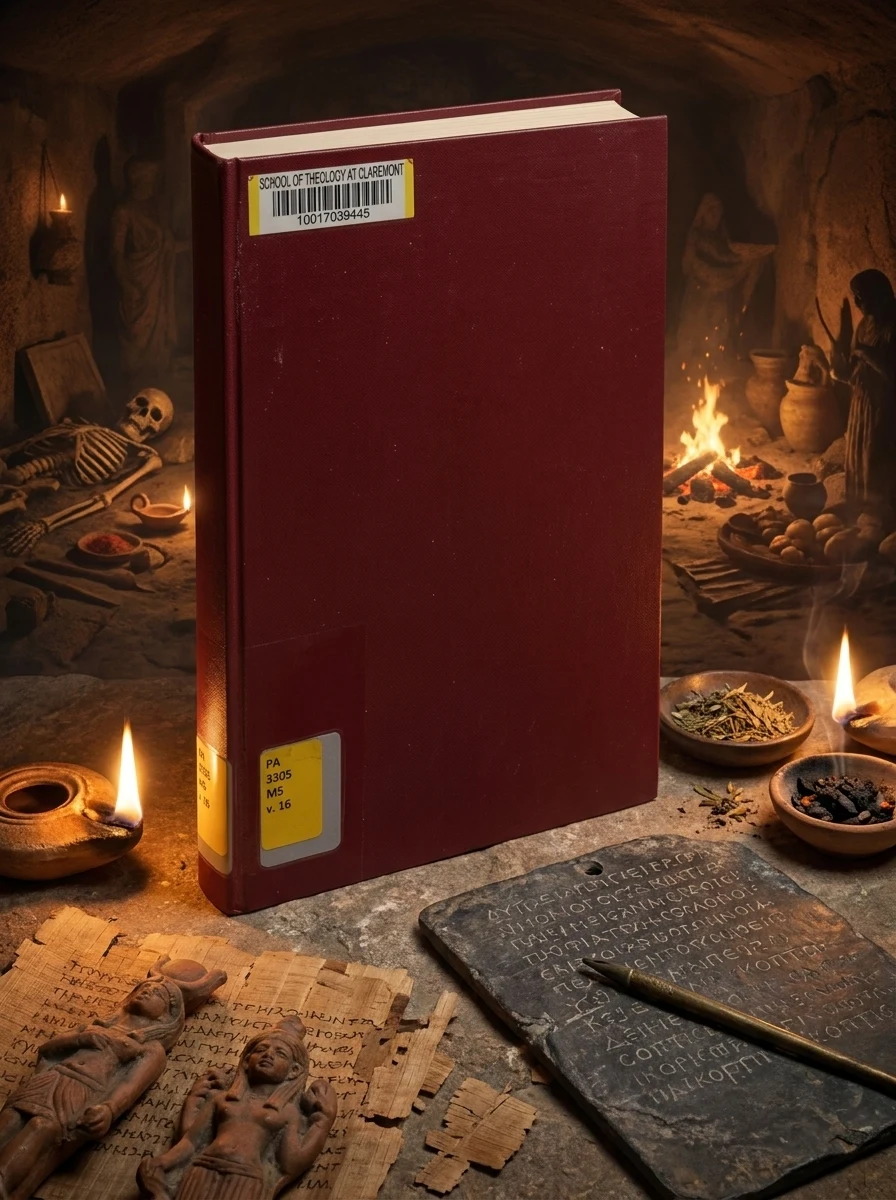

P. Michigan XVI: A Greek Love Charm from Egypt (P.Mich. 757) Volume 30 Martinez, David
This edition can be ordered. No arrival date is confirmed.
Unearth a potent ancient love charm, binding spirits to ignite passion in Roman Egypt.
Delve into the captivating world of ancient magic with this scholarly edition of P. Michigan XVI. This volume meticulously presents a lead tablet dating from the third or fourth century CE, revealing a powerful love charm crafted by Ailourion. He calls upon underworld deities and the restless spirits of the deceased to ensnare the affections of Kopria. Far more than a simple spell, this document offers profound insights into the multicultural syncretism and intricate magical practices prevalent in Roman-era Egypt, illuminating a forgotten aspect of human desire and spiritual manipulation.
This work sits at the intersection of papyrology and ancient esoteric studies, specifically focusing on Roman-era Egypt's multicultural syncretism. It documents the intricate magical practices and spiritual manipulation techniques prevalent in that historical period.


📝 Description: P. Michigan XVI: A Greek Love Charm from Egypt (P.Mich. 757) Volume 30 Martinez, David
💎 Expert review
📖 Why choose it
Why this book is worth reading
Scholars of ancient history and practitioners of ceremonial magic will find immense value in this meticulous scholarly edition. It offers a rare, tangible glimpse into the personal desires and spiritual anxieties of individuals in Roman Egypt. By presenting a specific lead tablet from the third or fourth century CE, it illuminates how ancient people navigated love and loss through complex magical frameworks. Readers interested in the intersection of archaeology and occult history will appreciate the detailed analysis of underworld deities and restless spirits. It is essential for those seeking to understand the multicultural syncretism that defined ancient magical practices, providing a profound insight into human desire beyond modern interpretations.
⭐ Reader reviews
Reader rating
This volume is a specialized academic resource rather than a casual read. It appeals primarily to researchers, papyrologists, and historians specializing in late antiquity or esoteric traditions. However, it does not suit general readers seeking accessible narratives or practical spell-casting instructions without prior scholarly context. The dense focus on a single third-century CE artifact may feel narrow to those expecting a broad overview of Greco-Roman magic. While the insights into multicultural syncretism are valuable, the technical nature of presenting a specific lead tablet limits its appeal to a niche audience familiar with academic papyrological standards and historical analysis.
❓ Frequently asked questions
📖 Who should read this
For the dedicated student of ancient magic, classical history, or religious studies, this volume offers unparalleled primary source material. If you seek to understand the practical application of chthonic invocations and love spells in Roman Egypt, this detailed edition is an essential addition to your library.
🎯 Key themes and symbolism
Ancient Magickal Practices
This volume meticulously details a Roman Egyptian love charm, offering a rare glimpse into the ritualistic invocation of chthonic powers and spirits of the dead. It illuminates the specific language, materials, and intentions behind such ancient spellcraft, providing scholars and practitioners a direct conduit to historical magical methods.
Greco-Egyptian Syncretism
The charm's structure and pantheon reveal a fascinating blend of Greek and Egyptian religious traditions. It exemplifies how diverse cultural beliefs intertwined in Roman Egypt, creating unique spiritual practices where deities from different mythologies were invoked together for a common magical purpose.
Love and Desire
Beyond its magical context, the P. Michigan XVI offers a window into the intense human emotions of love and longing in the ancient world. It demonstrates the lengths individuals would go to secure affection, reflecting universal desires and the desperation that could lead one to seek supernatural intervention.
💬 Quotes from the book
“I bind Kopria to Ailourion by the power of the chthonic gods and the unquiet dead, that her heart may burn for him alone.”
“The integration of Egyptian funerary deities alongside Greek underworld figures within this inscription underscores the profound multicultural fabric of magical practice in Roman Egypt.”
📜 Historical context
📚 Glossary
- Chthonic Deities
- Defixiones
- Syncretism
📔 Questions to reflect on
- How does the desperation for love in ancient times, as depicted by this charm, resonate with or differ from contemporary expressions of romantic longing?
- Consider the ethical implications of using magical means to compel another's affection. How might ancient perspectives on consent and will differ from modern ones?
- If you were to craft a modern "charm" for a deeply desired outcome, what elements (symbols, invocations, intentions) would you incorporate, and why?
You might also like
See more →
 91
91
 91
91
 91
91