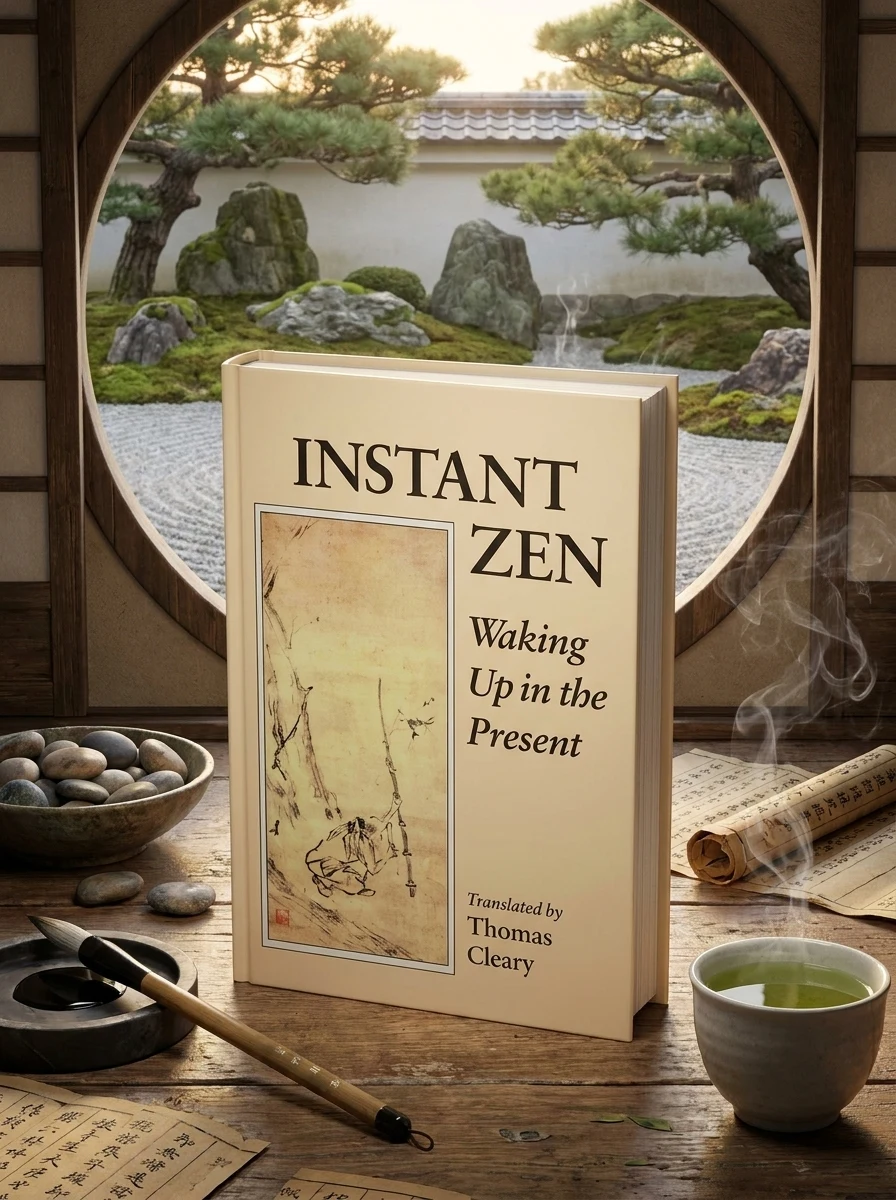
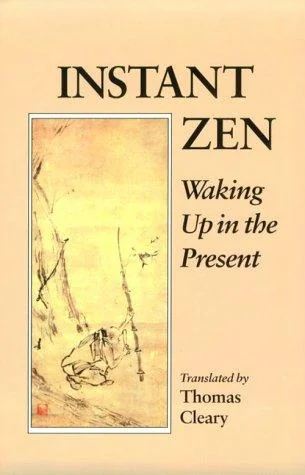
Instant Zen: Waking Up in the Present
✍️ Cleary, ThomasA translated collection of twelfth-century Chinese Zen master Foyan's teachings on direct mental awakening.
Instant Zen presents the direct teachings of Foyan, a twelfth-century Chinese Zen master from the Song dynasty Zen renaissance. Thomas Cleary translates these succinct historical texts, which focus on simple exercises in attention and thought to foster direct self-awakening. The material emphasizes complete personal autonomy, independence, and immediate perception without religious cultism or cultural exoticism. Cleary provides an incisive introduction alongside extensive reference materials from traditional Zen sources to establish both historical depth and contemporary context. Highly regarded as a top contemporary translator of Asian texts, Cleary brings expertise from his extensive work on classical Buddhist, Taoist, and I Ching titles.
Originating during the Song dynasty Zen renaissance in twelfth-century China, these teachings represent classical Chinese Zen practice. Cleary places Foyan's work within its original historical framework using traditional Zen source references.


📝 Description: Instant Zen: Waking Up in the Present
💎 Expert review
📖 Why choose it
Why this book is worth reading
Readers seeking immediate, uncluttered spiritual guidance will find profound value in this volume. It is ideal for those who feel overwhelmed by complex philosophical systems and crave a direct path to self-discovery. By distilling Foyan’s wisdom into practical exercises, the book empowers individuals to shed delusions and cultivate independence. It suits anyone desiring to stand firmly on their own ground and perceive reality with clarity. If you wish to awaken to your true nature without confusion, this text offers a refreshing return to uncomplicated truth.
⭐ Reader reviews
Reader rating
This collection offers a refreshingly direct approach to Zen, stripping away unnecessary complexity to reveal innate wisdom. It is highly effective for practitioners who prefer practical attention exercises over abstract theory. However, it does not suit those seeking dense academic analysis or historical criticism of Chan Buddhism. Readers expecting elaborate narratives or extended philosophical discourse may find the brevity lacking. It is best appreciated by those ready to engage in immediate self-inquiry rather than passive consumption. For the right audience, it is a potent tool for clarity and independence.
❓ Frequently asked questions
📖 Who should read this
If you seek an authentic, no-nonsense introduction to Zen practice, free from cultural trappings or cultism, this book is for you. Newcomers eager to cultivate genuine inner insight and stand independently on their spiritual path will find Foyan's direct guidance invaluable.
🎯 Key themes and symbolism
Direct Experiential Awakening
Foyan’s teachings emphasize an immediate, unmediated understanding of reality. He provides straightforward practices intended to bypass conceptual thought, leading practitioners directly to a profound awakening of Zen insight into their inherent self, rather than relying on abstract theories.
Cultivating Inner Autonomy
This work champions radical self-reliance on the path to enlightenment. Foyan encourages students to develop their own capacity for perception and truth, urging them to 'open their own eyes' and 'stand on their own two feet,' fostering independence from external dogma or traditional authority figures.
Unadorned Zen Practice
Returning to the purity of early Zen, Foyan strips away cultural embellishments and complex rituals. His approach focuses on the essential, presenting Zen as a genuine and uncomplicated journey toward self-discovery and the direct apprehension of truth, accessible to all without exoticism.
📜 Historical context
📚 Glossary
- Zen
- Awakening
- Song Dynasty
📔 Questions to reflect on
- How do I typically resist or cling to the present moment? What would it mean to simply 'be' with what is?
- In what areas of my life do I seek external validation or guidance, rather than trusting my own inner wisdom or direct perception?
- Foyan speaks of 'seeing directly without delusion.' What personal 'delusions' might be clouding my understanding of myself or the world?