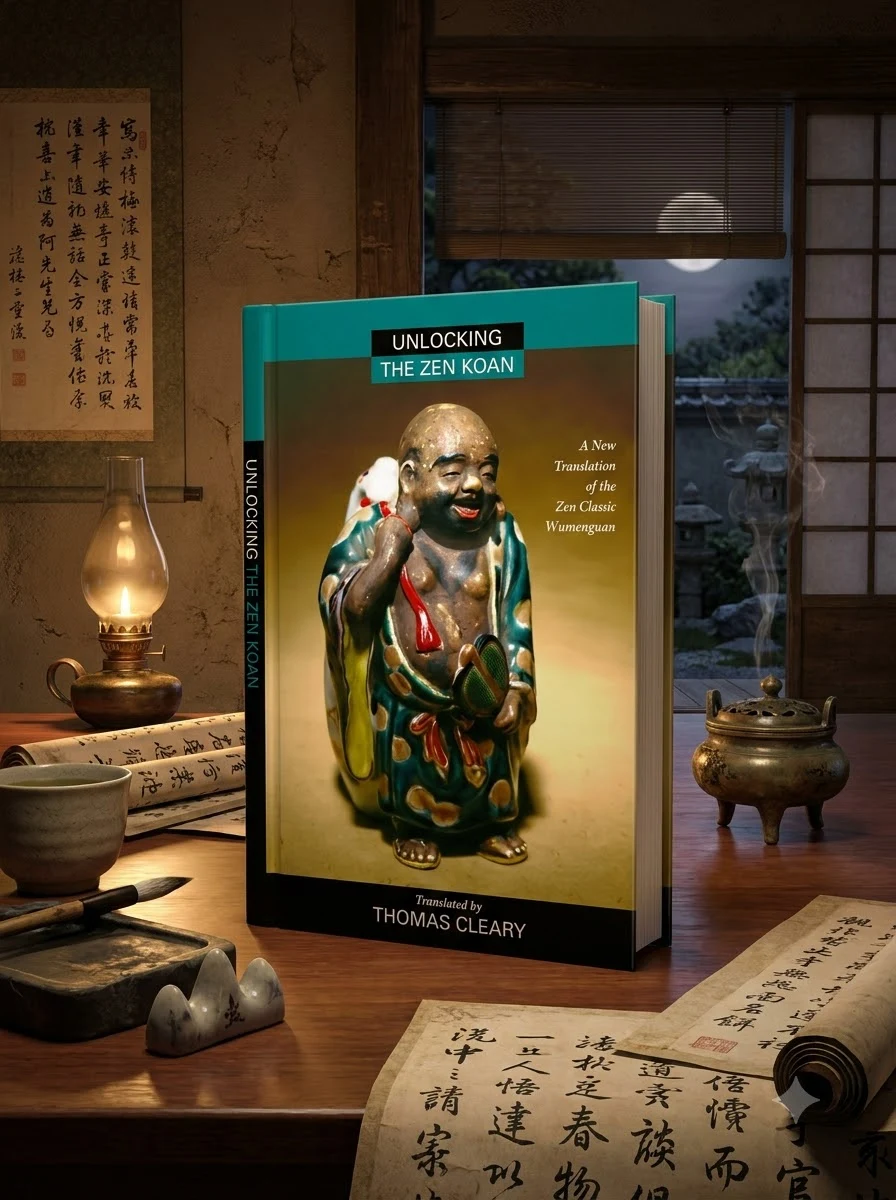
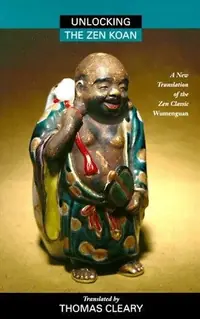
Unlocking the Zen Koan: A New Translation of the Zen Classic Wumenguam (Revised)
Cleary, ThomasThis edition can be ordered. No arrival date is confirmed.
Wumen’s gate opens not to logic, but to the sudden, breathless shock of awakening.
Thomas Cleary’s revised edition of the Wumenguan offers a masterful bridge between medieval Chinese Zen and the modern seeker. By translating directly from classical sources, he preserves the raw, paradoxical energy of the original forty-eight cases. The work layers Wumen’s verse commentary with prose analysis, contextualizing each koan through the lenses of subsequent Zen patriarchs. Cleary structures the reading experience to dismantle intellectual habits, guiding the user from initial shock through analytical deconstruction toward direct insight. This is not merely a translation; it is a pedagogical map for navigating the labyrinth of non-dual awareness.
This work anchors itself in the medieval Chinese Zen tradition through the Wumenguan, serving as a vital pedagogical map for navigating non-dual awareness. It bridges ancient paradoxical energy with modern philosophical inquiry, preserving the raw shock of awakening inherent in classical Chan practice.


📝 Description: Unlocking the Zen Koan: A New Translation of the Zen Classic Wumenguam (Revised)
💎 Expert review
📖 Why choose it
Why this book is worth reading
Readers seeking to dismantle their intellectual habits and experience the sudden, breathless shock of awakening will find this revised edition indispensable. Thomas Cleary’s masterful translation preserves the raw, paradoxical energy of the original forty-eight cases while providing a structured path from initial disorientation to direct insight. By layering Wumen’s verse commentary with prose analysis and contextualizing each koan through subsequent patriarchs, Cleary offers more than a mere translation; he provides a comprehensive guide for modern seekers. This book is essential for those ready to move beyond logic and engage directly with the labyrinth of non-dual awareness, making it a profound resource for serious practitioners of Zen philosophy.
⭐ Reader reviews
Reader rating
Bought this as a gift for my sister and ended up ordering a second copy for myself. The text itself is dense but rewarding — you get out what you put in. I appreciated how the argument builds steadily from first principles. My only regret is not ordering it sooner.
Needed this for my research. The symbolism is layered and generous to patient readers. Five stars from me.
Added this to my reference shelf. You can tell why this work has endured. Every rereading turns up something I missed. My only quibble is the cover feels thinner than expected. Good, with the caveats above.
Long-time student of the esoteric here. A text you study rather than simply read. A few pages arrived with light corner wear, though nothing serious. Happy enough with the purchase.
This exceeded my expectations. Not a light read, but far more accessible than I feared. It rewards patience more than any book I've bought this year. I'd have loved an index, but that's on the original text. Good, with the caveats above.
Cleary’s revision stands as a robust bridge between medieval Chinese Zen and contemporary esoteric study, faithfully capturing the text's paradoxical force. However, this is not a casual introduction to mindfulness or stress relief. Readers expecting straightforward logical explanations or comforting platitudes will find themselves frustrated by the deliberate dismantling of rational thought patterns. It demands active engagement with non-dual concepts rather than passive consumption. While the pedagogical structure aids navigation, the core material remains intensely abstract and resistant to conventional interpretation. It is strictly for those willing to endure the shock of awakening without the buffer of easy answers.
❓ Frequently asked questions
📖 Who should read this
Seekers weary of dry academic treatises who crave the visceral, immediate impact of Zen practice. It suits those ready to abandon rational control and engage directly with the mind’s deepest puzzles.
🎯 Key themes and symbolism
Paradoxical Insight
Non-Dual Awareness
Zen Pedagogical Method
💬 Quotes from the book
“The gate is always open, yet no one enters.”
“Words are fingers pointing at the moon.”
📜 Historical context
📚 Glossary
- Wumenguan
- Kensho
- Koan
📔 Questions to reflect on
- Where does your mind resist the paradox presented in the first koan?
- What assumptions about 'self' are challenged by the master’s abrupt reply?
- Can you identify a moment in daily life where logical analysis failed to resolve a situation?
✍️ More books by this author Cleary, Thomas
All books by this author →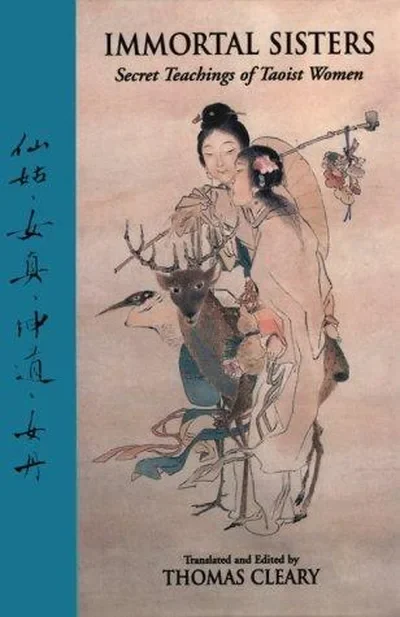
 89
89
🏛 Books from this publisher North Atlantic Books
All books from this publisher →
You might also like
See more → 88
88
 91
91