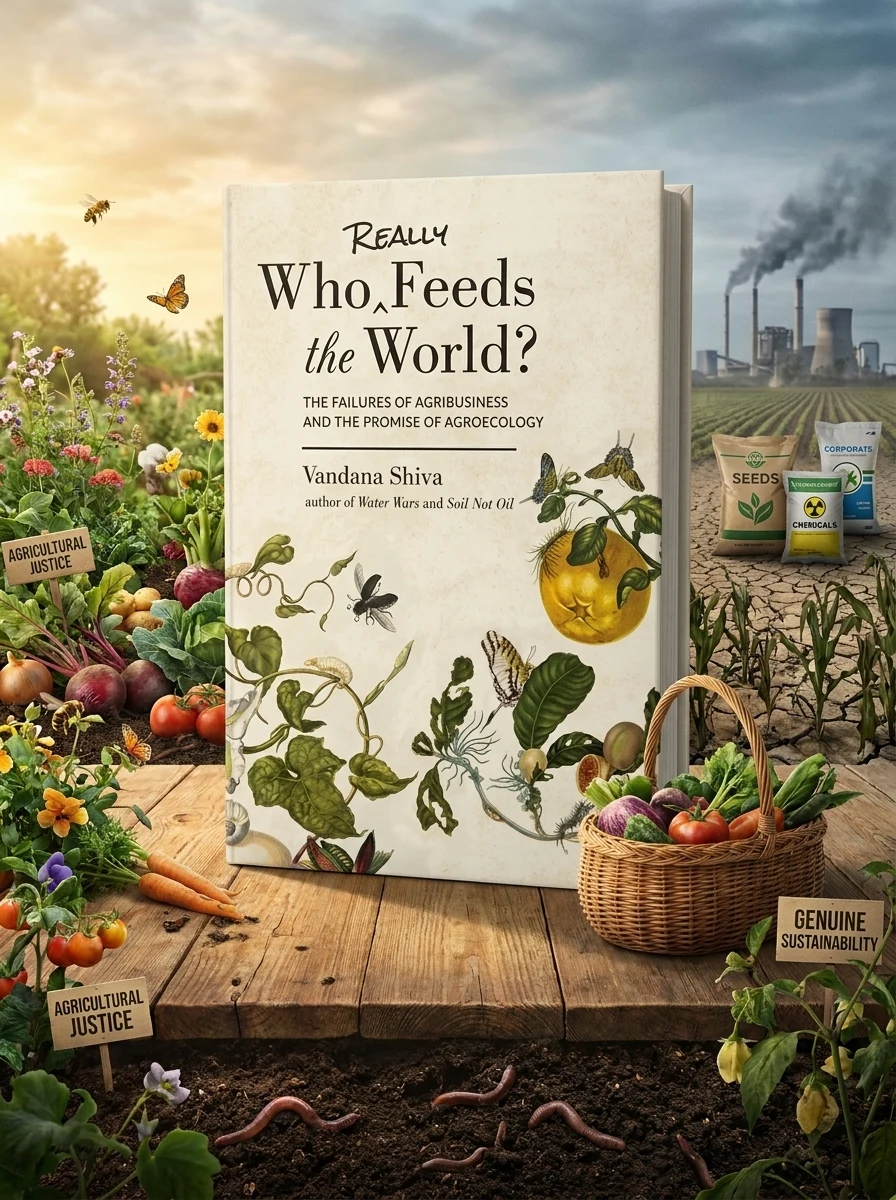
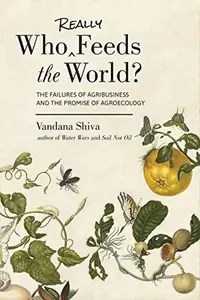
Who Really Feeds the World?: The Failures of Agribusiness and the Promise of Agroecology
Stock reported in the catalog; fulfillment is confirmed with your request.
Agribusiness starves the soul; agroecology nourishes the earth.
Vandana Shiva dismantles the myth that industrial monocultures feed the globe, revealing how corporate control destroys biodiversity and traps farmers in debt. She champions agroecology as a regenerative alternative, emphasizing seed sovereignty, localized food webs, and the vital role of women in sustenance. This work is not merely an critique but a blueprint for restoring ecological balance and social justice through traditional knowledge and community resilience.
This text sits at the intersection of environmental philosophy and social justice movements, challenging the dominant industrial paradigm with esoteric undertones of spiritual sustenance. It bridges the gap between practical agricultural science and the metaphysical connection between human communities and the earth.


📝 Description: Who Really Feeds the World?: The Failures of Agribusiness and the Promise of Agroecology
💎 Expert review
📖 Why choose it
Why this book is worth reading
Readers seeking to understand the deep spiritual and ecological roots of their food will find profound value in this work. It appeals to those who feel agribusiness starves the soul rather than nourishes it, offering a clear blueprint for restoring balance through agroecology. Individuals interested in seed sovereignty and the vital role of women in sustenance will appreciate the emphasis on traditional knowledge. This book is ideal for anyone ready to move beyond critique and embrace community resilience as a path toward social justice and ecological harmony.
⭐ Reader reviews
Reader rating
My third book from this store and this one might be the best. The historical context alone makes it worth the price. You can tell why this work has endured.
Needed this for my research. I appreciated how the argument builds steadily from first principles. Highly recommend to serious students.
Not my usual area but wanted to branch out. It's become a regular reference in my practice. The typesetting is comfortable for study, with good margins for notes. Some archaic spellings slow things down. Recommended with reservations.
Came across this title in a footnote and had to track it down. The print is clean and easy on the eyes for long sessions. Highly recommend to serious students.
Shiva provides a compelling dismantling of industrial monoculture myths, championing biodiversity and localized food webs with fierce integrity. However, readers seeking detached, purely technical agricultural data may find the strong ideological stance and focus on social justice distracting. Those who prefer optimistic narratives about technological solutions to famine will likely reject this critique of corporate control. It is not for those unwilling to confront the debt traps facing farmers or the destruction of biodiversity caused by agribusiness. The work demands an engagement with its philosophical underpinnings, making it less suitable for casual readers seeking quick, solution-oriented advice without contextual depth.
❓ Frequently asked questions
📖 Who should read this
Readers concerned with ecological collapse, food sovereignty, and corporate accountability. Ideal for activists, farmers, and those seeking ethical alternatives to industrial consumption patterns.
🎯 Key themes and symbolism
The Agroecology Imperative
Shiva argues that true sustainability arises from mimicking nature’s diversity rather than enforcing industrial uniformity. She details how agroecological practices restore soil health, conserve water, and empower local communities, offering a viable path forward against the ecological collapse driven by conventional agribusiness models.
Seed Sovereignty and Freedom
The text highlights the political and spiritual weight of saving seeds. Shiva posits that controlling genetic resources is central to corporate power, and reclaiming seed diversity is an act of resistance that preserves cultural heritage and ensures long-term food security for future generations.
Women and Food Justice
Shiva centers women as the primary custodians of agricultural knowledge and food production. The book explores how their labor and traditional wisdom are undervalued by patriarchal industrial systems, advocating for their recognition as essential agents in building equitable and resilient food networks.
💬 Quotes from the book
“The Earth does not belong to us; we belong to the Earth.”
“Agroecology is the science of sustainable agriculture.”
📜 Historical context
📚 Glossary
- Agroecology
- Seed Sovereignty
- Monocropping
📔 Questions to reflect on
- Where do you stand in the food chain, and how does your consumption impact local ecosystems?
- What traditional knowledge about nature or food do you wish to preserve or reclaim?
- How might your community become more resilient through localized food production?
🏛 Books from this publisher North Atlantic Books
All books from this publisher →







You might also like
See more →
 91
91