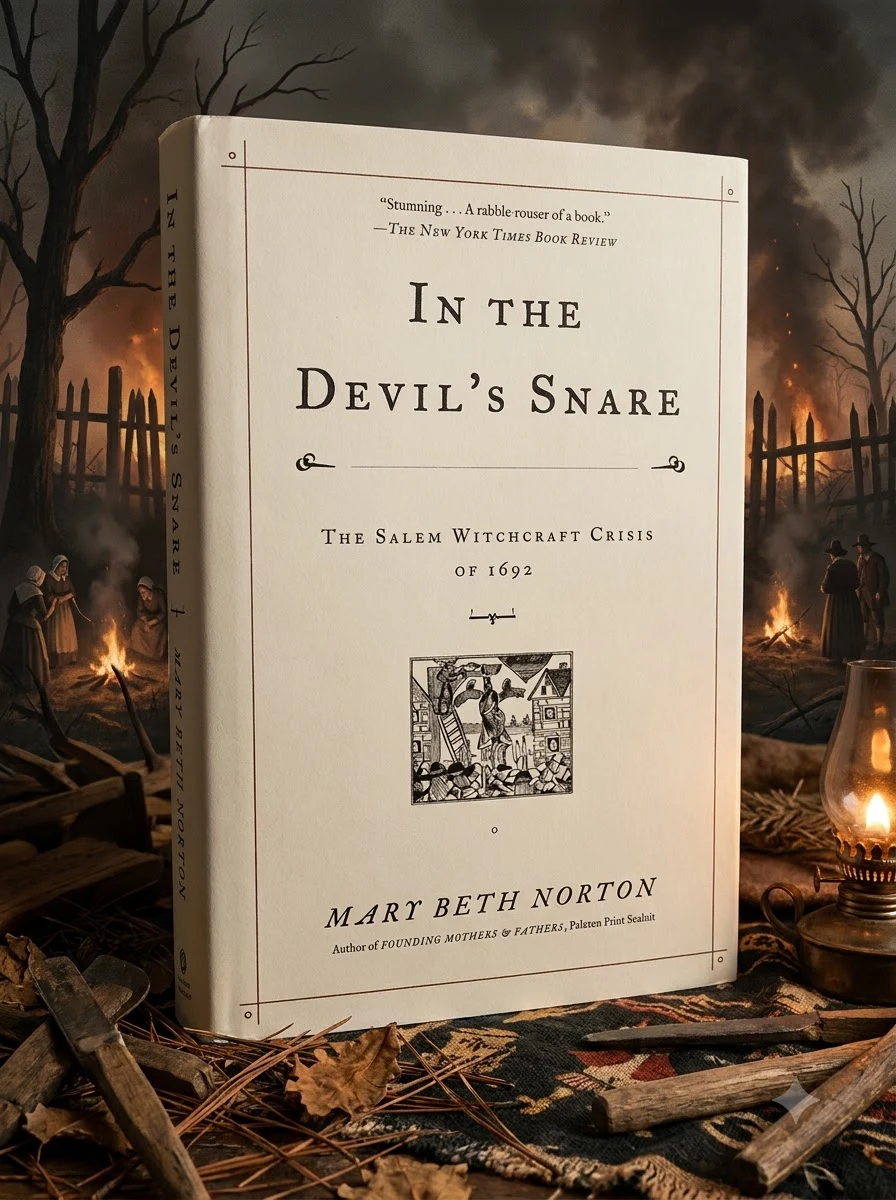
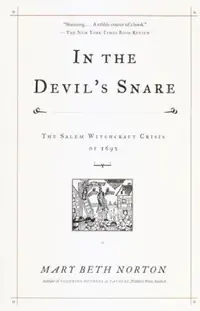
In the Devil's Snare: The Salem Witchcraft Crisis of 1692
Stock reported in the catalog; fulfillment is confirmed with your request.
Uncover the chilling confluence of fear, war, and spiritual panic that fueled Salem's darkest hour.
Mary Beth Norton meticulously peels back the layers of the 1692 Salem witchcraft crisis, revealing a profound and often overlooked context. She demonstrates how widespread terror, stemming from brutal frontier conflicts and the displacement of traumatized refugees—many becoming key accusers—created fertile ground for panic. Colonial leaders, grappling with their own failures, readily interpreted these afflictions as a vast, diabolical conspiracy involving Native Americans and the French. Expanding the narrative beyond Salem, Norton offers a compelling, fresh perspective on a pivotal moment, exposing the intertwined anxieties of war and spiritual crisis.
This work sits firmly within the tradition of revisionist historical scholarship that re-examines the Salem witchcraft trials through the lens of geopolitical conflict and social displacement rather than mere religious hysteria.


📝 Description: In the Devil's Snare: The Salem Witchcraft Crisis of 1692
💎 Expert review
📖 Why choose it
Why this book is worth reading
Readers fascinated by the intersection of political instability and spiritual anxiety will find this text indispensable. Norton provides a vital corrective to popular myths, showing how frontier warfare and refugee trauma directly fueled the accusations. It is essential for those seeking to understand how colonial leaders projected their failures onto diabolical conspiracies involving Native Americans and the French. By expanding the narrative beyond Salem, it offers a profound look at how fear operates during times of crisis. This book rewards careful study with a fresh perspective on a pivotal historical moment, exposing the deep intertwining of war and spiritual panic that defined the era.
⭐ Reader reviews
Reader rating
Norton’s meticulous research yields a compelling, albeit dense, narrative that challenges conventional understandings of the Salem trials. While the argument linking frontier conflicts to the witchcraft panic is persuasive, readers seeking a quick, dramatic retelling may find the analytical depth tedious. It does not suit those who prefer sensationalized accounts or simple moral binaries. Instead, it demands engagement with complex socio-political factors. The text is rigorous and fresh, but its academic tone and focus on structural causes over individual drama make it less accessible to casual history buffs. It is a serious scholarly contribution that prioritizes context over narrative flair.
❓ Frequently asked questions
📖 Who should read this
For those seeking a deeper, nuanced understanding of the Salem witch trials beyond typical narratives. If you're fascinated by the intersection of history, psychology, and the occult, and appreciate rigorous scholarship that challenges assumptions, this book offers an essential journey into America's dark past.
🎯 Key themes and symbolism
Fear and Trauma's Role
This book compellingly argues that pervasive fear from brutal frontier wars, coupled with profound trauma experienced by displaced refugees, fundamentally shaped accusations and beliefs during the Salem crisis. It reveals how collective societal anxiety created an environment ripe for mass hysteria and the targeting of vulnerable individuals.
Colonial Leadership's Influence
Norton exposes how political and military failures of Massachusetts's colonial leadership contributed significantly to the unfolding tragedy. Their inability to protect settlers and their theological interpretations of suffering as divine punishment or diabolical interference amplified the crisis, diverting blame and justifying the pursuit of supposed witches.
Beyond Salem's Borders
Unlike many accounts, this work expands its scope beyond Salem itself, connecting localized events to broader geopolitical tensions. It illustrates how perceived threats from Native American tribes and French forces, viewed through a Puritan lens, fueled belief in a widespread satanic conspiracy threatening the entire colonial enterprise.
💬 Quotes from the book
“The terror of the forest, filled with unseen enemies and unexplained attacks, found its dark mirror in the unseen torments described by Salem's afflicted.”
“To understand Salem, one must look beyond its meetinghouse walls, to the distant smoke of burning settlements and the desperate pleas of refugees seeking solace and explanation.”
📜 Historical context
📚 Glossary
- Puritan Eschatology
- Frontier Refugees
- Spectral Evidence
📔 Questions to reflect on
- How might contemporary societal anxieties, similar to those in 1692, manifest in modern-day collective fears or scapegoating?
- Reflect on how political leadership's interpretations of crises can either mitigate or exacerbate widespread panic and injustice.
- Consider the psychological impact of prolonged trauma and displacement, and how it might influence perceptions of reality or contribute to belief in extraordinary evils.
🏛 Books from this publisher Knopf Doubleday Publishing Group
All books from this publisher →
 89
89
You might also like
See more →





 91
91