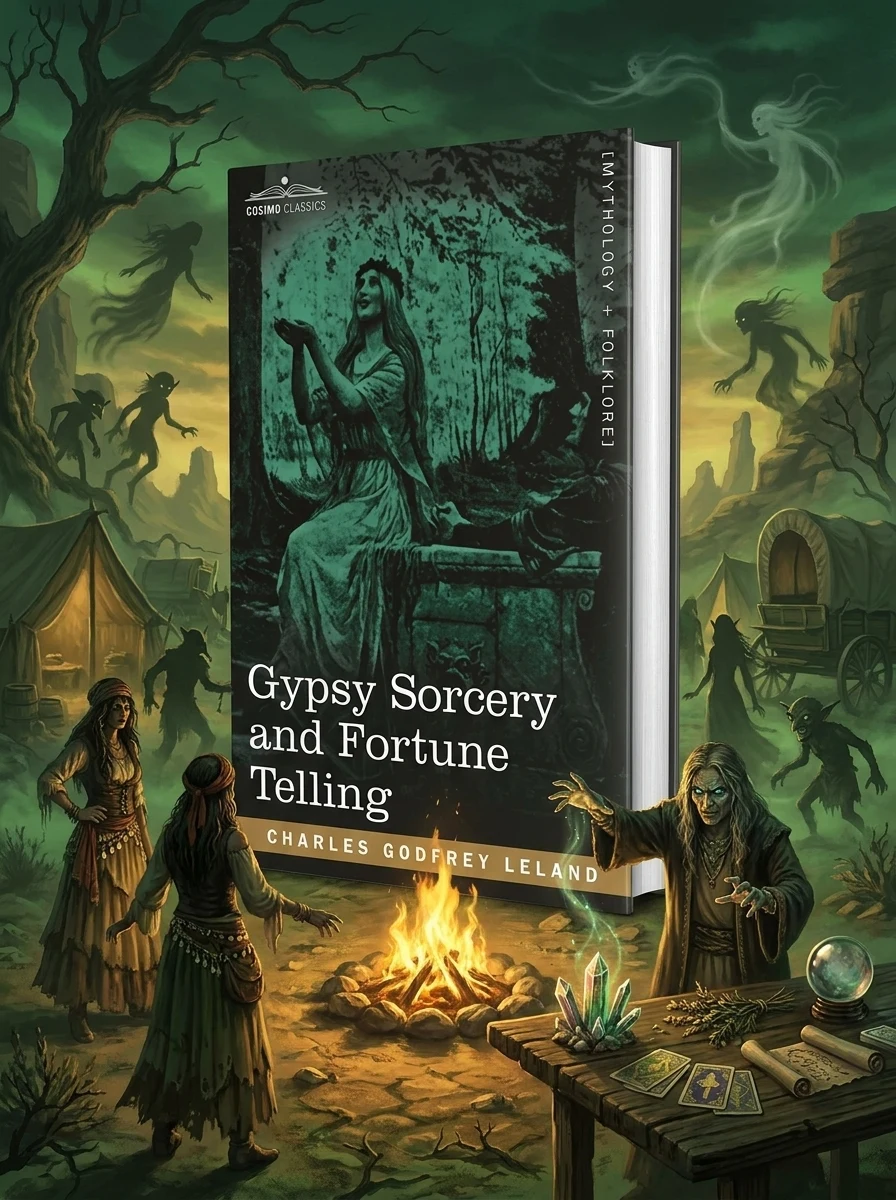
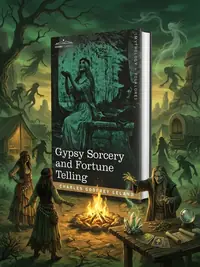
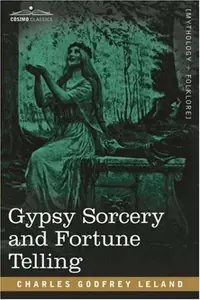
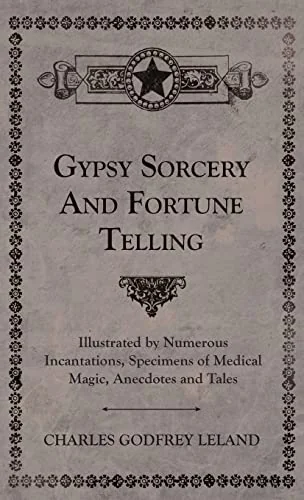
Gypsy Sorcery and Fortune Telling
Leland, Charles GodfreyStock reported in the catalog; fulfillment is confirmed with your request.
Uncover the ancient secrets of Romani magic and divination from a bygone era.
Step into the intriguing world of Romani folk traditions as documented by Charles Godfrey Leland. This work explores the historical and cultural roots of Romani sorcery and fortune-telling, presenting Leland's theories on how these practices emerged from a nomadic lifestyle and close connection to nature. Delving into various forms of divination and the perceived power of Romani practitioners, the book offers a unique, albeit dated, outsider's perspective on their mystical heritage. It highlights how these 'easy callings' required minimal resources, fostering a rich tapestry of belief and predictive arts.
This volume serves as a historical document of late 19th-century occultism, capturing an outsider's ethnographic view of Romani mystical traditions during a time when such nomadic practices were often romanticized or misunderstood by Victorian society.


📝 Description: Gypsy Sorcery and Fortune Telling
💎 Expert review
📖 Why choose it
Why this book is worth reading
Readers fascinated by the intersection of folklore and esoteric practice will find this book a compelling window into the past. It is ideal for those interested in the historical roots of fortune-telling and the cultural narratives surrounding Romani communities. By exploring how these practices emerged from a nomadic lifestyle, the text offers insight into the resourcefulness and spiritual depth of these traditions. While the perspective is dated, it remains valuable for understanding the evolution of divination arts and the specific 'easy callings' that defined this unique heritage for historical researchers and occult enthusiasts alike.
⭐ Reader reviews
Reader rating
This book provides a fascinating, albeit ethnocentric, glimpse into Romani mystical practices as perceived by an American outsider in a bygone era. Readers seeking rigorous academic anthropology or modern, respectful cultural studies should look elsewhere, as the text reflects dated theories and stereotypes. However, for those studying the history of Western occultism and how 19th-century authors interpreted 'exotic' traditions, it offers valuable primary source material. It is not suitable for contemporary Romani voices seeking accurate representation but serves well as a historical artifact for understanding past esoteric curiosities and the popularization of fortune-telling in English-speaking markets.
❓ Frequently asked questions
📖 Who should read this
If you are fascinated by historical accounts of folk magic, cultural anthropology, or the speculative origins of spiritual practices, this book is for you. It offers a glimpse into how a prominent 19th-century folklorist interpreted Romani traditions.
🎯 Key themes and symbolism
Romani Folk Magic
Leland meticulously details what he perceives as the unique magical practices of the Romani people. He emphasizes their connection to the wild, suggesting their sorcery is deeply intertwined with natural elements and a certain compelling presence, often characterized by a mesmerizing 'fascinator's eye.' His observations paint a picture of an intuitive, uncodified system of power.
Divinatory Practices
The book explores various methods of fortune-telling and future-gazing attributed to the Romani. Leland suggests these practices were often direct and resource-light, requiring no grand temples or elaborate tools. He speculates on how the ability to predict the future became a valuable skill, honed and passed down through generations within their communities.
Origins of Belief
Leland offers speculative theories on the genesis of Romani magical and spiritual beliefs. He posits that a life lived outdoors, amidst the mysteries of nature and the challenges of a wandering existence, naturally fostered conceptions of unseen entities and the development of protective or predictive practices. Fear, pain, and the unknown are presented as primal catalysts.
💬 Quotes from the book
“This is the case in Tartary, Africa, among the Eskimo, Lapps, or Red Indians, with all of whom the sorcerer, voodoo or medaolin, has the eye of the "fascinator," glittering and cold as that of a serpent.”
“It was an easy calling; it required no property or properties, neither capital nor capitol, shiners nor shrines, wherein to work the oracle.”
📜 Historical context
📚 Glossary
- Fascinator
- Medaolin
- Oracle
📔 Questions to reflect on
- Reflect on how environmental conditions and societal circumstances might shape the development of a community's spiritual beliefs and magical practices.
- Consider the concept of 'fascination' as described by Leland. How might a powerful gaze or presence influence belief and interaction in everyday life?
- Leland suggests that fear and mystery fostered early magical conceptions. How do you see fear and mystery influencing spiritual or supernatural beliefs today?
✍️ More books by this author Leland, Charles Godfrey
All books by this author →
 89
89
 89
89
🏛 Books from this publisher Cosimo Classics
All books from this publisher → 90
90

 87
87
 90
90
 89
89
You might also like
See more →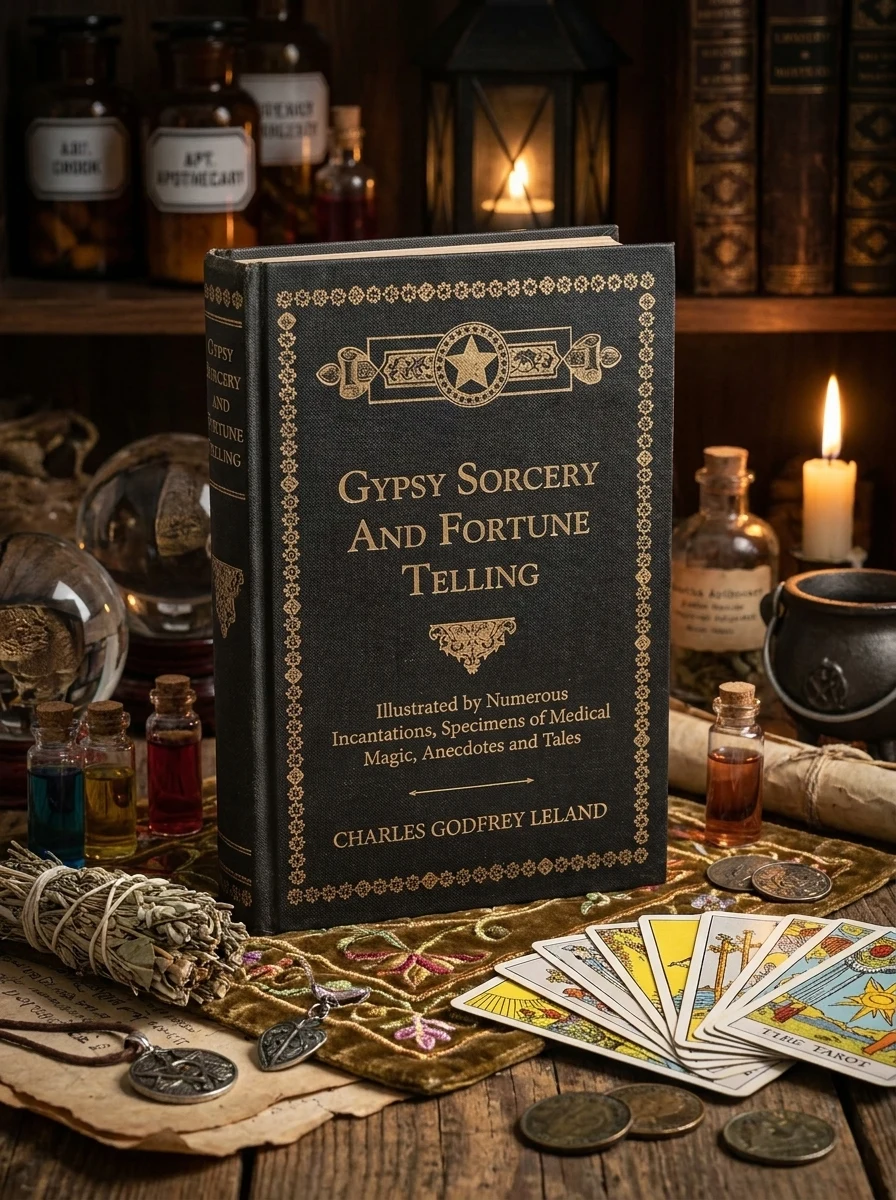

 82
82
 79
79