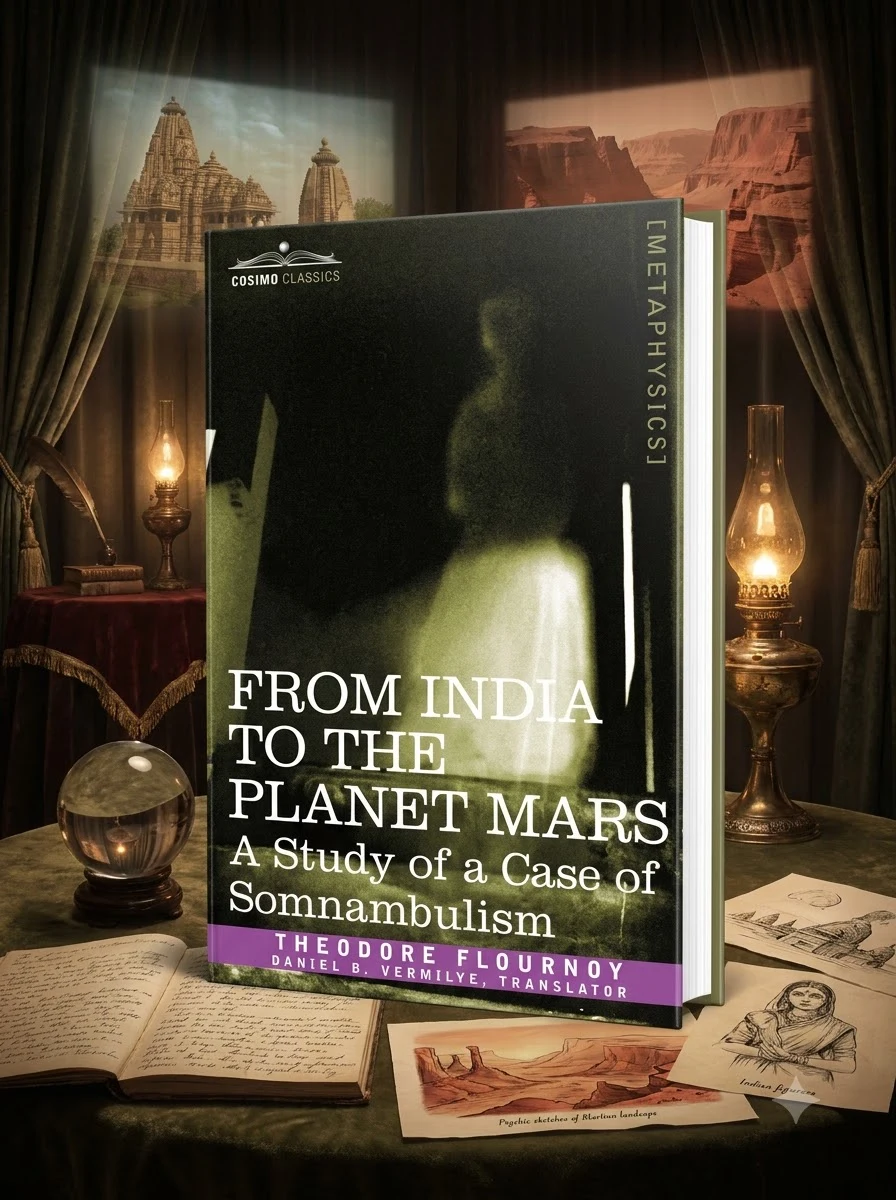
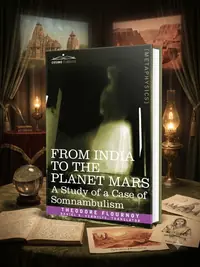

From India to the Planet Mars: A Study of a Case of Somnambulism Flournoy, Theodore
Flournoy, TheodoreStock reported in the catalog; fulfillment is confirmed with your request.
A century-old psychological case study revealing the vivid Martian dreams of a French medium.
This seminal 1900 text by Swiss psychologist Théodore Flournoy examines the intricate inner world of Catherine Elise Phinuit, a French medium who claimed access to past lives on Mars and India. Flournoy meticulously documents her trance states, analyzing the imaginative constructs that arise during somnambulism. He argues that these elaborate narratives are not demonic possessions but spontaneous creations of the subconscious mind. The work bridges the gap between spiritualist phenomena and scientific psychology, offering a profound look into the creative power of the unconscious when detached from rational control. It remains a foundational text for understanding the intersection of psyche, trance, and cultural myth.
This work sits at the intersection of early 20th-century spiritualism and emerging scientific psychology, serving as a pivotal text in the study of subconscious phenomena during a time when occult practices were being scrutinized through academic lenses.


📝 Description: From India to the Planet Mars: A Study of a Case of Somnambulism Flournoy, Theodore
💎 Expert review
📖 Why choose it
Why this book is worth reading
Readers fascinated by the mechanics of the human psyche will find profound value in this seminal examination of how the unconscious mind constructs elaborate mythologies. It is ideal for those interested in the history of psychology, specifically the study of trance states and mediumship, who wish to understand how cultural narratives like Mars or India can manifest within individual psyches. Professionals in parapsychology, historians of science, and enthusiasts of esoteric traditions will appreciate Flournoy’s rigorous approach to demystifying spiritualist claims without dismissing their psychological reality. The book offers a unique window into the creative power of the subconscious, making it essential for anyone exploring the boundary between rational science and mystical experience.
⭐ Reader reviews
Reader rating
Added this to my reference shelf. The ideas are old but land with surprising force today. A keeper.
First purchase from this shop. It connects ideas I'd only seen treated separately elsewhere. Good, with the caveats above.
Been hunting for a decent copy of this text for ages. It connects ideas I'd only seen treated separately elsewhere.
As someone who reads a lot in this field, I can be picky. It pairs well with more modern commentaries on the same tradition. If you're drawn to this subject, don't hesitate.
Flournoy’s text is a fascinating historical document that successfully bridges spiritualism and scientific psychology by analyzing the imaginative constructs of Catherine Elise Phinuit. While it offers valuable insights into the creative power of the unconscious, it may not suit readers seeking supernatural validation or those uninterested in early psychological case studies. The dense, academic tone might deter casual readers looking for straightforward occult instruction. However, for those willing to engage with its analytical depth, it provides a candid look at how trance states generate cultural myths. It is less about proving the existence of Martians and more about understanding the mind’s capacity for myth-making.
❓ Frequently asked questions
📖 Who should read this
Readers interested in the history of parapsychology, Jungian psychology, and the early 20th-century debate between spiritualism and scientific materialism. Ideal for scholars studying the unconscious mind.
🎯 Key themes and symbolism
Subconscious Imagination
Flournoy demonstrates how the unconscious mind constructs complex, coherent narratives during trance states. He shows that these 'alien' memories are actually psychological projections, revealing the mind's capacity for spontaneous myth-making without external spiritual intervention.
Somnambulism Analysis
The book provides a clinical breakdown of different trance levels. Flournoy categorizes the medium's altered states, distinguishing between simple automatisms and complex, character-driven personas that emerge from the depths of her psyche during somnambulistic episodes.
Psychic Phenomena
Rather than dismissing the medium's claims as fraud, Flournoy validates the reality of the experience while rejecting its supernatural origin. He treats the psychic data as genuine psychological material, exploring how cultural memories influence the content of trance communications.
💬 Quotes from the book
“The subconscious is not a void, but a fertile garden of images.”
“We must distinguish between the reality of the feeling and the truth of the object.”
📜 Historical context
📚 Glossary
- Somnambulism
- Mediumship
- Subconscious
📔 Questions to reflect on
- What narratives arise in your mind when you let go of conscious control?
- How do cultural stories shape your understanding of the unknown?
- When have you experienced a 'trance' state of deep focus or dissociation?
🏛 Books from this publisher Cosimo Classics
All books from this publisher →
 90
90


 87
87
 90
90
 89
89
You might also like
See more → 75
75