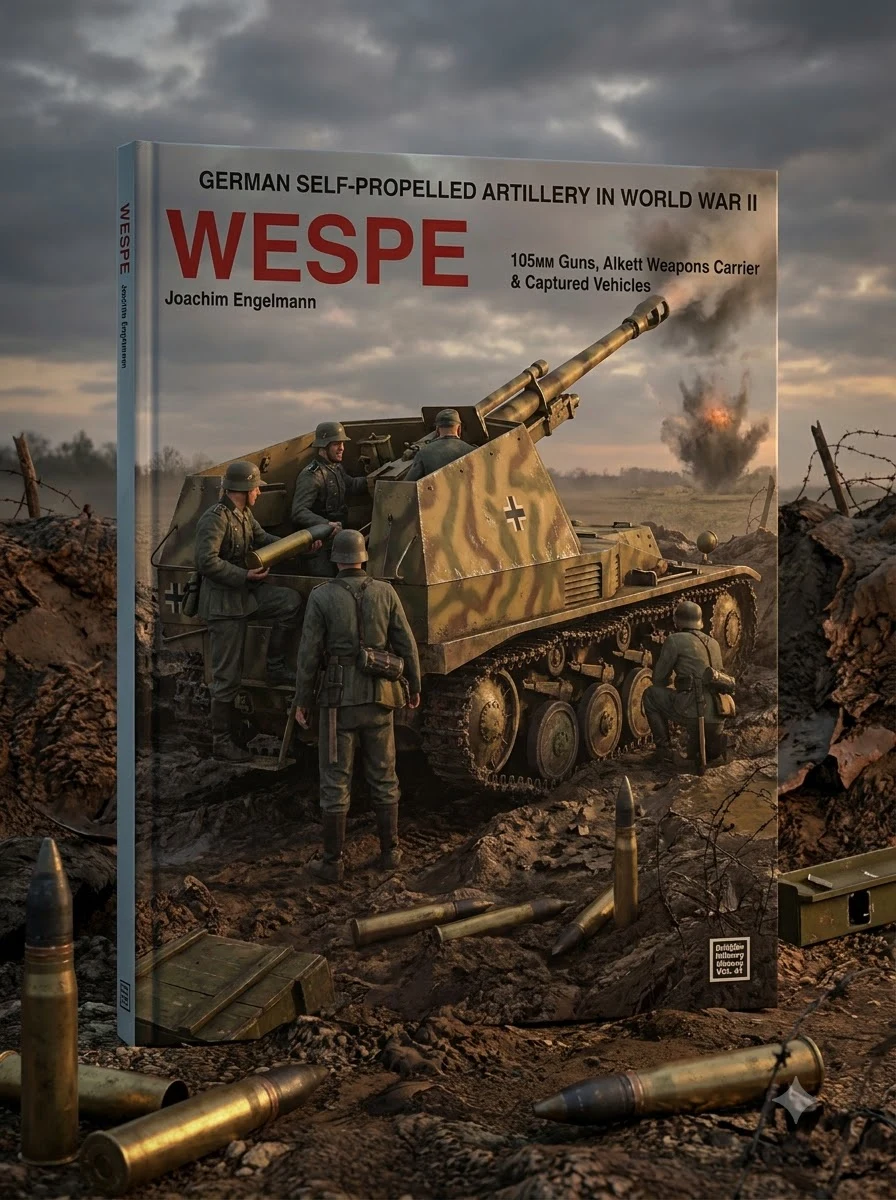
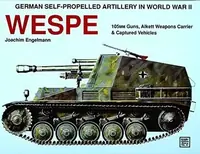
German Self-Propelled Artillery in WWII: Wespe
This edition can be ordered. No arrival date is confirmed.
The Wespe was a fragile yet vital mobile gun platform of the Third Reich's armored forces.
This volume dissects the engineering and operational history of the Panzerwerfer 42, known as Wespe. It details how German engineers salvaged the Panzer II chassis to mount a 105mm howitzer, creating a lightweight self-propelled artillery piece. The text explores the tactical deployment of these vehicles across European theaters, analyzing their reliability, armor limitations, and effectiveness in direct fire support roles during the latter stages of the Second World War.
This volume sits within the niche tradition of specialized military history publishing, focusing on the technical and operational specifics of World War II armored warfare rather than broad strategic narratives.


📝 Description: German Self-Propelled Artillery in WWII: Wespe
💎 Expert review
📖 Why choose it
Why this book is worth reading
Military historians and modelers seeking granular detail on German armored engineering will find this text indispensable. It offers a focused dissection of the Panzerwerfer 42, appealing to those fascinated by the ingenuity required to mount heavy artillery on light chassis. Readers interested in the tactical realities of the latter war stages, specifically the balance between mobility and protection, will appreciate the analysis of reliability and effectiveness. It serves as a precise reference for understanding how the Third Reich utilized salvaged components to create vital mobile gun platforms across European theaters.
⭐ Reader reviews
Reader rating
Ordered this after seeing it referenced in another book I was studying. The print is clean and easy on the eyes for long sessions. Solid, if not essential.
Long-time student of the esoteric here. You can tell why this work has endured. It reads better in small doses — a chapter at a time with notes.
My third book from this store and this one might be the best. Not a light read, but far more accessible than I feared.
This book is a dry, technical examination of the Wespe's engineering and deployment. It strictly avoids narrative flair, focusing instead on chassis modifications and tactical limitations. It is not suited for readers seeking dramatic battlefield anecdotes or general WWII history; those looking for broad strategic overviews will find it too narrow. However, for specialists analyzing the Panzer II chassis adaptations and 105mm howitzer integration, it provides necessary clarity on armor constraints and direct fire support roles without unnecessary embellishment.
❓ Frequently asked questions
📖 Who should read this
Military historians, modelers, and enthusiasts of WWII armored warfare will find this essential. It offers technical depth for those interested in the intersection of mechanical engineering and battlefield strategy during the Nazi era.
🎯 Key themes and symbolism
Chassis Salvage Engineering
The book examines the pragmatic decision to reuse the underpowered Panzer II hull. It explains how designers adapted the existing suspension and engine to support heavier weaponry, highlighting the ingenuity born from resource scarcity and urgent wartime demands.
Tactical Deployment Strategy
It analyzes how Wespe units were integrated into Panzer divisions for mobile artillery support. The narrative covers their use in both offensive thrusts and defensive stands, emphasizing the need for speed and indirect fire capabilities on the Eastern and Western fronts.
Armor and Vulnerability
The text critically assesses the thin armor plating that left crews exposed to small arms and shrapnel. It discusses how this vulnerability influenced crew survival rates and forced commanders to employ specific escort tactics to protect these valuable but fragile assets.
💬 Quotes from the book
“A mobile fortress of thin steel.”
“Engineering born of necessity.”
📜 Historical context
📚 Glossary
- Selbstfahrlafette
- LeFH 18
- Panzer II
📔 Questions to reflect on
- How does the concept of 'good enough' engineering apply to the Wespe's design choices?
- What ethical considerations arise when studying the technical prowess of a military regime?
- How did the limitations of the Panzer II chassis influence the tactical doctrine of the Wespe?
🏛 Books from this publisher Schiffer Publishing
All books from this publisher →
 89
89



You might also like
See more →




 91
91
 91
91