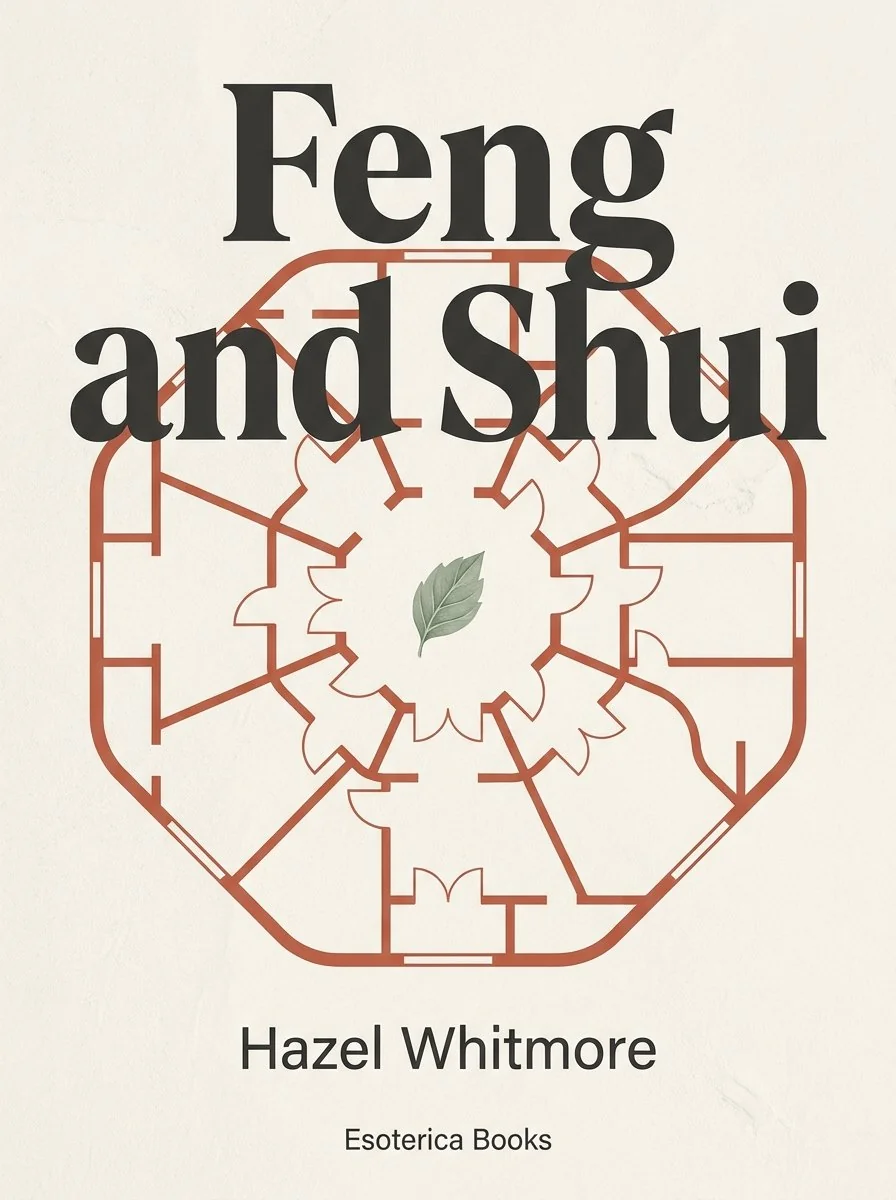
Feng and Shui: Create a Harmonious Home
Create a more welcoming home with room-by-room feng shui and the practical H.O.M.E. Method.
Feng and Shui: Create a Harmonious Home by Hazel Whitmore introduces the traditional Chinese art of feng shui through practical, room-by-room decorating guidance. Using the four-step H.O.M.E. Method, you'll learn to observe your surroundings, open pathways, work with the bagua map, and enhance each space with intention. Explore bedroom layouts, welcoming living rooms, kitchen arrangements, the Five Elements, colors, plants, mirrors, and furniture placement. From spacious houses to studio apartments, this approachable guide helps you adapt traditional principles to your actual floor plan and create a home that reflects your personal sense of harmony.
Feng shui is a traditional Chinese system concerned with the relationship between people and their surroundings. Its principles consider qi, spatial arrangement, entrances, furniture, the Five Elements, and the bagua map as interconnected parts of a meaningful living environment.
📝 Description: Feng and Shui: Create a Harmonious Home
📖 Why choose it
Why this book is worth reading
The appeal of this guide is its combination of traditional ideas and immediately understandable decorating decisions. Instead of beginning with complicated terminology, it invites you to look at your own front entrance, notice an obstructed walkway, and move one piece of furniture. From there, the H.O.M.E. Method provides a consistent framework for exploring every room. The book also gives beginners an accessible introduction to the Five Elements and bagua map, helping connect individual decorating choices with a broader traditional system.
⭐ Reader reviews
Reader rating
Hazel Whitmore's guide takes a practical approach to introducing feng shui into everyday domestic spaces. Its strongest feature is the H.O.M.E. Method, which gives beginners four understandable steps rather than presenting decorating decisions as isolated rules. The preview is particularly useful in its attention to entrances, clear pathways, furniture arrangements, the Five Elements, and the bagua map. The twelve-chapter structure also gives smaller homes and home offices a place alongside conventional rooms. One limitation is that readers looking for an in-depth comparison of different feng shui schools or advanced bagua interpretations may find the introductory approach too basic. Overall, this is an accessible starting point for thoughtful, tradition-informed home arrangement.
❓ Frequently asked questions
📖 Who should read this
Ideal for beginners exploring feng shui, homeowners refreshing their interiors, apartment dwellers working with limited space, and anyone interested in combining traditional Chinese spatial principles with practical decorating. It is especially suitable for readers who prefer clear instructions and manageable changes over complicated interior-design projects.
🎯 Key themes and symbolism
Traditional Feng Shui
Room-by-Room Decorating
Five Elements
Bagua Map
📜 Historical context
📚 Glossary
- Feng shui
- Qi
- Bagua map
- Five Elements
- Command position
- Elemental balance
📔 Questions to reflect on
- When you walk through your front entrance, what is the first thing you notice, and what does that first impression tell you about the atmosphere of your home?
- Which room feels most crowded or disconnected from its intended purpose, and what three small changes could help open its pathways and make it more welcoming?
- Which of the Five Elements—Wood, Fire, Earth, Metal, or Water—most naturally reflects the atmosphere you want to cultivate in your home, and how could you represent it through colors, materials, or meaningful objects?
📖 Read on the blog
✍️ More books by this author Hazel Whitmore


🏛 Books from this publisher Esoterica Books
You might also like
See more →

Have a question about this item?
Ask about the edition, condition, delivery or anything else — we reply by email or phone, usually within a day.
