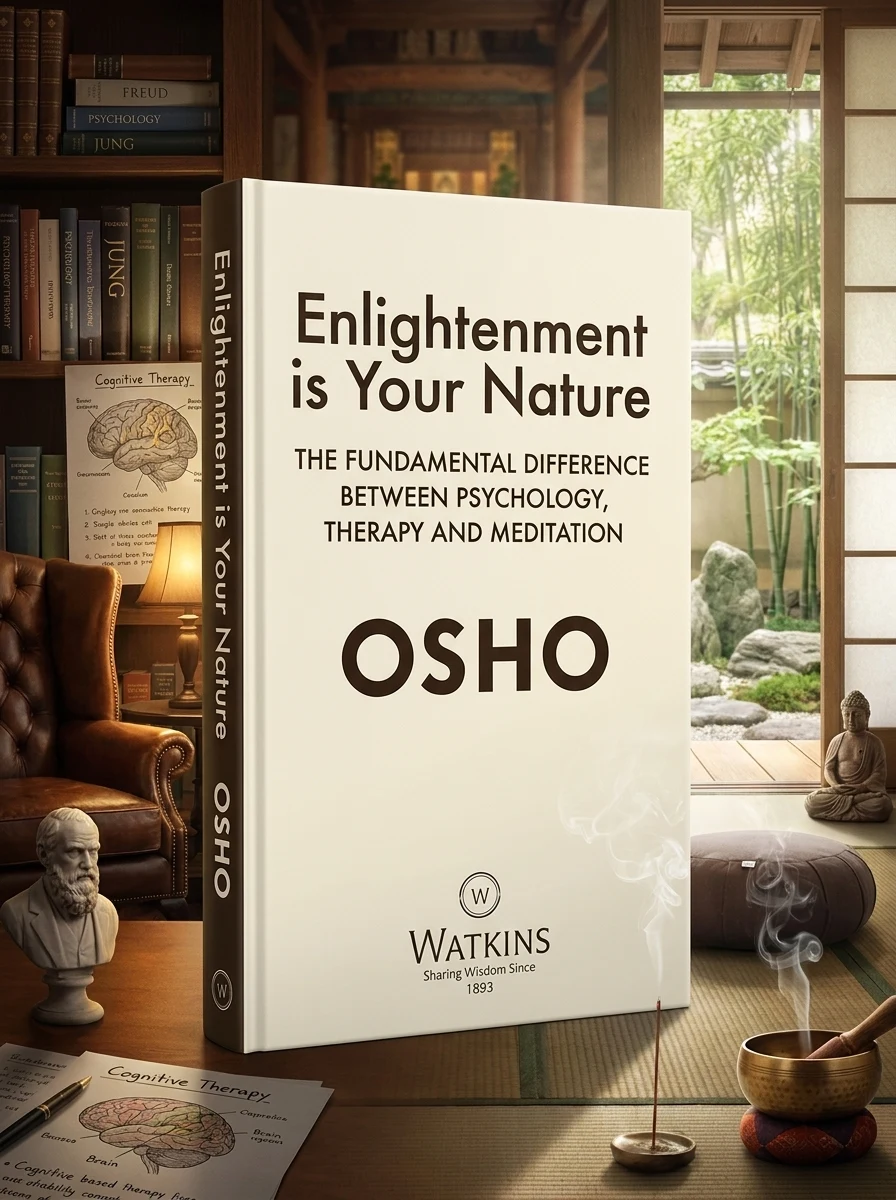

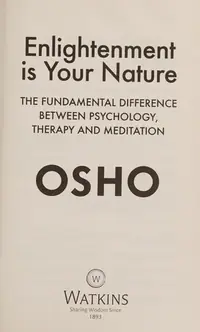
Enlightenment Is Your Nature: The Fundamental Difference Between Psychology, Therapy, and Meditation
OshoThis edition can be ordered. No arrival date is confirmed.
Unravel the true nature of enlightenment, beyond dogma and therapy.
Osho challenges prevailing Western notions of spiritual awakening, meticulously distinguishing genuine enlightenment from the realms of psychology and therapeutic practices. He posits that our ingrained cultural perspectives, particularly Judeo-Christian conditioning, often distort the Eastern understanding of this profound state. This work aims to dismantle common misconceptions, such as viewing enlightenment as a supernatural feat or an exclusive achievement, instead presenting it as an inherent human potential. By stripping away layers of religious belief and ascetic distortions, Osho offers a refreshingly radical and accessible pathway to comprehending one's own enlightened nature.
This text belongs to the contemporary esoteric literature tradition, specifically within the realm of modern mysticism and spiritual psychology. It bridges Eastern philosophical concepts with Western therapeutic frameworks, challenging established Judeo-Christian cultural conditioning through a radical reinterpretation of spiritual awakening.


📝 Description: Enlightenment Is Your Nature: The Fundamental Difference Between Psychology, Therapy, and Meditation
💎 Expert review
📖 Why choose it
Why this book is worth reading
Readers seeking to transcend conventional religious dogma and psychological frameworks will find profound value in this work. It is ideal for those who feel alienated by traditional spiritual narratives or clinical therapy models, offering a refreshing perspective that views enlightenment not as an exclusive supernatural feat, but as an inherent human potential. By dismantling layers of ascetic distortion and cultural bias, Osho provides an accessible pathway for individuals eager to understand their true nature without the burden of guilt or complex belief systems. This book empowers seekers to embrace a radical, direct approach to self-realization, making it essential for anyone desiring to strip away misconceptions and connect with the fundamental difference between mere mental health and genuine spiritual awakening.
⭐ Reader reviews
Reader rating
Osho’s provocative stance offers a necessary correction to Western misunderstandings of enlightenment, clearly distinguishing it from therapy. However, readers heavily invested in Judeo-Christian theological structures or those who prefer structured, evidence-based psychological interventions may find the text dismissive of their foundational beliefs. It does not suit those seeking academic rigor or traditional religious guidance, as it actively dismantles established dogma rather than reinforcing it. The work is best appreciated by open-minded mystics willing to confront their conditioning, but it risks alienating individuals who rely on conventional spiritual authority or clinical frameworks for their sense of order and meaning.
❓ Frequently asked questions
📖 Who should read this
Are you ready to challenge your preconceived notions of spirituality and self-discovery? This book is for those seeking a rigorous, unvarnished exploration of enlightenment, unburdened by dogma. If you've felt a disconnect between Western therapeutic models and deeper spiritual truths, Osho offers a provocative and clarifying perspective.
🎯 Key themes and symbolism
Eastern vs. Western Enlightenment
This book meticulously dissects the fundamental divergence between the 18th-century Western 'Age of Reason' concept of enlightenment and the Eastern spiritual state of consciousness. It highlights how Western theological frameworks, emphasizing a divine external to the self, hinder a true grasp of Eastern liberation, leading to misinterpretations like supernatural powers or an elite status for the 'enlightened.'
Deconstructing Spiritual Misconceptions
Osho takes a radical stance, systematically dismantling prevalent misunderstandings surrounding enlightenment. He liberates the concept from the baggage of spiritual and religious dogma, including the asceticism and renunciation often associated with both Eastern and Western traditions. The text argues that these distortions obscure enlightenment's true, inherent nature, presenting a clearer, unburdened view.
Beyond Therapy and Meditation
Central to the book is Osho's sharp distinction between the objectives and methodologies of psychology, therapy, and meditation. He illustrates how the former largely focus on mental adjustment and problem-solving within the ego's framework, while meditation, in its purest form, transcends these, aiming for a fundamental shift in consciousness that reveals one's essential, enlightened being.
💬 Quotes from the book
“Enlightenment is not a peak to be conquered; it is the ground you already stand upon, obscured by layers of conditioned thought.”
“Psychology seeks to adjust the ego; meditation seeks to transcend it. These are not parallel paths, but divergent destinies for human consciousness.”
📜 Historical context
📚 Glossary
- Enlightenment (Eastern sense)
- Theistic conditioning
- Asceticism/Renunciation
📔 Questions to reflect on
- Reflect on how your cultural background might have shaped your understanding of 'enlightenment' or spiritual liberation. What preconceptions do you hold?
- Consider Osho's distinction between psychology/therapy and meditation. In what ways do you see their goals aligning or diverging in your own experiences or observations?
- If enlightenment is your nature, as Osho suggests, what everyday habits or beliefs might be obscuring this intrinsic state for you?
✍️ More books by this author Osho
All books by this author →



🏛 Books from this publisher Watkins Publishing
All books from this publisher →




![Pregnancy Health Yoga: Your Essential Guide for Bump, Birth and Beyond [With DVD]](/img/pregnancy-health-yoga-your-essential-guide-for-bump-birth-and-beyond-with-dvd.webp)
You might also like
See more →



 87
87