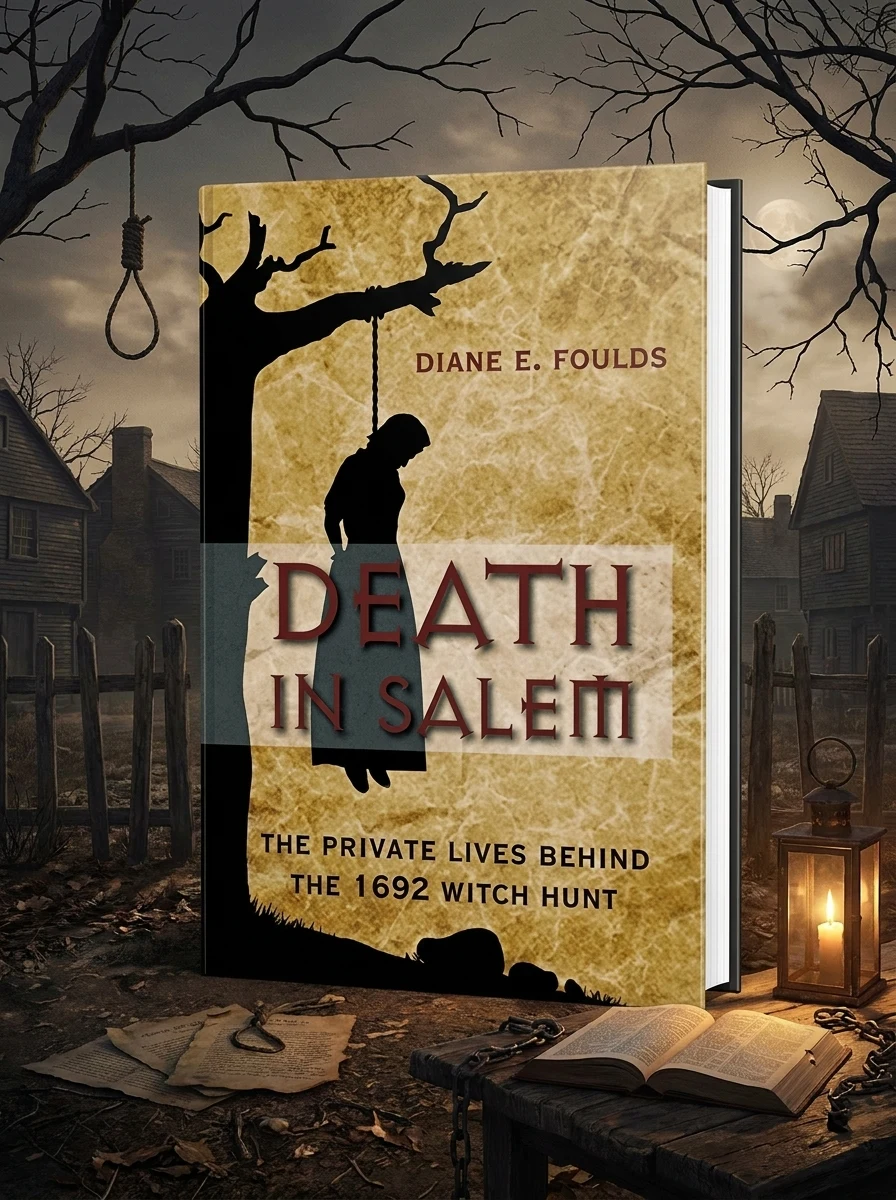
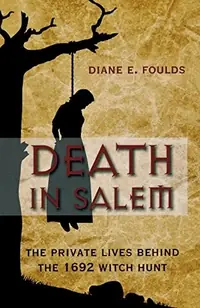
Death in Salem: The Private Lives Behind the 1692 Witch Hunt
Stock reported in the catalog; fulfillment is confirmed with your request.
Uncover the raw human drama behind Salem's infamous 1692 witch hunt.
Diane Foulds re-examines the Salem Witch Trials, moving beyond conventional narratives to delve into the intimate lives of its participants. This compelling work explores the unimaginable hardships faced by colonial settlers, revealing how personal tragedies and profound suffering profoundly influenced the actions and accusations during this dark period. By profiling individuals from all sides – accusers, accused, and authorities – the book illuminates the complex human motivations that fueled the hysteria, offering a deeply personal and often heartbreaking perspective on one of America's most enduring mysteries. It’s a vital read for understanding the human cost of history.
This work sits within the tradition of revisionist American history and occult studies, specifically focusing on the Salem Witch Trials of 1692 through a lens of personal tragedy and colonial hardship. It bridges the gap between academic historiography and accessible narrative non-fiction for enthusiasts of esoteric history.


📝 Description: Death in Salem: The Private Lives Behind the 1692 Witch Hunt
💎 Expert review
📖 Why choose it
Why this book is worth reading
Readers seeking a deeper, more empathetic understanding of the Salem Witch Trials will find profound value in this intimate exploration. By shifting focus from broad political theories to the raw human drama and personal suffering of individuals, the book offers a heartbreaking yet essential perspective on the hysteria. It is ideal for those who wish to comprehend the true human cost of historical events, revealing how private tragedies fueled public accusations. This approach transforms a well-known mystery into a poignant study of grief and motivation, making it a vital addition for anyone interested in the complex social dynamics of colonial America and the enduring legacy of this dark period.
⭐ Reader reviews
Reader rating
Diane Foulds delivers a compelling, character-driven narrative that successfully humanizes the participants of the 1692 witch hunt. The strength lies in its focus on intimate lives and personal tragedies, offering a fresh take on familiar ground. However, readers expecting rigorous academic citations or dry political analysis may find this work too emotional or anecdotal. It is not suited for those seeking detached objectivity or purely theological debates. Instead, it appeals to those who prefer narrative history that prioritizes the psychological and emotional realities of the accusers and accused alike, making it a strong choice for general audiences over specialists.
❓ Frequently asked questions
📖 Who should read this
If you're drawn to the human element of history, seeking to understand the 'why' behind historical events through individual lives, this book is for you. Readers interested in the psychological impact of trauma and the complexities of colonial America will find it particularly insightful.
🎯 Key themes and symbolism
Personal Hardship & Trauma
The book meticulously details the severe difficulties endured by 17th-century Massachusetts colonists, from devastating attacks to rampant disease. It argues persuasively that these pervasive traumas, such as the brutal loss of family members or the constant threat of starvation, profoundly shaped individual behaviors and contributed directly to the escalating paranoia and fear that gripped Salem.
Individual Biographies Unveiled
Rather than a broad historical overview, this volume offers a series of compelling character studies. It provides intimate profiles of key figures involved in the trials, meticulously asking why certain individuals became targets or accusers. This approach humanizes the historical record, presenting a 'who's who' of the period, each with their own complex backstory and motivations.
Psychological Roots of Hysteria
Foulds explores the psychological underpinnings of the Salem events, demonstrating how intense personal suffering and collective anxiety can coalesce into widespread delusion. The book reveals how the private agonies of individuals, often barely comprehensible today, played a crucial role in creating an environment ripe for suspicion, accusation, and the ultimate tragic outcomes.
💬 Quotes from the book
“Before the accusations, before the gallows, there was the silent, gnawing fear born of a parent's brutal end, shaping the very soul of the accuser.”
“The tragedy of Salem was not merely a legal folly, but a tapestry woven from countless private sorrows, each thread a person's desperate struggle for meaning in a brutal world.”
📜 Historical context
📚 Glossary
- Salem Witch Trials
- Puritan
- Bewitched
📔 Questions to reflect on
- Reflect on a time when collective fear or anxiety influenced individual behavior. How might this resonate with the events in Salem?
- Consider the unimaginable hardships faced by colonial settlers. How might sustained trauma alter a person's perception of reality and justice?
- If you were a historian examining the Salem Witch Trials, what personal details about the participants would you prioritize in your research and why?
🏛 Books from this publisher Globe Pequot Publishing
All books from this publisher →
You might also like
See more →


 91
91

 91
91