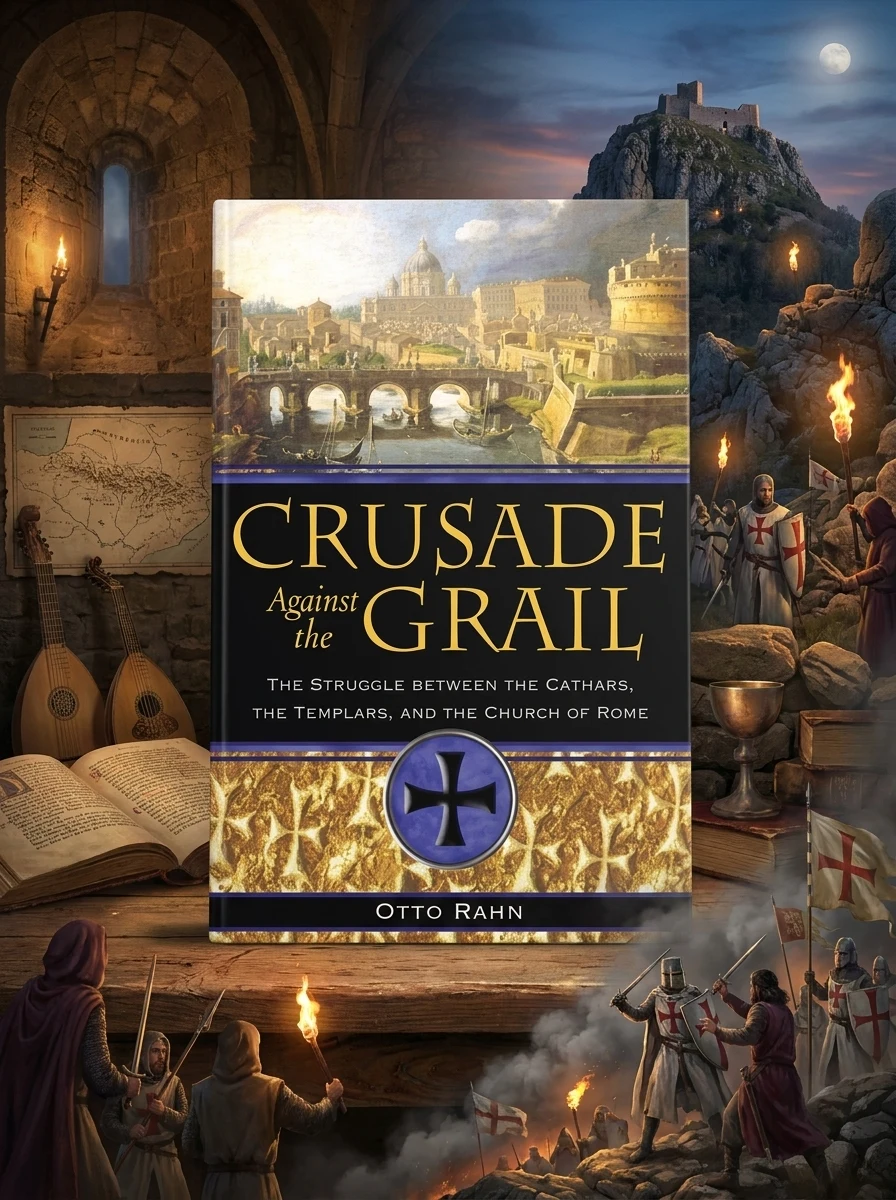
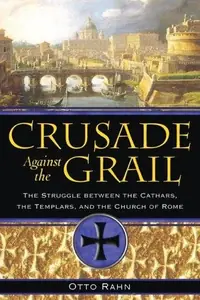
Crusade Against the Grail: The Struggle Between the Cathars, the Templars, and the Church of Rome
Rahn, Otto

This edition can be ordered. No arrival date is confirmed.
Uncover the forbidden secrets of the Cathars and the true resting place of the Holy Grail.
Otto Rahn's seminal work, now finally in English, daringly proposes that the elusive Holy Grail was safeguarded by the persecuted Cathar sect within the Pyrenean fortress of Montségur. He meticulously deciphers Wolfram von Eschenbach's medieval epic Parzival not as fiction, but as a veiled historical chronicle revealing the Cathars' spiritual resistance and the Papal crusade against them. Rahn’s profound explorations and controversial interpretations breathe new life into an ancient mystery, influencing generations of esoteric thinkers.
This work sits at the intersection of esoteric history and alternative religious studies, bridging medieval mysticism with modern occult interpretation. It challenges mainstream ecclesiastical narratives by presenting a counter-historical view of the Cathars and Templars.


📝 Description: Crusade Against the Grail: The Struggle Between the Cathars, the Templars, and the Church of Rome
💎 Expert review
📖 Why choose it
Why this book is worth reading
Readers deeply fascinated by hidden histories and the spiritual undercurrents of medieval Europe will find this book profoundly rewarding. It offers a compelling alternative narrative that connects the persecution of the Cathars with the enigmatic Holy Grail mythos. Those who enjoy deciphering symbolic texts like Parzival as historical keys will appreciate Rahn’s meticulous approach. The book breathes new life into ancient mysteries, appealing to seekers interested in the struggle between spiritual purity and institutional power. It is ideal for anyone wanting to understand how esoteric traditions survived through veiled chronicles rather than open doctrine.
⭐ Reader reviews
Reader rating
Rahn’s seminal text provides a daring proposal regarding the Grail’s true resting place, linking it to Montségur and Cathar resistance. While influential for generations of esoteric thinkers, this dense interpretation may not suit readers seeking straightforward historical facts or those uninterested in literary decryption as evidence. It is best for those comfortable with controversial theological arguments. Skeptics of alternative history might find the methodology too speculative. However, for enthusiasts of occult philosophy and Cathar studies, it remains a vital, if polarizing, exploration of forbidden secrets.
❓ Frequently asked questions
📖 Who should read this
If you are drawn to the hidden currents of history, the allure of forbidden knowledge, or the enduring mystery of the Holy Grail, this book offers a provocative journey. Prepare to have your understanding of medieval history and spiritual traditions profoundly challenged.
🎯 Key themes and symbolism
Cathar Esoteric Wisdom
Rahn delves into the spiritual beliefs of the Cathars, presenting them as custodians of an ancient, pre-Christian gnosis that challenged the established Church and led to their brutal suppression, reinterpreting their history through a mystical lens. He highlights their dualistic worldview and unique understanding of divinity.
The Grail's Hidden Truth
This book boldly redefines the Holy Grail, moving beyond traditional Christian relics to suggest it represents a profound spiritual lineage or secret knowledge protected by the Cathars. Rahn argues its location and true nature are encoded within medieval literature and the landscape of the Pyrenees, challenging conventional Grail lore.
Myth as Historical Key
Rahn pioneers an innovative approach to history, asserting that epic poems like Parzival are not mere fables but carefully disguised historical documents. He treats these narratives as offering cryptographic clues to real events and sacred sites, much like an archaeological map, unlocking forgotten truths about the past.
💬 Quotes from the book
“The true Grail is not a relic to be found, but a spiritual lineage to be recognized, hidden within the very stones of Montségur.”
“Wolfram von Eschenbach's Parzival is no mere romance; it is a meticulously coded map to forgotten history, waiting for those with eyes to see.”
📜 Historical context
📚 Glossary
- Cathars
- Montségur
- Parzival
📔 Questions to reflect on
- How might Rahn's reinterpretation of Parzival challenge your understanding of the relationship between myth, legend, and historical truth?
- Consider the implications of a powerful spiritual artifact, like the Grail, being protected by a persecuted religious group. What does this suggest about power and knowledge?
- If Montségur truly held the Grail, what does that signify about the Cathars' spiritual legacy and their enduring influence on esoteric thought?
✍️ More books by this author Rahn, Otto
All books by this author →
🏛 Books from this publisher Inner Traditions International
All books from this publisher →


You might also like
See more →