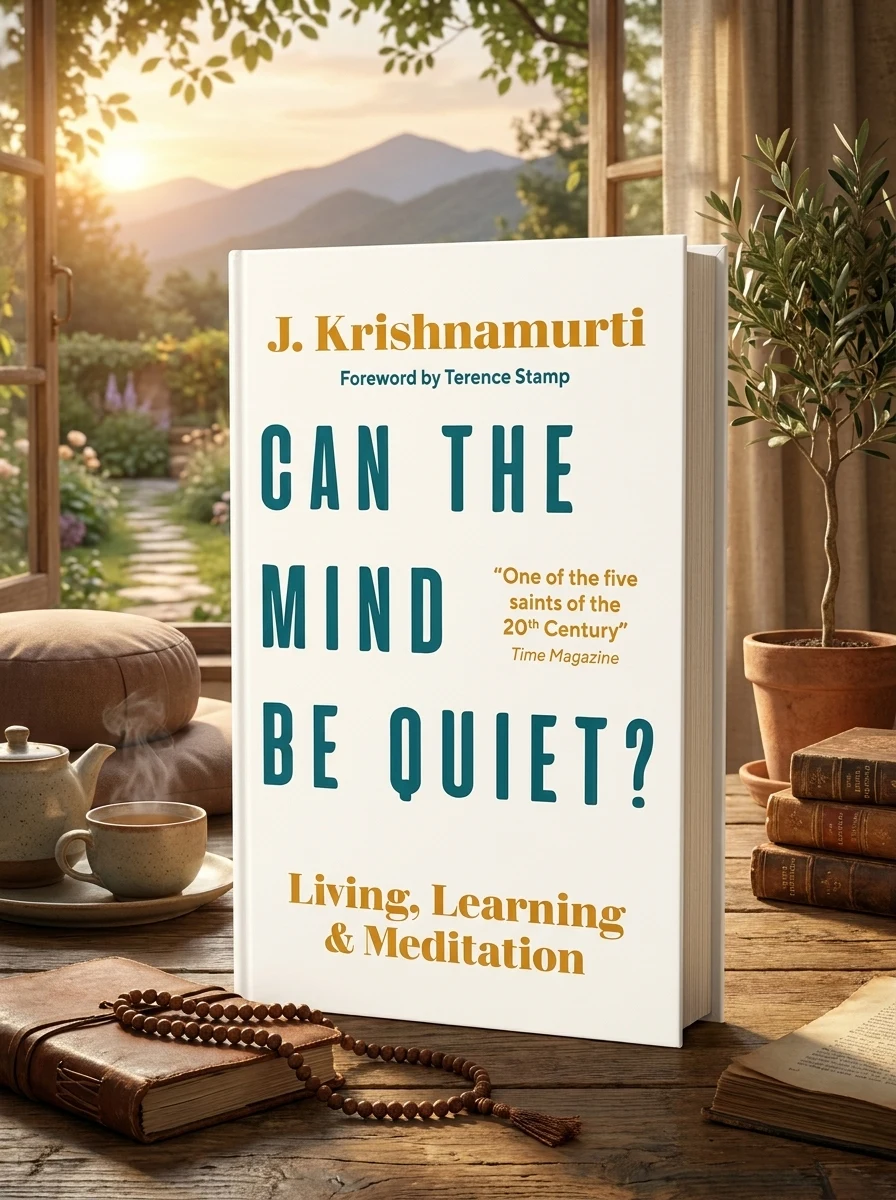
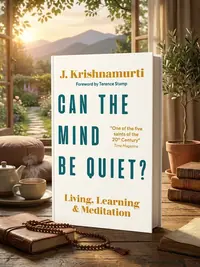
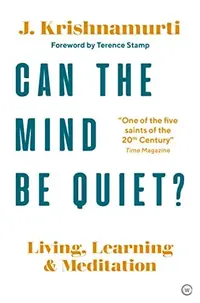
Can the Mind Be Quiet?: Living, Learning and Meditation
Krishnamurti, Jiddu

This edition can be ordered. No arrival date is confirmed.
Uncover serenity and piercing insight through the master's intimate dialogues.
This extraordinary collection unveils Jiddu Krishnamurti's previously unreleased dialogues, offering a profound journey into the stillness of the mind. Across sixty contemplative chapters, each commencing with evocative settings and often introducing a seeker, Krishnamurti engages in direct exchanges that illuminate the path to inner peace and authentic living. Readers are invited to witness his incisive wisdom firsthand, exploring themes of personal inquiry and the cultivation of a truly meaningful existence. It’s an intimate exploration of consciousness, presented with striking clarity.
This work resides firmly within the modern esoteric and mystical tradition of non-dual inquiry, continuing the lineage of spiritual teachers who emphasize direct experience over dogma. It reflects the ongoing contemporary dialogue on consciousness and inner peace, bridging ancient contemplative practices with accessible, dialogic formats for the modern seeker.


📝 Description: Can the Mind Be Quiet?: Living, Learning and Meditation
💎 Expert review
📖 Why choose it
Why this book is worth reading
Readers seeking authentic spiritual guidance will find profound value in this intimate collection of dialogues. Those tired of rigid doctrines and yearning for a direct, unmediated encounter with truth will appreciate Krishnamurti’s piercing clarity. The book is ideal for seekers who desire to understand the mechanics of their own minds without the filter of complex theory or historical baggage. By engaging with these sixty contemplative chapters, you gain access to a space where personal inquiry meets practical living. It offers not just intellectual stimulation, but a transformative tool for cultivating inner peace and meaningful existence through the simple yet radical act of quieting the mind.
⭐ Reader reviews
Reader rating
This volume serves as a compelling entry point into Krishnamurti’s philosophy, utilizing evocative settings and seeker interactions to demystify complex concepts of consciousness. The dialogic structure makes his incisive wisdom accessible, offering striking clarity on themes of authentic living and stillness. However, it is not suited for readers who prefer structured religious frameworks, ritualistic practices, or step-by-step instructional manuals. Those seeking definitive answers or comforting dogma may find the open-ended, inquiry-based approach frustratingly ambiguous. It demands active participation and a willingness to sit with uncertainty, making it less appropriate for those looking for quick fixes or prescriptive spiritual advice.
❓ Frequently asked questions
📖 Who should read this
If you're drawn to deep philosophical inquiry into consciousness and personal liberation, particularly if you appreciate the directness of spiritual masters like Eckhart Tolle or the allegorical depth of Paulo Coelho, this book offers unparalleled insight. It's for seekers ready to question their own perceptions.
🎯 Key themes and symbolism
Self-Inquiry & Awareness
Krishnamurti guides readers through a rigorous process of internal questioning, challenging preconceived notions and encouraging direct observation of one's own thoughts and reactions. This isn't about finding answers from external sources, but rather cultivating an immediate, unmediated understanding of the self, free from the dictates of memory or desire.
The Quiet Mind
Central to the work is the exploration of mental stillness. The dialogues probe the possibility of a mind free from the incessant chatter of thought and conditioning, suggesting that true freedom and insight arise from this profound inner quietude, unburdened by fear or the relentless pursuit of an imagined future.
Authentic Living
Beyond mere intellectual understanding, the book delves into the practicalities of living a genuinely rich and meaningful life. It examines how our daily choices and perceptions contribute to a state of fulfillment, emphasizing a harmonious relationship with existence rather than a pursuit of fleeting happiness or societal expectations.
💬 Quotes from the book
“Is solitude merely an absence of others, or is it the profound cessation of the self's incessant demand, revealing an emptiness not of lack, but of boundless possibility?”
“To observe life as an extraordinarily beautiful movement requires a mind unburdened by interpretation, a consciousness that simply is, without the shadow of the 'observer'.”
📜 Historical context
📚 Glossary
- Self-Inquiry
- Conditioning
- Quiet Mind
📔 Questions to reflect on
- What are the primary fears or desires that prevent your mind from achieving a state of genuine quietude?
- How do your daily interactions and observations change when you approach them with an attitude of unconditioned self-inquiry rather than pre-judgment?
- In what ways might your current understanding of 'a fulfilled life' be shaped by external expectations rather than an inner realization?
✍️ More books by this author Krishnamurti, Jiddu
All books by this author →

🏛 Books from this publisher Watkins Publishing
All books from this publisher →




![Pregnancy Health Yoga: Your Essential Guide for Bump, Birth and Beyond [With DVD]](/img/pregnancy-health-yoga-your-essential-guide-for-bump-birth-and-beyond-with-dvd.webp)
You might also like
See more →