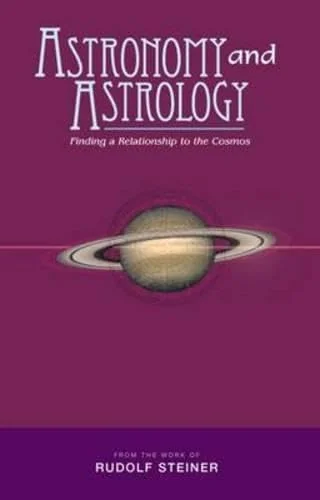
Astronomy and Astrology: Finding a Relationship to the Cosmos
✍️ Steiner, Rudolf; , Jonas, MargaretRudolf Steiner, expertly compiled by Margaret Jonas, challenges the modern schism between astronomy and astrology. This insightful anthology reclaims the medieval understanding of a unified cosmos, where celestial movements were intrinsically linked to human destiny and spiritual evolution. Steiner critiques superficial popular astrology while presenting a profound vision: individuals, guided by spiritual entities, consciously choose their birth moment to align with their preordained life path. Explore cosmic influences, planetary spirits, and the profound interplay between our soul's journey and the stars.


📝 Description: Astronomy and Astrology: Finding a Relationship to the Cosmos
💎 Expert review
📖 Why choose it
Why this book is worth reading
Readers deeply invested in the spiritual dimensions of astrology will find profound value in this text, particularly those dissatisfied with superficial horoscope readings. It offers a rigorous exploration of how celestial movements intrinsically link to human destiny and spiritual evolution. Those interested in the medieval conception of a unified cosmos, where planetary spirits guide soul journeys, will appreciate Steiner’s critique of modern schisms. This book serves as an essential guide for individuals seeking to understand the conscious choice behind birth moments and their alignment with preordained life paths, fostering a deeper connection to the cosmic tapestry.
⭐ Reader reviews
Reader rating
Steiner presents a dense, metaphysical argument that demands serious attention from the reader. While it offers a compelling vision of planetary spirits and soul journeys, it is explicitly not suited for those seeking practical, daily horoscope advice or casual entertainment. The text requires patience and an openness to complex spiritual concepts regarding pre-ordained paths. Readers preferring empirical scientific astronomy or skeptical of esoteric claims may find the material difficult to engage with. It is best reserved for serious students of anthroposophy who wish to reclaim the unified cosmic understanding lost in modern times, rather than the general public looking for quick astrological insights.
❓ Frequently asked questions
📖 Who should read this
If you seek a deeper, spiritual understanding of the stars beyond predictive horoscopes, and are drawn to Anthroposophy or esoteric cosmology, this book will illuminate your path. It offers a profound re-evaluation of our connection to the universe.
🎯 Key themes and symbolism
Reuniting Cosmos and Spirit
Steiner’s work endeavors to bridge the chasm that opened between astronomical science and astrological wisdom in the 17th century. He argues that the cosmos is not merely a collection of inert matter but a vibrant, spiritually infused realm intimately connected to human experience and destiny, urging a return to a holistic understanding.
Destiny and Birth Choice
This book explores the profound concept that our birth is not a random event but a deliberate choice made by our spiritual essence, guided by higher beings. We select the opportune cosmic alignment at birth to best serve the unique destiny and lessons we are meant to embody and experience in our earthly incarnation.
Cosmic Influences on Humanity
Delve into Steiner's nuanced perspective on how celestial bodies—planets, constellations, and even phenomena like eclipses and comets—exert specific spiritual and formative influences on individuals and human culture throughout various epochs. It's an exploration of the universe as an active, conscious participant in our evolution.
📜 Historical context
📚 Glossary
- Astronomia
- Materialistic Worldview
- Spiritual Beings
📔 Questions to reflect on
- How might your understanding of your life's challenges or talents shift if you believed you chose your birth time and celestial alignment?
- Reflect on how a spiritual perspective on planets and stars could deepen your connection to the universe, moving beyond scientific observation alone.
- Consider the historical split between astronomy and astrology. What might be gained or lost by reuniting these two ways of knowing the cosmos?