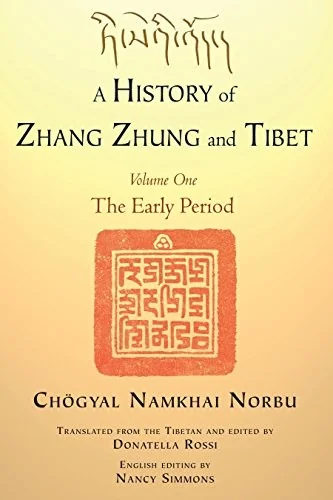
A History of Zhang Zhung and Tibet, Volume One: The Early Period
✍️ Chogyal Namkhai Norbu, Donatella Rossi, Nancy SimmonsCurrently unavailable
This book is sold out right now. Leave your email — we'll let you know if it comes back, and you'll get 10% off any book today.
In stock now — readers of this book also loved:




This groundbreaking volume by Chögyal Namkhai Norbu meticulously reconstructs the enigmatic Zhang Zhung kingdom, challenging long-held assumptions about pre-Buddhist Tibetan culture. Far from primitive, Zhang Zhung, the "cradle of Tibetan culture," was a vast, sophisticated civilization encompassing sacred Mount Kailash. Delving into the little-studied Bon religion—an intricate system of shamanic and animistic beliefs—Norbu's rigorous analysis of primary sources illuminates Zhang Zhung's rich traditions, from written language and rock carvings to healing practices and divination, ultimately revealing the profound roots of later Tibetan Buddhist culture.


Praise for this book
“Scholars and students of early Tibet will welcome the publication in English of this first volume of Chögyal Namkhai Norbu's trilogy on the history of Zhang Zhung and Tibet. Accurately and carefully translated by Donatella Rossi, this book draws on a wide range of Bon sources and chronicles that shed light on the creation mythology, geography, lineages, and cultural legacy of ancient Zhang Zhung.”
“for example, an emphasis on bardo rites; a cohesive, spiritual taxonomy for transmissions of alphabets, scripts, and systems of writing; historically long-enduring divination practices; distinctive frameworks of medicine (including moxibustion); signature practices of fine arts; and even contemplative methods for dreaming - derives from the Zhang Zhung civilization.”
“Using traditional sources in an original way, this work paints a fascinating picture of the history and culture of the Zhang Zhung kingdom of early Tibet.”
📝 Description: A History of Zhang Zhung and Tibet, Volume One: The Early Period
📑 What's inside
- Translators Foreword
- A Technical Note on the Translation
- I. The Human Generations of Ancient Zhang Zhung
- 1. Nonhuman Beings
- 2. The Four Original Great Clans and the Six Family Lines of the Early Human Generations
- 3. The bSe, Khyung, and sBra Tribal Groups of Zhang Zhung
- II. The Bon Lineages of Ancient Zhang Zhung
- 1. gShen-rab Mi-bo-che and the dMu-gshen Lineage
- 2. The Diffusion of Bon after the Birth of gShen-rab Mi-bo-che
- III. The Royal Lineages of Ancient Zhang Zhung
- 1. The Eighteen Monarchs, Holders of the Horn-Like Crowns
- 2. The Twelve Minor Principalities
- IV. The Written Language of Ancient Zhang Zhung
- 1. gShen-rab Mi-bo-che Taught the Written Language of Ancient Zhang Zhung
- 2. The sPungs Script of sTag-gzig
- V. The Civilization of Ancient Zhang Zhung
- 1. gZi and Thog Icags
- 2. Rock Carvings
- 3. The Science of Arts and Crafts [bZo rig]
- 4. Music
- 5. gTo and its Cultural Foundations
- 6. Ju thig
- 7. Mo-pra
- 7.1. Magical Divination [rDe'u 'pbrul gyi mo]
- 7.2. Divination with Symbolic Images [brDa mo]
- 7.3. Scapulimancy [Sog mo]
- 7.4. Divination with Dice [Shwo mo]
- 7.5. Divination with Prayer Beads [Phreng mo]
- 7.6. Cho lo Divination
- 7.7. Pra Divination
- 8. Dreams [rMi lam]
- 9. Numerological Astrology
- 10. Medicine
- Bibliography
- Indexes
- Index of Tibetan and Zhang Zhung Names and Terms
- Index of Textual Sources
- Index of Sanskrit Names and Terms
- Index of Chinese Names and Terms
- List of Tables
- Table 1. The Four Great Rivers
- Table 2. The Thirteen g.Yen of the Higher Sphere
- Table 3. The Nine g.Yen of the Intermediate Sphere
- Table 4. The Eleven g.Yen of the Earthly Sphere
- Table 5. Genealogy of the dMu Royal Lineage
- Table 6. gShen-rab's Consorts and Sons
- Table 7. The First sMe-'kbor
- Table 8. The Twelve Scattered Minor Principalities
- Table 9. Additional Principalities
💎 Expert review
📖 Why choose it
Why this book is worth reading
Scholars and enthusiasts of esoteric traditions will find this volume indispensable for its rigorous reconstruction of the Zhang Zhung kingdom. By challenging assumptions about pre-Buddhist Tibet, it reveals a vast, sophisticated civilization centered on Mount Kailash. Readers interested in the intricate roots of Tibetan Buddhist culture, shamanic beliefs, and ancient healing practices will gain profound insights into this enigmatic past. It is essential for those seeking to understand the 'cradle of Tibetan culture' and its animistic foundations.
⭐ Reader reviews
Reader rating
Norbu’s meticulous analysis offers a groundbreaking glimpse into Zhang Zhung, illuminating its rich traditions through primary sources. However, readers seeking accessible narratives or popular history may find the academic rigor and focus on obscure Bon religion daunting. It is not for those expecting a light read or simplified summaries of Tibetan Buddhism. The text demands patience and a serious interest in esoteric history, making it less suitable for casual readers but highly rewarding for dedicated students of occult and ancient cultural systems.
❓ Frequently asked questions
📖 Who should read this
If you're fascinated by the hidden origins of spiritual traditions, the rich tapestry of pre-Buddhist Asia, or seeking to deepen your understanding of Tibetan cultural roots beyond conventional narratives, this foundational work is an indispensable guide for your journey.
🎯 Key themes and symbolism
Zhang Zhung's Ancient Splendor
The book meticulously uncovers the sophisticated civilization of Zhang Zhung, presenting it as the true "cradle of Tibetan culture." It counters the outdated narrative of pre-Buddhist Tibet as undeveloped, showcasing a vibrant kingdom with its own language, arts, and spiritual depth that spanned a significant portion of Western and Northern Tibet.
Bon Tradition Rediscovered
This work offers a critical, scholarly examination of the Bon religion, Tibet's indigenous spiritual system. It moves beyond superficial understanding to explore Bon's complex shamanic and animistic beliefs, its crucial role within Zhang Zhung's dynasties, and its practices, which include healing, music, and divination, revealing its foundational importance.
Roots of Tibetan Culture
Norbu demonstrates how the cultural and spiritual landscape of Zhang Zhung, particularly through the Bon traditions, laid the groundwork for what would later become Tibetan Buddhist culture. By detailing Zhang Zhung's unique ornaments, rock carvings, and societal structures, the book provides essential context for understanding the evolution of modern Tibetan identity.
📜 Historical context
📚 Glossary
- Zhang Zhung
- Bon
- Dzogchen
📔 Questions to reflect on
- How does understanding the pre-Buddhist history of Tibet, as presented in this book, challenge or expand your views on the origins of spiritual traditions?
- Reflect on the idea of a 'cradle of culture.' What does this concept mean for a region's identity, and how might uncovering such a cradle impact its modern self-perception?
- Consider the Bon religion's various practices (healing, divination, music). How might these ancient methods resonate with or offer insights into contemporary spiritual or holistic approaches?
📖 Read on the blog
🏛 Books from this publisher North Atlantic Books
All books from this publisher →






You might also like
See more →



Have a question about this item?
Ask about the edition, condition, delivery or anything else — we reply by email or phone, usually within a day.
