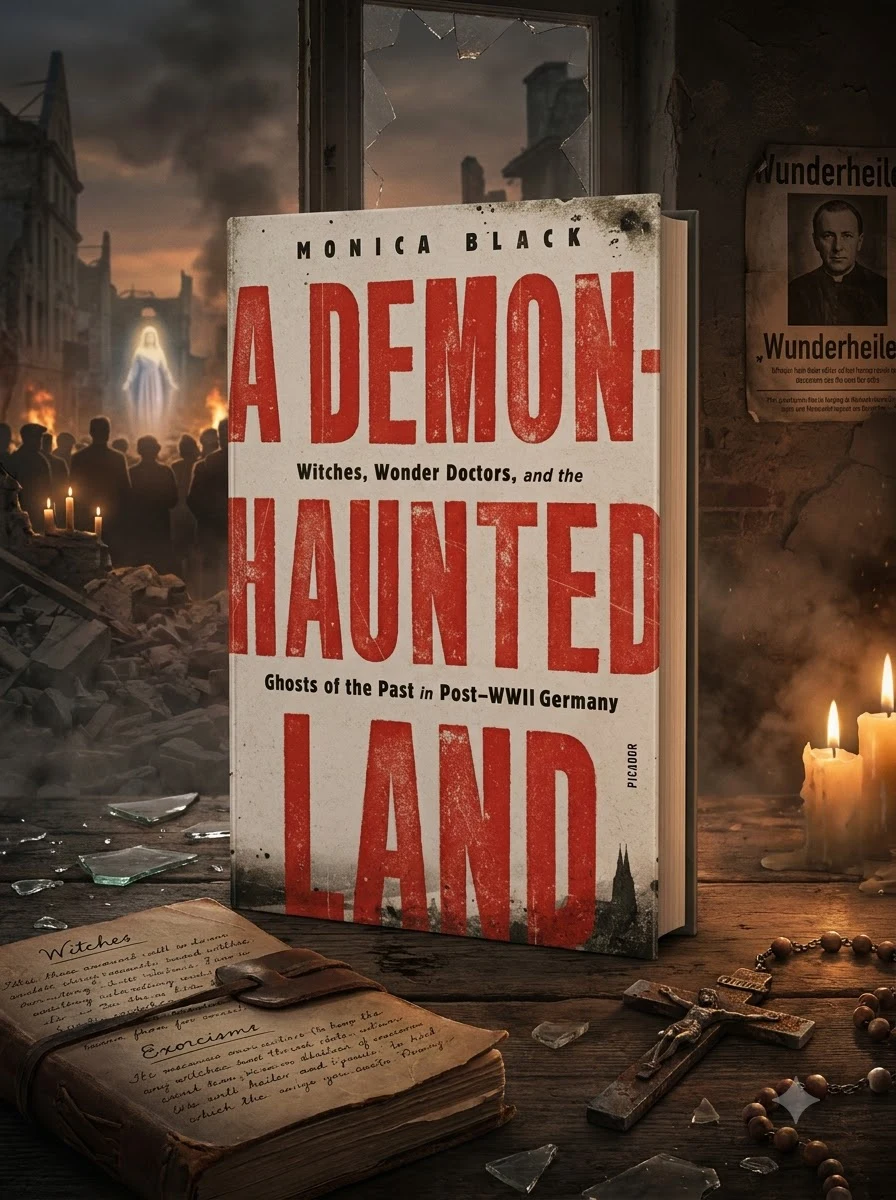
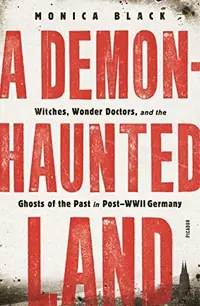
A Demon-Haunted Land: Witches, Wonder Doctors, and the Ghosts of the Past in Post-WWII Germany


Stock reported in the catalog; fulfillment is confirmed with your request.
Post-WWII Germany: a landscape haunted by spirits, faith healers, and accusations of witchcraft.
Explore the unsettling spiritual landscape of post-World War II Germany, where a shattered nation grappled with an astonishing surge of supernatural occurrences. Monica Black's compelling study reveals a society gripped by messianic faith healers, public exorcisms, and widespread reports of Marian apparitions. Communities turned on each other with accusations of witchcraft, leading to dramatic court cases. This work challenges conventional narratives of Germany's post-war recovery, exposing the deep-seated mistrust, lingering bitterness, and profound spiritual unrest that simmered beneath the "economic miracle," arguing for the enduring presence of the irrational.
This study situates itself within the esoteric history of post-World War II Germany, examining the intersection of spiritual unrest and societal reconstruction through the lens of folk magic and supernatural belief. It bridges academic historical analysis with occult studies by exploring how irrational forces influenced public life during the era of the economic miracle.


📝 Description: A Demon-Haunted Land: Witches, Wonder Doctors, and the Ghosts of the Past in Post-WWII Germany
💎 Expert review
📖 Why choose it
Why this book is worth reading
Readers fascinated by the hidden undercurrents of history will find this book a compelling revelation. It is ideal for those intrigued by how trauma manifests in supernatural beliefs, offering a fresh perspective on post-war Germany beyond economic statistics. If you enjoy exploring how communities process collective grief through rituals, exorcisms, and witch trials, this work provides deep insight into the era's spiritual anxiety. It appeals to historians of religion and occult enthusiasts alike, demonstrating that the past’s ghosts were very much alive in the daily lives of ordinary Germans. The narrative challenges standard recovery stories, revealing a society deeply unsettled by the irrational.
⭐ Reader reviews
Reader rating
Monica Black presents a rigorous examination of post-war German spirituality, challenging the notion that rationality fully replaced superstition after the war. The book succeeds in highlighting the pervasive fear and mistrust that fueled accusations of witchcraft and devotion to faith healers. However, readers seeking light entertainment or purely fictional ghost stories will find this academic approach dry and dense. It is not for those who prefer straightforward political histories without spiritual analysis. The focus on court cases and societal unrest may feel repetitive to some, but it effectively illustrates the depth of the era's existential crisis and the enduring power of the irrational in public discourse.
❓ Frequently asked questions
📖 Who should read this
If you're drawn to the hidden currents of history, curious about the intersection of societal trauma and the supernatural, or seek to understand how collective belief systems shape national identity, this book offers a profound and challenging perspective on Germany's post-war soul.
🎯 Key themes and symbolism
Post-War Spiritual Malaise
Explores how the devastation of WWII and the Holocaust left a profound spiritual void in Germany. The book examines how this emptiness manifested in a widespread preoccupation with evil, a search for meaning outside traditional structures, and a susceptibility to extraordinary beliefs and practices as a way to cope with unimaginable trauma.
The Return of Witchcraft
Unearths the shocking resurgence of witchcraft accusations in post-war German communities. This theme investigates why ordinary people suddenly turned on their neighbors, leading to legal battles for defamation, assault, and even murder, revealing a society struggling to process its anxieties and assign blame in the wake of societal collapse.
Irrationality in Modernity
Challenges the notion of a purely rational, modern society by showcasing the enduring power of the irrational. The book argues that supernatural beliefs and phenomena – from faith healing to apparitions – were not anomalies but integral to understanding Germany's complex transition from dictatorship to democracy, revealing the deep psychological currents beneath historical events.
💬 Quotes from the book
“The ashes of war had barely settled, yet a different kind of darkness began to stir in the German psyche, one that manifested in whispers of ancient evils and promises of divine intervention.”
“Far from being mere superstitious relics, these outbreaks of the irrational were crucial indicators of a nation's struggle to forge a new identity from the rubble of its genocidal past.”
📜 Historical context
📚 Glossary
- Marian Apparitions
- Faith Healer
- Economic Miracle (Wirtschaftswunder)
📔 Questions to reflect on
- How might profound national trauma, like that experienced by post-WWII Germany, create fertile ground for the resurgence of supernatural beliefs or unconventional spiritual practices?
- Consider a time in history or your own life when rational explanations failed, and how that might have opened the door to more mystical or 'irrational' interpretations of events.
- In what ways do societies, even modern ones, continue to grapple with and integrate the 'irrational' or the 'occult' into their understanding of the world?
You might also like
See more →