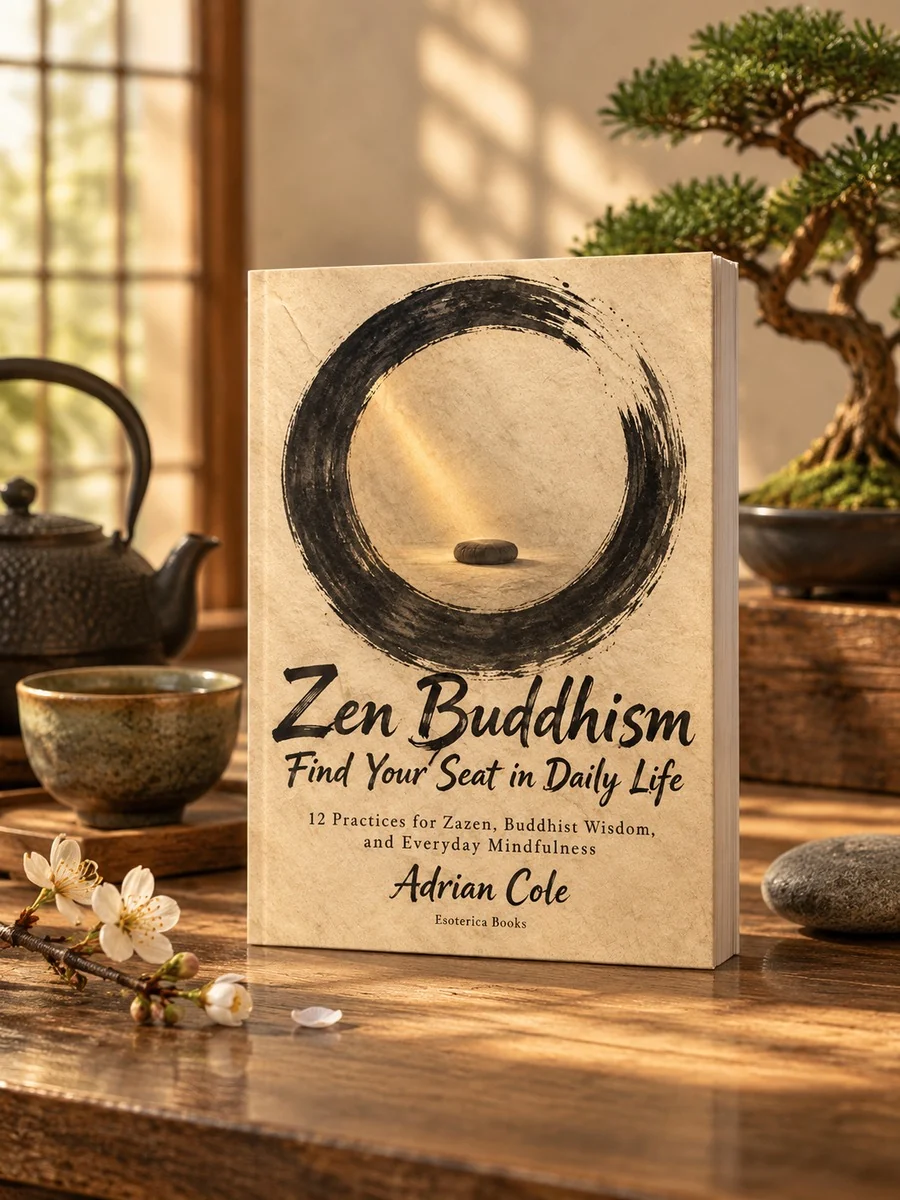
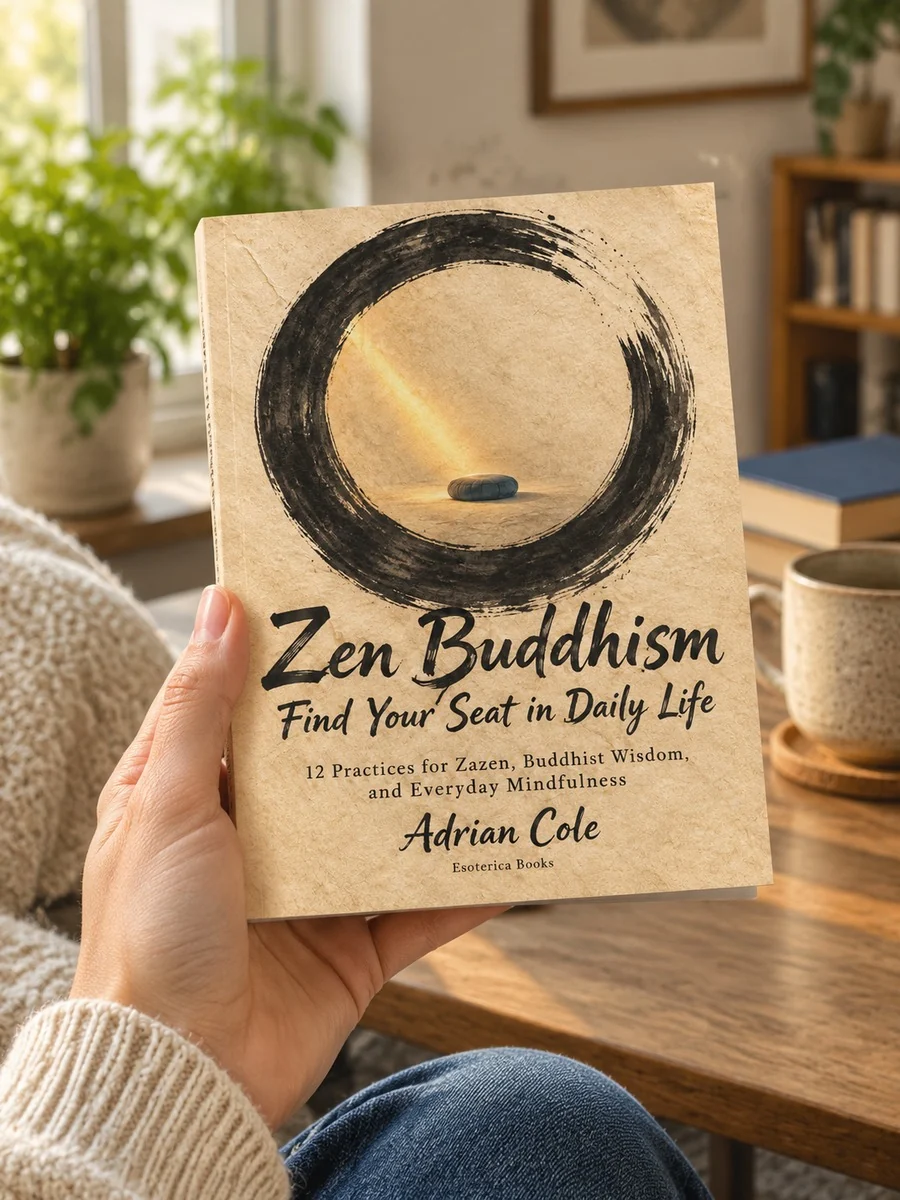
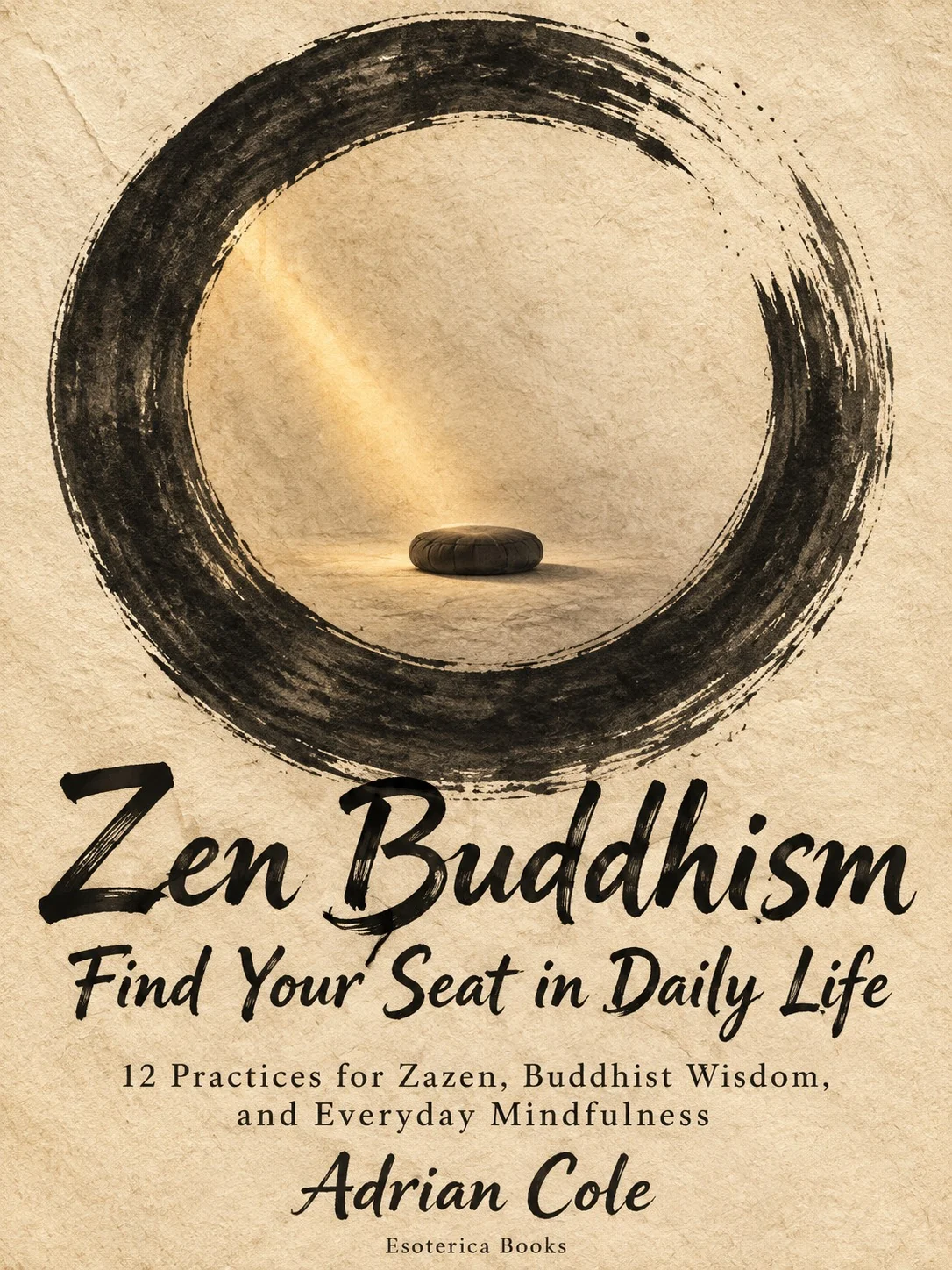
Zen Buddhism: Find Your Seat in Daily Life
Discover Zen Buddhism through 12 practical practices, from your first zazen sitting to mindful everyday living.
What does Zen Buddhism mean, and how can its teachings become part of ordinary life? Adrian Cole offers a welcoming introduction to Zen through 12 practical practices organized around The Open Seat Practice: Arrive, Sit, See, and Carry. Begin with a guided seated meditation, establish a comfortable zazen routine, and explore Buddhist teachings, koans, symbols, and traditions. Gradually bring mindful attention, simplicity, and compassion into walking, eating, working, and relationships. The result is a clear, accessible path from first curiosity to a more considered personal practice.
Zen is a school of Mahayana Buddhism with roots in the Chinese Chan tradition and important developments in Japan. Its practice brings together zazen, Buddhist teachings, disciplined attention, ethical conduct, and direct engagement with ordinary experience.


📝 Description: Zen Buddhism: Find Your Seat in Daily Life
📖 Why choose it
Why this book is worth reading
Zen Buddhism can seem surprisingly difficult to approach when its vocabulary, symbols, and meditation traditions are encountered without context. This book makes a useful distinction between understanding Zen and simply trying to sit quietly. Its strength is the connection between instruction and application: readers learn how to position their hands, observe natural breathing, approach a koan, understand an ensō, and bring attention to familiar activities. The four-part Open Seat method gives these subjects a coherent structure and makes the tradition easier to explore at a beginner's pace.
⭐ Reader reviews
Reader rating
Adrian Cole's introduction has a clear editorial strength: it treats Zen as a living Buddhist tradition rather than a collection of relaxation techniques. The Open Seat Practice provides a useful organizing principle, connecting the practical mechanics of zazen with Buddhist philosophy, koans, visual symbols, and everyday conduct. The preview is particularly effective in its concrete sitting instructions, including alternatives for cushion and chair users, natural breathing, and the importance of a sustainable posture. The progression from first sitting to everyday attention is logical and welcoming. One limitation: readers seeking advanced koan training, detailed textual scholarship, or an in-depth comparison of Zen schools will need a more specialized book.
❓ Frequently asked questions
📖 Who should read this
Ideal for beginners exploring Zen Buddhism, readers interested in the Buddha's teachings, and anyone who wants to understand zazen beyond generic meditation advice. It also suits readers looking for a practical introduction to Buddhist philosophy, traditional Zen approaches, and mindful everyday activities.
🎯 Key themes and symbolism
Zazen and Meditation
Buddhist Wisdom
Zen Symbols and Koans
Everyday Mindfulness
📜 Historical context
📚 Glossary
- Zazen
- Shikantaza
- Koan
- Kinhin
- Ensō
- Buddha Nature
📔 Questions to reflect on
- What assumptions do I bring to Zen Buddhism, and how might beginner's mind help me approach the tradition with greater openness?
- Which ordinary activity in my daily routine could become an opportunity to practice attentive participation, and what would that look like?
- How do impermanence and interdependence change the way I understand my relationships, daily decisions, and responsibilities?
📖 Read on the blog
✍️ More books by this author Adrian Cole









🏛 Books from this publisher Esoterica Books
All books from this publisher →







You might also like
See more →




Have a question about this item?
Ask about the edition, condition, delivery or anything else — we reply by email or phone, usually within a day.
