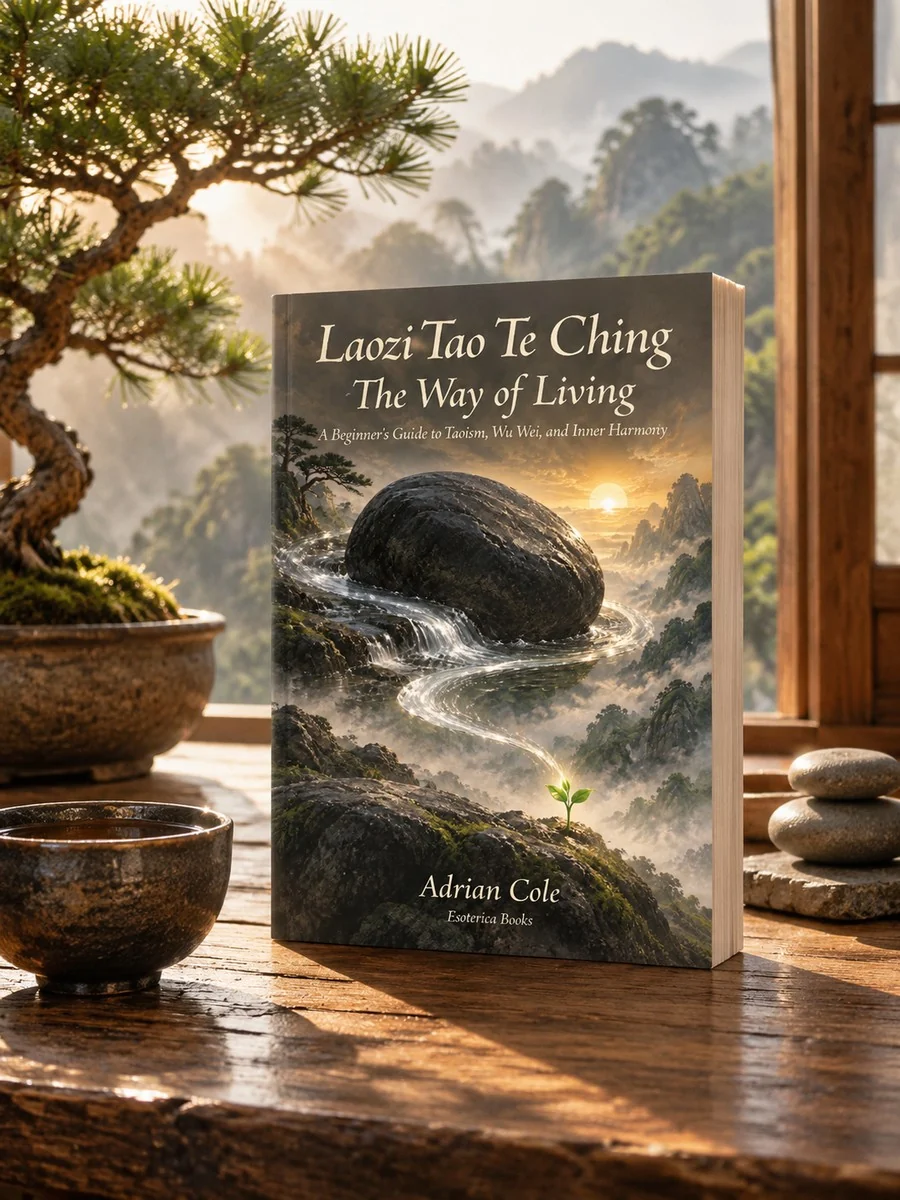
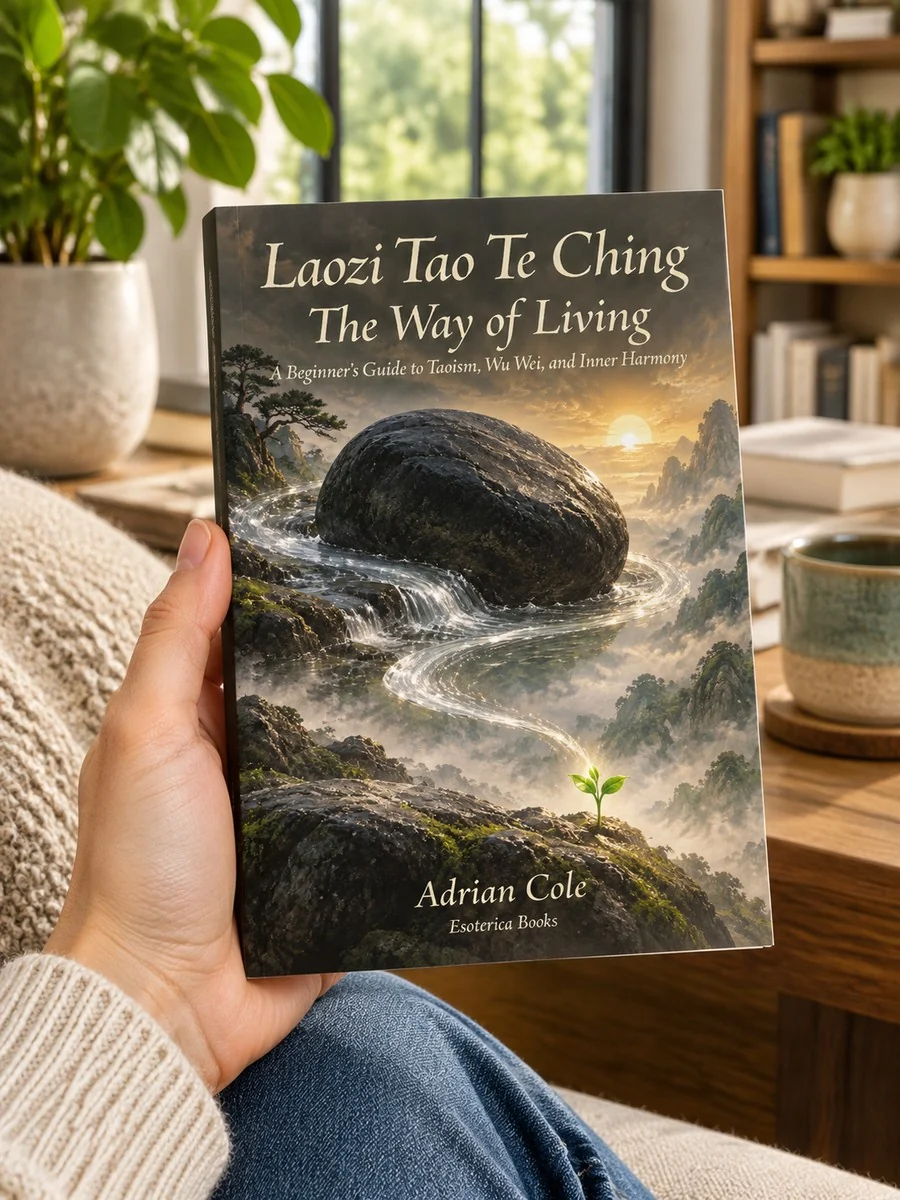
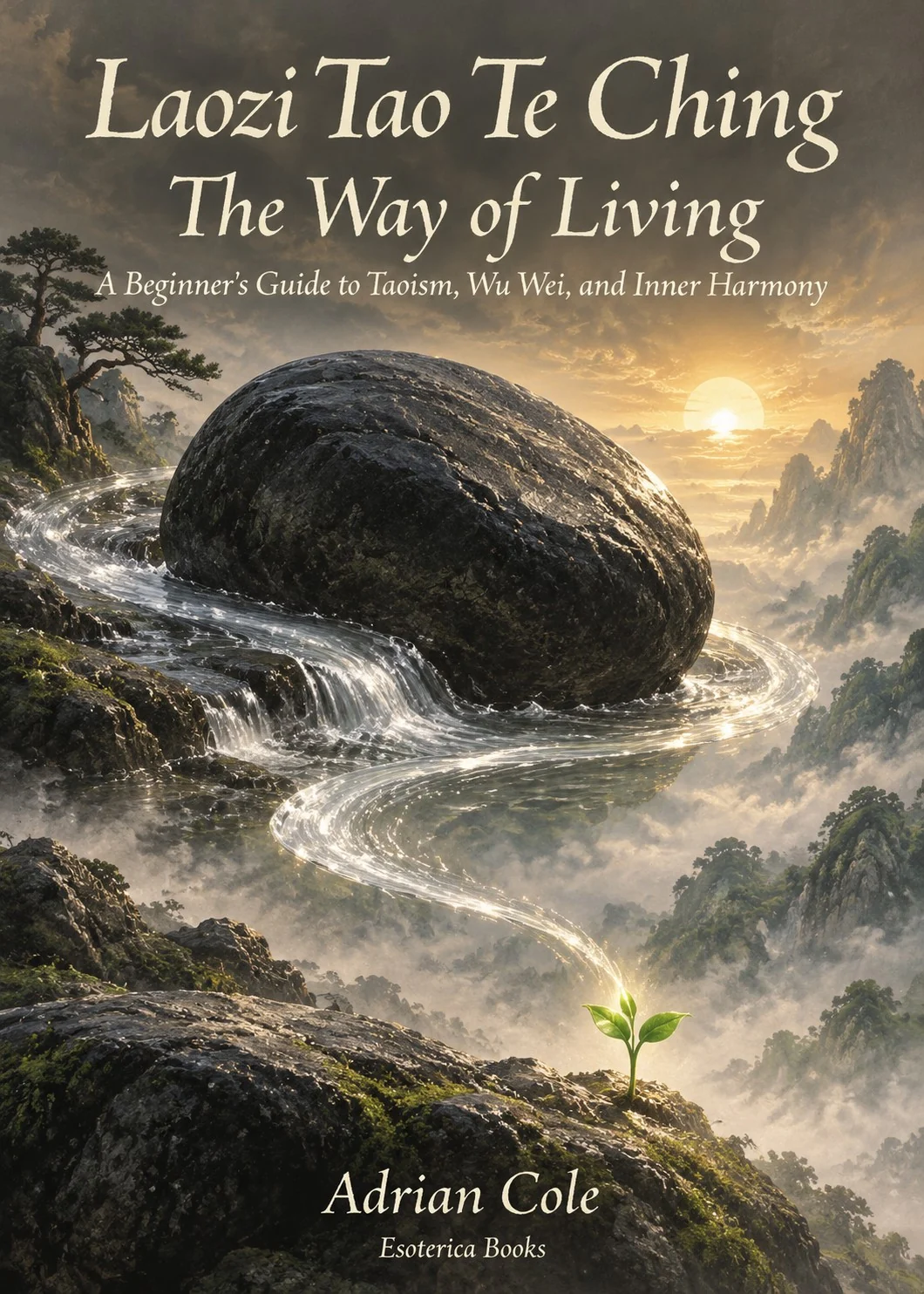
Laozi Tao Te Ching: The Way of Living
Discover the wisdom of the Tao Te Ching and learn to bring simplicity, humility, and effortless action into everyday life.
What can water teach you about living well? In this beginner-friendly guide to the Tao Te Ching, Adrian Cole introduces Laozi's central teachings through clear explanations, memorable natural imagery, and practical everyday exercises. Explore the meaning of the Tao, understand wu wei (non-forcing), and discover the value of simplicity, humility, patience, and balance. The original five-step Way of the Open Hand method takes you from reading a passage to reflecting on its meaning and choosing a small action. Apply the text's wisdom to relationships, work, decisions, and daily routines.
The Tao Te Ching is a foundational work of philosophical Daoism, a Chinese tradition that explores the Tao, naturalness, balance, and the character of wise conduct. Its poetic imagery and paradoxes invite readers to consider how human life might move more harmoniously with the natural course of things.


📝 Description: Laozi Tao Te Ching: The Way of Living
📖 Why choose it
Why this book is worth reading
The Tao Te Ching is easier to appreciate when its ideas become more than beautiful sentences on a page. This guide gives you a repeatable way to explore its teachings and connect them with recognizable situations: a difficult conversation, an overloaded schedule, a decision that feels forced, or the temptation to control every detail. Its particular strength is the movement from interpretation to action. You finish with a flexible reading practice, a collection of useful reflections, and a clearer vocabulary for exploring the Tao.
⭐ Reader reviews
Reader rating
Adrian Cole's guide takes a practical approach to introducing the Tao Te Ching. Its strongest feature is the Way of the Open Hand, a clearly explained five-step method that moves from reading a passage to choosing a concrete everyday action. The opening exercise on chapter 8 is particularly effective: readers examine water's qualities and connect them with flexibility, humility, and conduct. The twelve-chapter structure also provides a useful progression from foundational concepts to relationships, decisions, and leadership. The explanations of wu wei and the distinction between non-forcing and passivity are welcome. One limitation: readers seeking an in-depth academic examination of classical Chinese philosophy, textual history, or competing scholarly interpretations will find this introduction too basic. Its purpose is practical engagement, not specialist research.
❓ Frequently asked questions
📖 Who should read this
This book is for beginners curious about Laozi, the Tao Te Ching, and the practical meaning of Taoist philosophy. It will especially appeal to readers who enjoy reflective exercises and want to connect philosophical ideas with ordinary decisions, relationships, and daily habits.
🎯 Key themes and symbolism
Wu Wei
Simplicity and Contentment
Humility and Flexibility
Taoist Everyday Wisdom
📜 Historical context
📚 Glossary
- Tao
- Wu wei
- De
- Ziran
- Pu
- Yin and yang
📔 Questions to reflect on
- Where in my daily life am I pushing against a situation that might benefit from greater flexibility, like water finding its way around an obstacle?
- Which commitment, expectation, or habit could I simplify to make more room for what genuinely matters?
- When a disagreement arises, how might I practice humility and attentive listening while still respecting my own boundaries?
📖 Read on the blog
✍️ More books by this author Adrian Cole
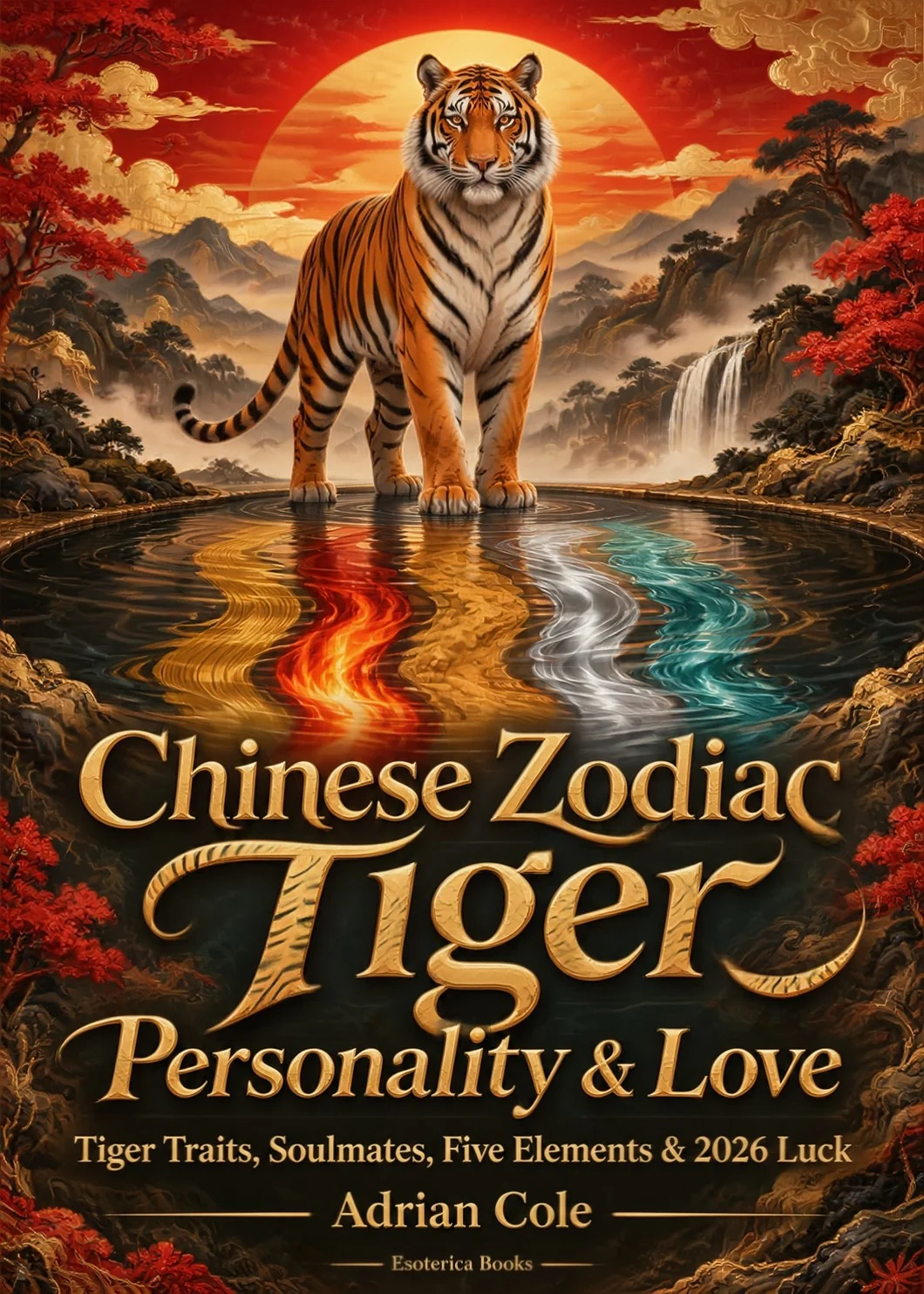


🏛 Books from this publisher Esoterica Books
All books from this publisher →
You might also like
See more →



Have a question about this item?
Ask about the edition, condition, delivery or anything else — we reply by email or phone, usually within a day.
A teacher featured in this book: Lao Tzu
