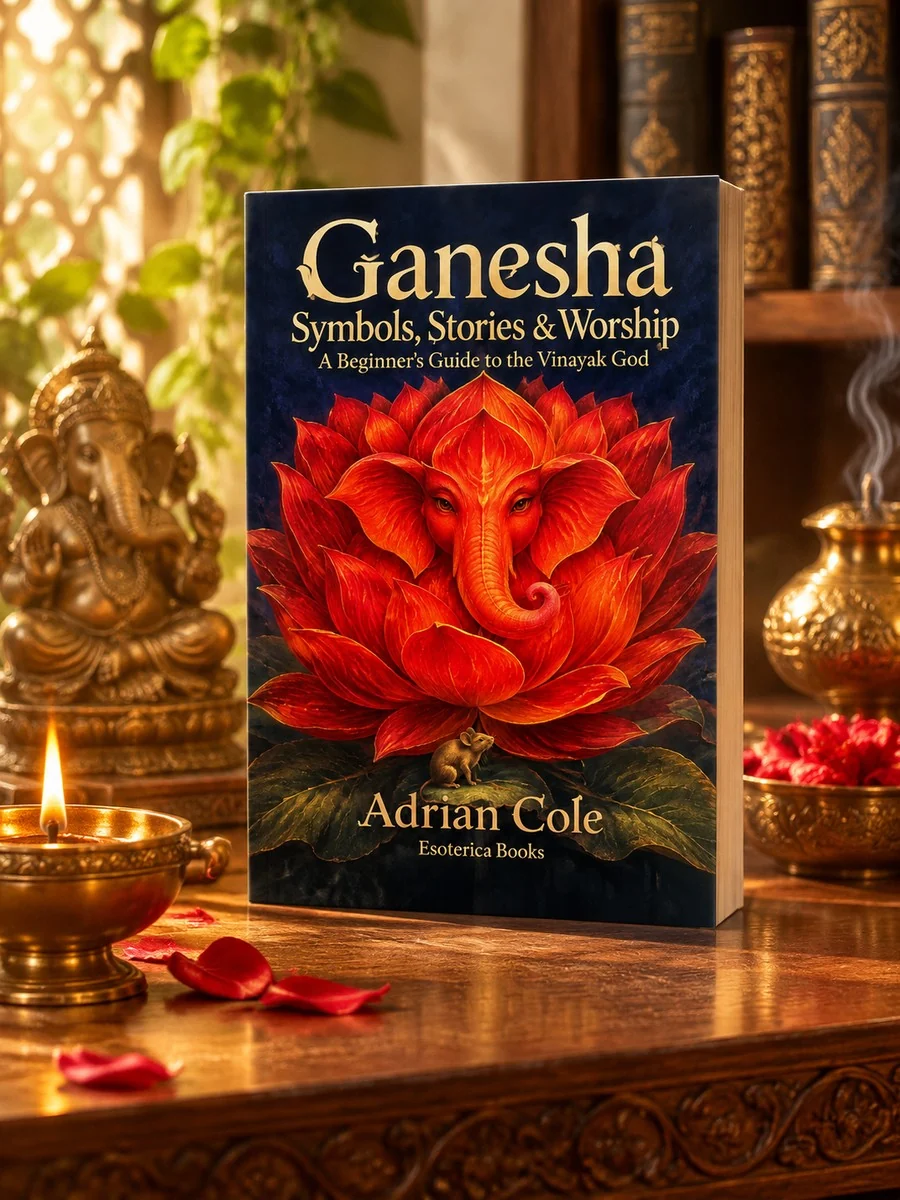
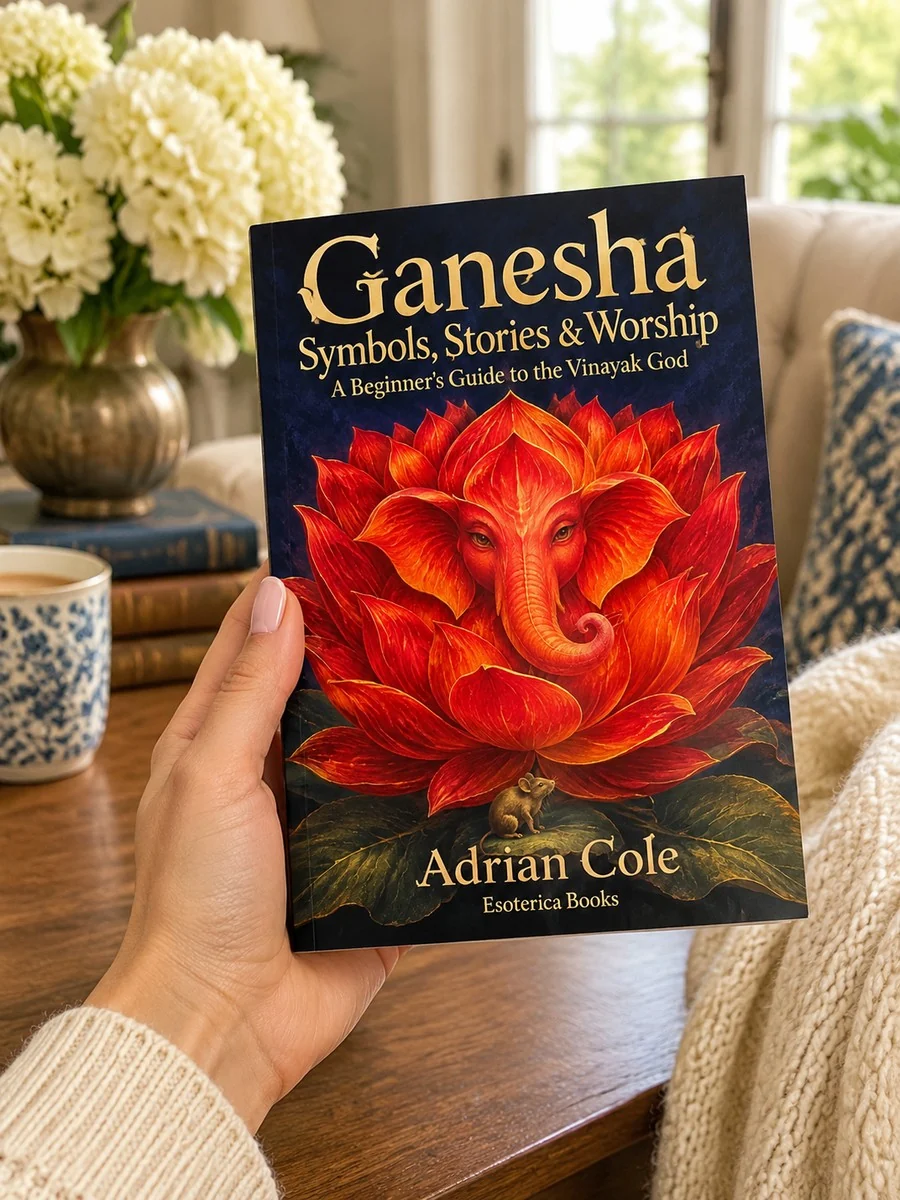
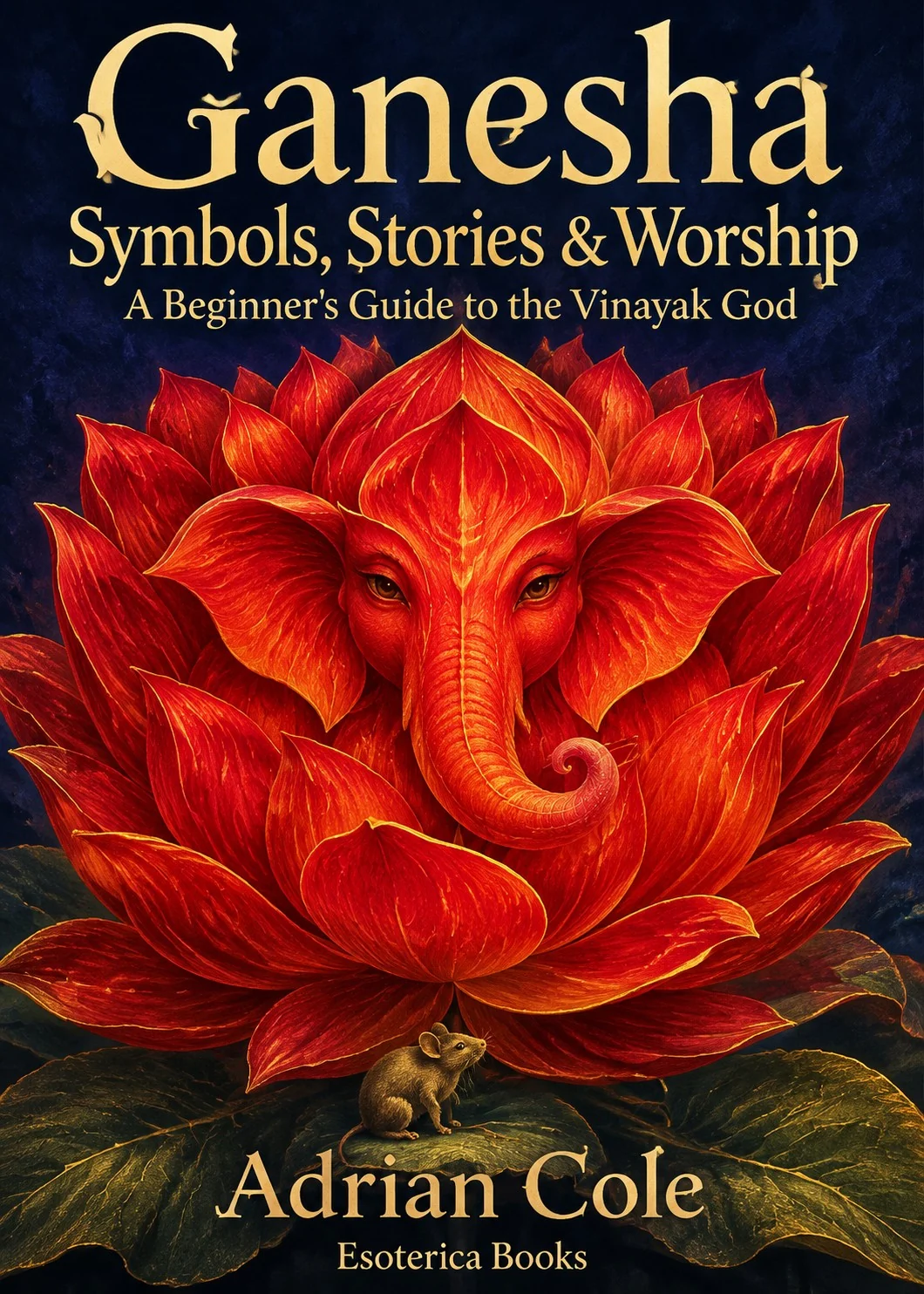
Ganesha: Symbols, Stories & Worship
Discover what Ganesha’s elephant head, broken tusk, mouse, and sacred symbols reveal about wisdom and devotion.
Who is Ganesha, and what do his familiar elephant-headed image and distinctive attributes mean? This beginner-friendly guide by Adrian Cole explores Ganesha’s identity, traditional names, stories, symbolism, and important place in Hindu devotion. Through the four-stage G.A.J.A. Method—Greet, Attend, Join, and Apply—you will learn to recognize his symbols, understand their traditional meanings, prepare a simple home altar, present devotional offerings, and follow an introductory puja. The book brings cultural understanding and practical worship together, helping readers approach Ganesha with curiosity, respect, and sincerity.
Ganesha holds an important place in Hindu devotional traditions and is especially associated with wisdom, discernment, and the beginning of important undertakings. His imagery, names, stories, and worship practices appear in diverse regional, linguistic, family, and community traditions across India.


📝 Description: Ganesha: Symbols, Stories & Worship
📖 Why choose it
Why this book is worth reading
Ganesha's image is familiar to many people, but recognizing an elephant head is different from understanding the devotional ideas behind it. This book connects individual details—the curved trunk, large ears, broken tusk, mouse, and modak—with traditional stories, names, and meanings. Its particular strength is the transition from understanding to participation: readers move from observing an image to preparing offerings and following a complete introductory puja. The G.A.J.A. Method makes that progression easy to follow, even for someone encountering Hindu devotional practice for the first time.
⭐ Reader reviews
Reader rating
Adrian Cole's guide offers a clear, approachable introduction to Ganesha, combining visual symbolism, devotional stories, and practical worship. The strongest feature is its progression through the G.A.J.A. Method: readers move from recognizing Ganesha's image to understanding his attributes, preparing a home altar, and following a complete introductory puja. Particularly useful details include the explanation of Ekadanta, the traditional offerings of durva grass and red hibiscus, and the introduction to Om Gam Ganapataye Namaha. The contents also acknowledge regional and family differences in worship. Its limitation is its introductory scope: readers seeking extensive theological discussion, detailed historical scholarship, or advanced ritual instruction will need more specialized material. A welcoming starting point for curious beginners.
❓ Frequently asked questions
📖 Who should read this
Ideal for beginners curious about Ganesha meaning in Hinduism, readers who want to understand the symbolism of his elephant-headed image, and those interested in learning the basics of respectful home worship. It also suits readers seeking a practical introduction to Hindu devotional customs and Ganesha's traditional qualities.
🎯 Key themes and symbolism
Ganesha Symbolism
Hindu Devotion
Home Puja
Spiritual Reflection
📜 Historical context
📚 Glossary
- Puja
- Modak
- Durva Grass
- Mantra
- Mala
- Ekadanta
📔 Questions to reflect on
- Which of Ganesha's symbols speaks most strongly to you—the elephant head, curved trunk, broken tusk, large ears, generous belly, or mouse—and what traditional quality does it represent?
- How might Ganesha's traditional associations with wisdom, discernment, and perseverance influence the way you approach an important undertaking?
- What would a respectful personal devotional routine look like if you incorporated a Ganesha image, a chosen name, a simple offering, and a moment of reflection?
📖 Read on the blog
✍️ More books by this author Adrian Cole









🏛 Books from this publisher Esoterica Books
All books from this publisher →







You might also like
See more →





Have a question about this item?
Ask about the edition, condition, delivery or anything else — we reply by email or phone, usually within a day.
