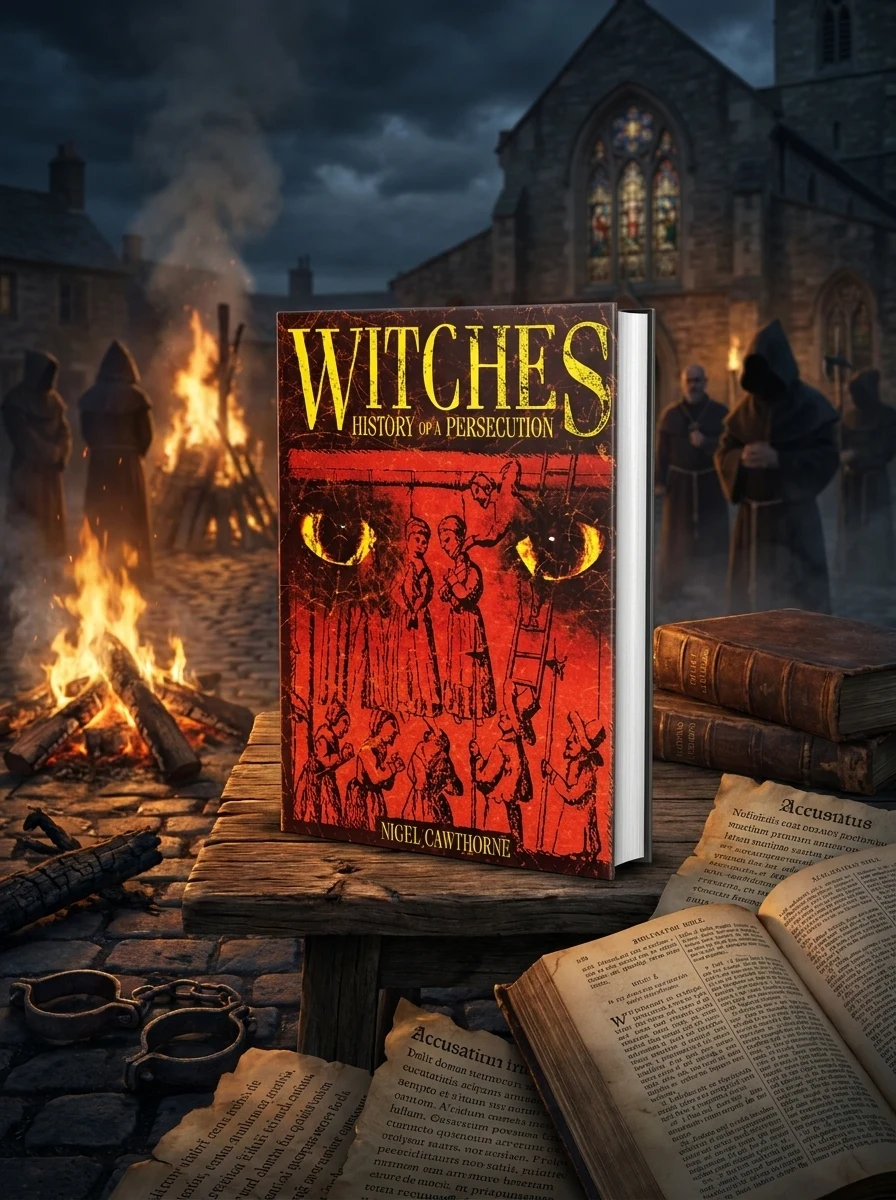
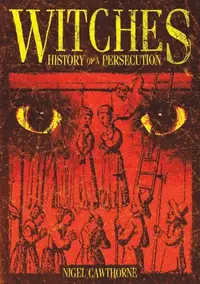
Witches: History of a Persecution
This edition can be ordered. No arrival date is confirmed.
Uncover the dark epoch when fear and faith ignited Europe's deadliest witch hunts.
Nigel Cawthorne meticulously chronicles the harrowing era between 1450 and 1750, a time when over one hundred thousand individuals, predominantly women, faced brutal prosecution across Europe and colonial America for alleged sorcery and devil worship. This compelling work delves into the pervasive religious fervor and societal paranoia that fueled these widespread persecutions, meticulously tracing their historical antecedents to the ruthless suppression of groups like the Waldensian sect by the Catholic Church. It offers a comprehensive examination of this dark chapter in human history.
This volume situates itself within the historiography of European witchcraft persecutions, specifically addressing the period of intense religious fervor and societal paranoia between 1450 and 1750.


📝 Description: Witches: History of a Persecution
💎 Expert review
📖 Why choose it
Why this book is worth reading
Readers fascinated by the intersection of religious history, sociology, and gender studies will find this book invaluable. It serves those seeking to understand the mechanisms behind mass hysteria and institutional oppression during the early modern period. By tracing the roots of persecution back to the suppression of groups like the Waldensians, it provides a crucial context for understanding how fear and faith can ignite deadly consequences. Those interested in the specific plight of women during this era, or the legal and theological frameworks that justified such brutal prosecutions across Europe and colonial America, will gain a comprehensive and harrowing perspective on this dark chapter of human history.
⭐ Reader reviews
Reader rating
Nigel Cawthorne delivers a meticulously chronicleled account of the witch hunts, offering a compelling narrative of the over one hundred thousand individuals prosecuted. While it succeeds in detailing the pervasive religious fervor and societal paranoia, readers expecting deep theological analysis or academic rigor may find it lacking. It is best suited for general history enthusiasts rather than specialists in medieval studies. The work effectively highlights the brutality faced by predominantly women but does not explore modern Wiccan perspectives. Avoid this if you seek literary flourishes; instead, choose it for a clear, factual overview of the historical antecedents and the ruthless suppression that defined this epoch.
❓ Frequently asked questions
📖 Who should read this
If you are drawn to the historical intersections of belief, power, and injustice, or seek to understand the origins of one of history's most tragic moral panics, this book offers a crucial lens. It's for those who wish to grasp the human cost of religious extremism.
🎯 Key themes and symbolism
The Great Persecution
This book vividly details the horrifying scale and methods of the witch hunts that swept across Europe and colonial America. It examines the legal and social mechanisms that facilitated the accusation, torture, and execution of tens of thousands, predominantly women, illustrating the profound human cost of this widespread societal panic.
Religious Zealotry's Grip
Explore how fervent religious beliefs and the pervasive fear of the Devil became potent catalysts for the witch trials. The book dissects the theological justifications and moral panic that transformed folk magic into a demonic conspiracy, demonstrating how religious hysteria could be weaponized to justify extreme violence and social control.
Echoes of Heresy
Cawthorne traces the ideological roots of the witch hunts back to earlier campaigns of religious suppression, notably the brutal persecution of the Waldensian sect. This theme reveals how established patterns of persecuting 'heretics' laid crucial groundwork, providing precedents and methods for the later, equally savage, persecution of alleged witches.
💬 Quotes from the book
“The sheer scale of the witch hunts, claiming tens of thousands of lives, reveals a society gripped by a terror far more potent than any perceived sorcery itself.”
“Religious hysteria, once unleashed, found fertile ground in an era ripe with social upheaval and deep-seated fears, transforming suspicion into undeniable proof.”
📜 Historical context
📚 Glossary
- Witchcraft
- Persecution
- Waldensian
📔 Questions to reflect on
- How do historical accounts of persecution inform our understanding of modern societal fears and scapegoating?
- Reflect on how religious belief, when intertwined with state power, can lead to widespread injustice. What lessons can be learned?
- Consider the role of gender in the witch trials. How did societal biases contribute to women being disproportionately targeted?
You might also like
See more →
 91
91