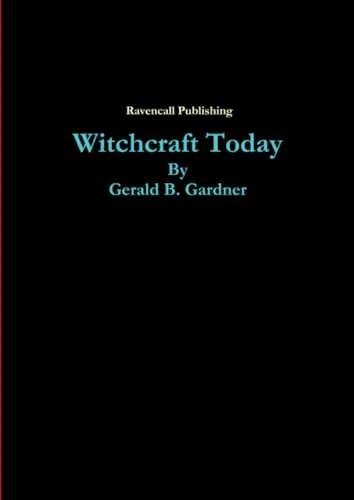
Witchcraft Today
✍️ Gardner, GeraldGerald Gardner's 1954 account of modern witchcraft practices and beliefs.
This volume serves as a primary historical record of early Wiccan practice. Gardner shares his personal encounters with coven members and rituals. The text provides insight into the structure of ceremonies and the ethical codes observed by practitioners. It is not a step-by-step guide but rather an exposition of the religion's nature. The work bridges the gap between folklore and organized spiritual practice. Readers gain understanding of how the craft was perceived and practiced in the mid-twentieth century.
This book sits at the intersection of occult studies and religious history. It documents the emergence of Wicca as a recognized spiritual path in the mid-twentieth century. The text reflects the cultural shift toward alternative religions in post-war America and Britain.


📝 Description: Witchcraft Today
💎 Expert review
📖 Why choose it
Why this book is worth reading
Readers deeply interested in the historical roots of modern paganism will find this text indispensable for understanding how contemporary witchcraft emerged into public consciousness. It offers a unique window into the synthesis of folklore, anthropology, and personal coven experience that defined the early movement. Those seeking to grasp the philosophical underpinnings of their practice, or those studying the evolution of esoteric literature in the mid-twentieth century, will gain significant insight here. It is essential for anyone wishing to appreciate the narrative Gardner constructed about an unbroken lineage of the Old Religion.
⭐ Reader reviews
Reader rating
Gardner’s text serves as a crucial historical document for the Wiccan tradition, detailing the rituals and beliefs that shaped modern paganism. However, it may not suit readers seeking purely academic analysis or those skeptical of personal anecdote as historical evidence. The narrative relies heavily on Gardner’s own claims regarding secret lineages, which some might find lacking in rigorous documentation. It is best approached as a foundational mythos rather than a detached scholarly critique. Readers expecting dry technical grimoires might find the autobiographical elements distracting, yet they are central to its charm and influence.
❓ Frequently asked questions
📖 Who should read this
If you're curious about the historical roots of modern Wicca, or wish to understand the initial public declaration of an ancient Craft, this book is essential. It's for anyone seeking insight into the spiritual awakening that sparked contemporary paganism.
🎯 Key themes and symbolism
The Old Religion Revealed
Gardner posits the survival of a pre-Christian, nature-worshipping religion, practiced covertly through the ages. He describes its tenets, deities, and the secret societies that preserved its wisdom, offering a compelling narrative for those seeking an alternative spiritual heritage beyond mainstream faiths. This theme is central to understanding the book's radical impact.
Coven Structure & Rites
The author provides insights into the organization and ceremonial practices of his own coven. He details the roles within the group, the significance of lunar and seasonal gatherings (Esbats and Sabbats), and the purpose of various magical tools. This offers a structural blueprint that would become highly influential for subsequent Wiccan traditions and covens worldwide.
Nature as Sacred
A profound reverence for the natural world and its cycles permeates Gardner's work. He emphasizes the interconnectedness of all life, the divinity found in nature, and the importance of aligning magical practice with seasonal rhythms. This perspective champions an earth-centered spirituality that deeply resonated with a post-industrial society.
📜 Historical context
📚 Glossary
- Coven
- Esbat
- Sabbats
📔 Questions to reflect on
- How does Gardner's concept of an 'Old Religion' challenge or affirm your own understanding of spiritual history and tradition?
- Consider the social and cultural climate of the 1950s. What might have been the greatest risks and rewards for Gardner in publishing this work?
- If you were to establish a 'new' spiritual tradition today, what core principles would you emphasize, and how might they compare to Gardner's?
📖 Read on the blog
🏛 Books from this publisher Lulu.com
All books from this publisher →




You might also like
See more →

Have a question about this item?
Ask about the edition, condition, delivery or anything else — we reply by email or phone, usually within a day.
