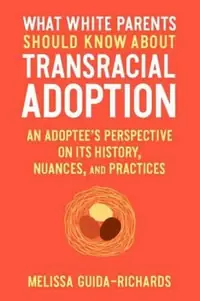
What White Parents Should Know about Transracial Adoption: An Adoptee's Perspective on Its History, Nuances, and Practices
Stock reported in the catalog; fulfillment is confirmed with your request.
Shatter the myth of benevolent parenting with raw adoptee truths and vital tools for transracial families.
Melissa Guida-Richards dismantles the comforting lie that love alone bridges racial divides in adoption. Drawing from her own late-discovery adoptee experience and extensive interviews, this text exposes the subtle, often unconscious biases white parents inflict. It replaces performative allyship with concrete strategies for identity formation and cultural competency. The author challenges the 'white savior' narrative, urging parents to confront their privilege actively. This is not a celebration of good intentions, but a rigorous manual for correcting historical and personal errors in raising children of color within white households.
This text emerges from the contemporary discourse on transracial adoption and critical race theory, challenging historical narratives of benevolent parenting through the lens of adoptee experience. It sits at the intersection of social justice literature and family dynamics, offering a corrective to traditional white-centric viewpoints on raising children of color.


📝 Description: What White Parents Should Know about Transracial Adoption: An Adoptee's Perspective on Its History, Nuances, and Practices
💎 Expert review
📖 Why choose it
Why this book is worth reading
White parents engaged in transracial adoption will find this book an essential, albeit uncomfortable, mirror reflecting the unconscious biases they may inflict on their children. Melissa Guida-Richards provides vital tools for moving beyond performative allyship toward genuine cultural competency and identity formation for adoptees. It is a necessary guide for families willing to confront privilege actively rather than hiding behind good intentions. Adoptees themselves will also appreciate the validation of late-discovery experiences and the dismantling of the 'white savior' myth. This manual offers concrete strategies for correcting historical errors, ensuring that love is supplemented by rigorous understanding. It is for those ready to shatter myths and build a foundation of truth rather than comfort.
⭐ Reader reviews
Reader rating
I've read excerpts online before, but having the full text is different. Some chapters demand a slow, careful read, and that's exactly the point. The ideas are old but land with surprising force today. My only quibble is the cover feels thinner than expected. Solid, if not essential.
This book serves as a rigorous manual for white parents navigating transracial adoption, exposing the subtle biases often masked by benevolence. Guida-Richards effectively dismantles the comforting lie that love alone bridges racial divides, offering instead concrete strategies for cultural competency. However, it is not suited for readers seeking validation of their good intentions or those unwilling to confront their own privilege. It may feel too accusatory for those clinging to the 'white savior' narrative. The text demands active engagement with historical errors and personal accountability. While vital for its target audience, it lacks appeal for casual readers or those resistant to critical self-examination. It is a challenging but necessary read for serious commitment to anti-racist parenting.
❓ Frequently asked questions
📖 Who should read this
White parents of transracially adopted children who are ready to discard naive optimism for hard truths. It is essential for families seeking to move beyond superficial diversity into genuine cultural integration and anti-racist parenting practices.
🎯 Key themes and symbolism
Unlearning White Saviorism
The book critiques the paternalistic mindset that frames adoption as a charitable rescue mission. Guida-Richards argues that viewing oneself as a benevolent savior erases the child’s agency and heritage. Parents must shift from a posture of salvation to one of humble stewardship, recognizing that their privilege does not grant them ownership over the child’s racial narrative or cultural inheritance.
Identity Formation Strategies
Focusing on the psychological needs of the adoptee, the text provides actionable advice for fostering a robust racial identity. It emphasizes that parents cannot simply 'hope' for positive outcomes; they must actively curate diverse environments, literature, and community connections. The goal is to equip the child with the tools to navigate a world that may view them as an outsider in their own home.
Confronting Unconscious Bias
Guida-Richards highlights how well-meaning parents often perpetuate microaggressions through ignorance rather than malice. The work guides readers to identify these blind spots, such as colorblindness or the denial of systemic racism. By acknowledging these hidden dynamics, parents can stop inflicting harm under the guise of protection and start engaging in honest, difficult conversations about race and belonging.
💬 Quotes from the book
“Good intentions are not a substitute for cultural competency.”
“You are not saving them; you are stewarding a life that belongs to itself.”
📜 Historical context
📚 Glossary
- Late-Discovery Adoptee
- White Savior Complex
- Transracial Adoption
📔 Questions to reflect on
- When did you first realize your 'love' was insufficient to bridge racial gaps in your family?
- What specific cultural practices do you avoid discussing because they make you uncomfortable?
- How does your definition of 'protection' differ from the adoptee's need for 'visibility'?
🏛 Books from this publisher North Atlantic Books
All books from this publisher →






You might also like
See more →



 91
91