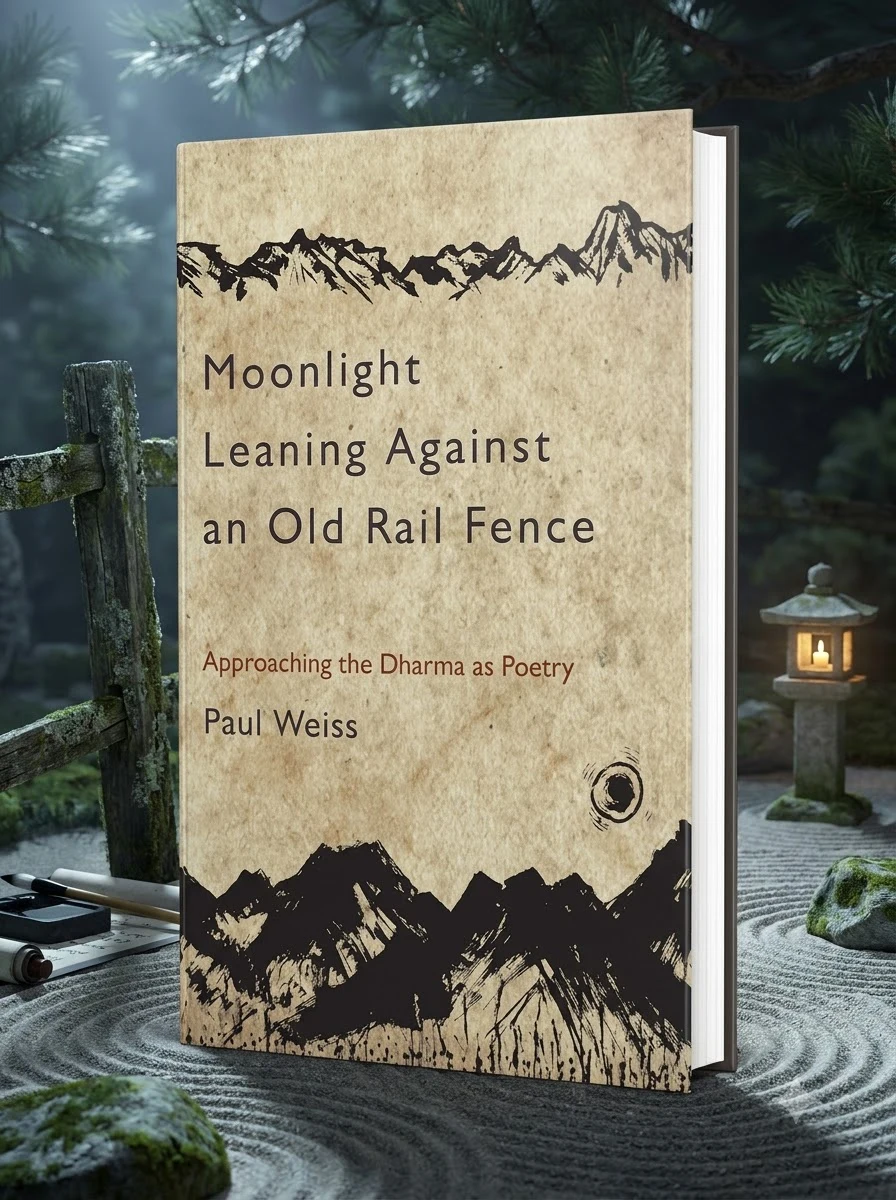
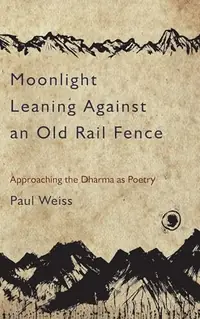
Moonlight Leaning Against an Old Rail Fence: Approaching the Dharma as Poetry
Weiss, PaulThis edition can be ordered. No arrival date is confirmed.
Discover Zen's heart where poetry and profound wisdom illuminate the path to awakened living.
This compelling collection by Paul Weiss offers a unique journey into Zen Dharma, blending introspective poetry with insightful commentary. It encourages readers to engage directly with their experience, moving beyond mere conceptual frameworks. Weiss explores the inherent poetic quality of awakened consciousness while dissecting the egoic patterns that foster division and distress. Expect both profound celebrations of reality's clarity and practical guidance for daily life, intertwined with observations on history and human interconnectedness. It's a cohesive tapestry of spiritual thought, designed to enrich contemplation and personal evolution.
This work sits at the intersection of Zen Buddhism and Western literary expression, offering a contemporary perspective on Dharma through the lens of poetic inquiry. It bridges ancient spiritual traditions with modern introspective practices, appealing to those interested in the philosophical nuances of awakened consciousness.


📝 Description: Moonlight Leaning Against an Old Rail Fence: Approaching the Dharma as Poetry
💎 Expert review
📖 Why choose it
Why this book is worth reading
Readers seeking a gentle yet profound entry into Zen practice will find this collection deeply rewarding. Paul Weiss’s approach demystifies the Dharma by framing it through poetry, making abstract concepts of awakened living tangible and accessible. It is ideal for those who feel constrained by rigid dogma and desire a path that honors direct experience over intellectual framework. The book offers practical guidance for daily life while celebrating the clarity of reality, fostering personal evolution through contemplation. Those longing for spiritual texts that intertwine human interconnectedness with historical observation will appreciate the cohesive tapestry Weiss weaves, enriching their understanding of egoic patterns and the peace found in letting go.
⭐ Reader reviews
Reader rating
Weiss delivers a compelling blend of introspective poetry and insightful commentary, successfully illuminating Zen’s heart through accessible language. However, this book may not suit readers seeking rigorous academic theology or strict doctrinal adherence to traditional Buddhist texts. Those who prefer direct instruction over poetic abstraction might find the approach too diffuse. It is best for those comfortable with metaphorical exploration of consciousness and willing to engage with egoic patterns through literary observation rather than systematic study. The work serves as a warm invitation to awakened living, provided one appreciates the synergy between spiritual wisdom and artistic expression without demanding concrete rules or historical data.
❓ Frequently asked questions
📖 Who should read this
If you seek a contemplative path that marries profound spiritual insight with artistic sensibility, this book is for you. It’s perfect for Zen practitioners, poetry lovers, and anyone eager to explore the nature of consciousness beyond conventional thought, fostering genuine personal and spiritual growth.
🎯 Key themes and symbolism
Dharma as Poetic Expression
This work uniquely frames spiritual teachings not as rigid doctrines but as an flowing, intuitive art form. It invites readers to perceive the profound truths of existence through the lens of poetry, encouraging direct, unmediated experience rather than intellectual abstraction, making enlightenment accessible as an aesthetic and felt reality.
Deconstructing Ego's Illusions
Weiss delves into the mechanisms of the ego, illustrating how our personal and collective identities create a sense of separation and fuel suffering. The book offers insights into recognizing these patterns, providing a pathway to transcend self-imposed limitations and fostering a more unified, compassionate understanding of self and other.
Luminous, Pristine Awareness
The author repeatedly points to an innate, radiant quality of human experience, a state of pristine awareness often obscured by daily distractions. Through both celebratory verse and clear exposition, the text guides readers toward recognizing and embracing this transparent reality, fostering a deeper connection to the present moment and its inherent beauty.
💬 Quotes from the book
“The moonlight on the old rail fence is not a metaphor; it is the silent, breathing truth itself, needing no words to be known.”
“When the mind ceases its striving, the world reveals its jeweled net, each moment a reflection of every other, luminous and whole.”
📜 Historical context
📚 Glossary
- Dharma
- Zen
- Ego
📔 Questions to reflect on
- How might viewing your daily experiences through a poetic lens transform your understanding of them?
- Where do you notice the "mechanisms of ego" creating a sense of separation or suffering in your own life, and how might you gently observe them?
- What does "luminous and transparent reality" mean to you personally, and how can you cultivate moments of its recognition?
✍️ More books by this author Weiss, Paul
All books by this author →
🏛 Books from this publisher North Atlantic Books
All books from this publisher →
You might also like
See more →
 91
91