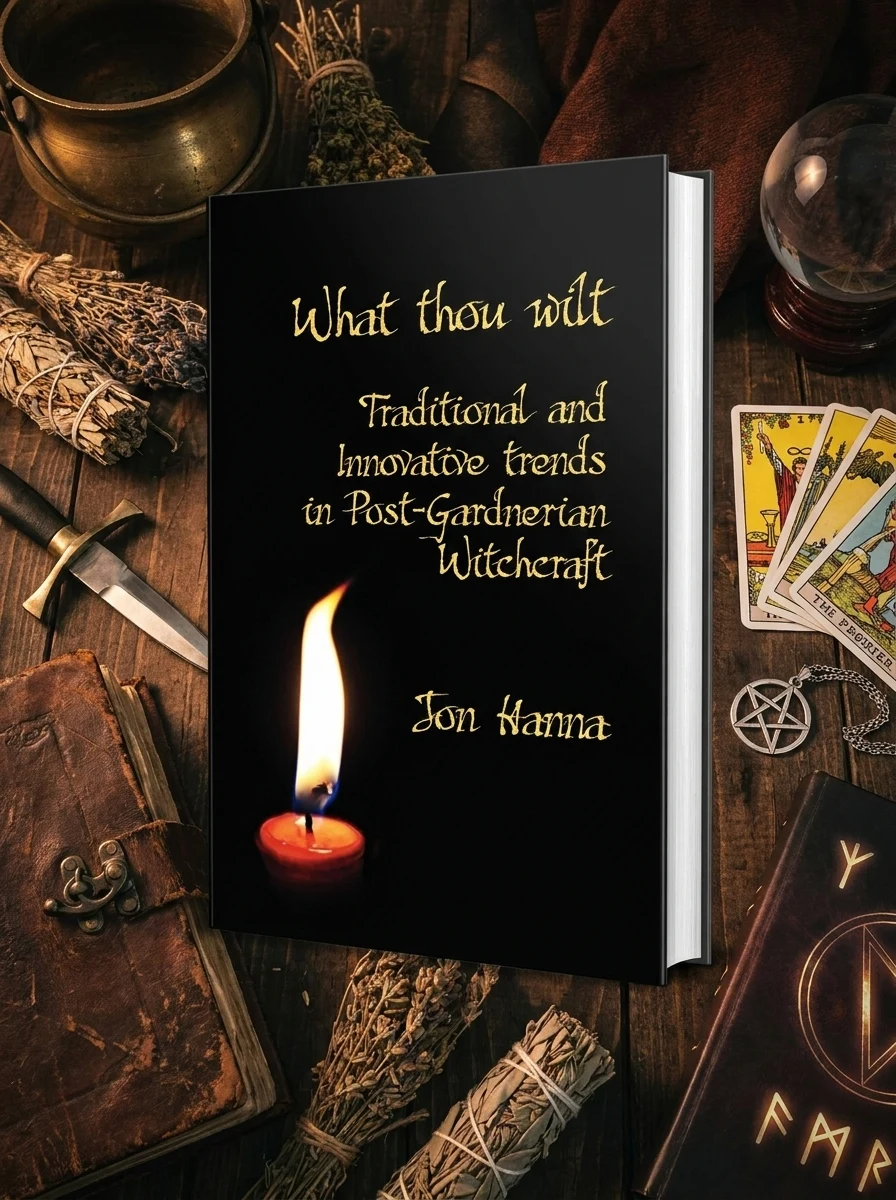
What Thou Wilt: Traditional and Innovative Trends in Post-Gardnerian Witchcraft
Stock reported in the catalog; fulfillment is confirmed with your request.
Unravel the intricate tapestry of modern witchcraft, from ancient echoes to daring new paths.
This insightful volume meticulously dissects the evolution of modern witchcraft since Gerald Gardner's pivotal 1954 revelations. It illuminates the two distinct, yet interconnected, paths that emerged: one rooted in traditional initiatory lineages and established practices, and another embracing diverse innovations and personal interpretations. The text explores how these "Wiccan" currents, both falling under the umbrella of Post-Gardnerian Pagan Witchcraft, define themselves and perceive their counterparts, particularly the traditionalists' often-labeling of the innovative as "Eclectic."
This volume examines the schisms and syntheses within Post-Gardnerian Pagan Witchcraft following Gerald Gardner's initial disclosures. It serves as a scholarly bridge between established initiatory traditions and the burgeoning landscape of personal spiritual innovation.


📝 Description: What Thou Wilt: Traditional and Innovative Trends in Post-Gardnerian Witchcraft
💎 Expert review
📖 Why choose it
Why this book is worth reading
Readers seeking to understand the complex genealogy of modern witchcraft will find this text invaluable. It clarifies the often confusing distinction between traditional initiatory lineages and eclectic, innovative paths that define contemporary practice. By exploring how these groups perceive one another, particularly regarding the label 'Eclectic,' the book offers deep insight into community dynamics. Whether you are a long-time practitioner or a curious newcomer, this work provides necessary context for navigating the diverse landscape of Post-Gardnerian Pagan Witchcraft with greater clarity and respect for its varied histories.
⭐ Reader reviews
Reader rating
Hanna and Lee provide a meticulous dissection of modern witchcraft's evolution since Gardner’s pivotal moments. The text is essential for those interested in the sociological and theological divides between traditionalists and innovators. However, readers looking for practical spell-casting instructions or ritual liturgies will find this volume lacking, as it focuses strictly on historical analysis and identity formation. It is a scholarly examination of lineage and definition rather than a grimoire. Those expecting dogmatic answers may be disappointed by its nuanced exploration of how these currents define themselves in relation to each other.
❓ Frequently asked questions
📖 Who should read this
If you're a practitioner or scholar eager to understand the rich, evolving landscape of modern witchcraft, this book is essential. Delve into the historical currents and philosophical distinctions that shape today's diverse magical traditions, gaining clarity on their origins and ongoing dialogue.
🎯 Key themes and symbolism
Traditional vs. Innovative Paths
The book meticulously contrasts the two primary branches of modern witchcraft: those rigorously adhering to initiatory lineage and historical practices, and those embracing a more fluid, adaptive, and often non-lineaged approach. It examines the foundational differences in belief, ritual structure, and communal organization.
Defining "Wicca" and Identity
This work critically analyzes how practitioners within both traditional and innovative streams define "Wicca" and their broader identity within Post-Gardnerian Paganism. It highlights the internal debates and varying interpretations of what constitutes legitimate practice and belonging, especially concerning lineage and established rites.
Perceptions and Labels
The text explores the often-divergent ways traditional and innovative groups perceive and label each other. It unpacks the traditionalist tendency to categorize innovative forms as "Eclectic," and how this labeling impacts inter-community dialogue and self-understanding within the broader witchcraft landscape.
💬 Quotes from the book
“The schism between lineage-bound practice and individually curated spirituality defines the contemporary landscape of Post-Gardnerian expression.”
“Labels like 'Eclectic,' while often used by traditionalists to categorize, rarely capture the nuanced self-identity of innovative practitioners.”
📜 Historical context
📚 Glossary
- Gardnerian Witchcraft
- Eclectic Witchcraft
- Initiatory Lineage
📔 Questions to reflect on
- How do you define "Wicca" or "Witchcraft" in your own practice or understanding, and how does it align with or diverge from the definitions discussed in this text?
- Consider the role of tradition versus innovation in your spiritual path. Where do you find balance, and what are the benefits and challenges of each approach?
- If you are part of a magical community, how do perceptions and labels, both internal and external, shape its identity and interactions with other groups?
You might also like
See more →
 91
91